

Interview with Carlos Fernando Galán, mayor of Bogotá
Why are healthy cities so important for the well-being of their residents and visitors?
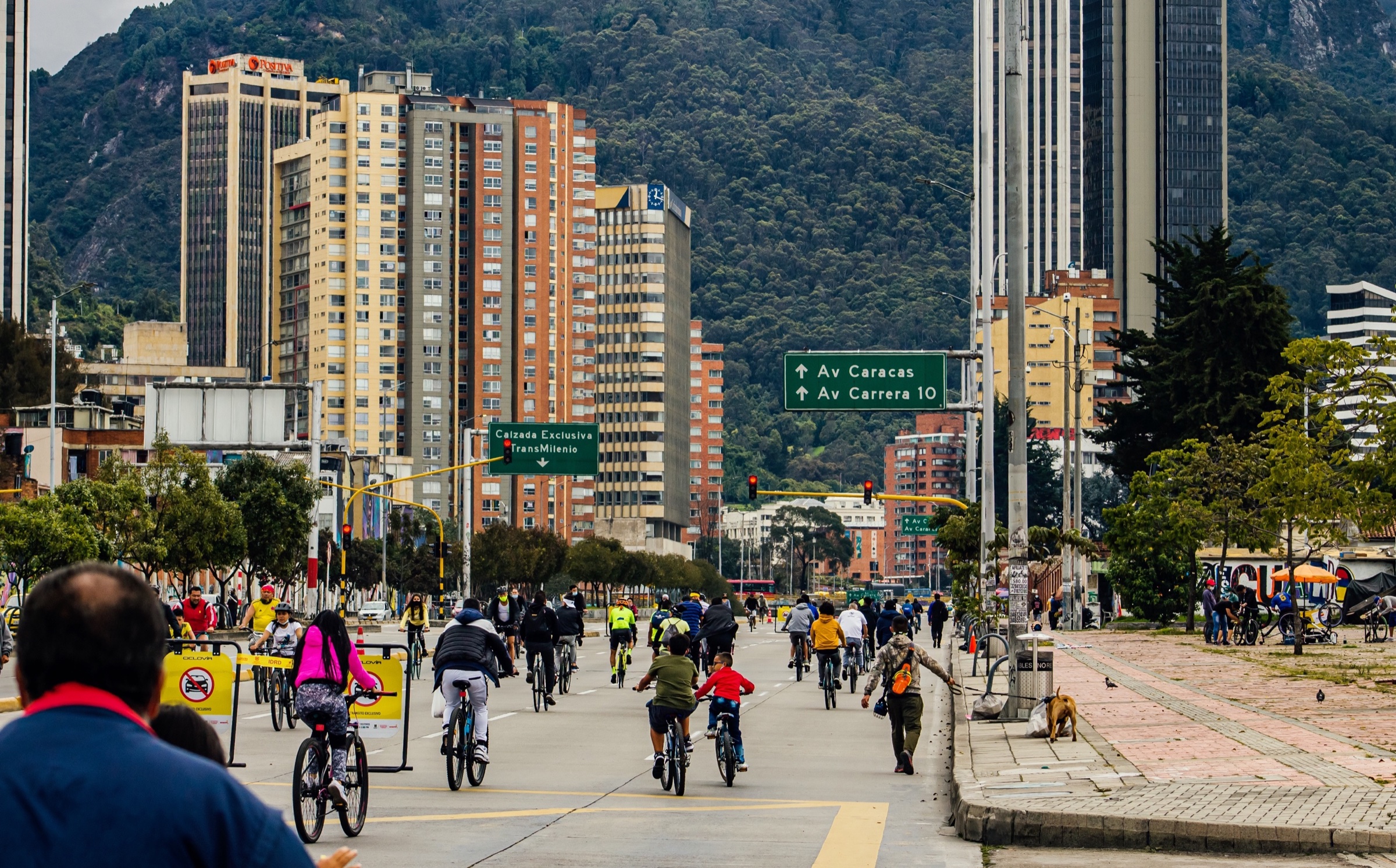
Health systems are usually the responsibility of the national government. But the city has a responsibility that goes beyond the health system: how people move, how the transportation system works, what air people breathe, how safe people feel in the streets – all that affects the health of citizens. Hours lost in traffic and the impact on families and mental health do not come up when a person goes to the doctor.Every sector has a responsibility. But all the sectors overlap and affect health. So if all the sectors understand the end goal is to have an integrated goal in terms of health, we can have a better life and a better quality of life for citizens.Was this part of your campaign when you ran for mayor?Promoting social primary care was a key part of my campaign, understanding that health is related to many other issues and we have to work together. But it wasn’t raised in the debates over what was important for people. The main issue was whether we build the metro system. That’s related to health, of course, but not in the voters’ minds. They were concerned with moving around faster and escaping traffic. But it was included in our integrated way of understanding what a healthy city is.How are your initiatives in urban planning improving people’s health?For many years, Bogotá has had policies built on by several mayors. We started 30 years ago to change the transportation system, which has reduced emissions impressively. Today we have more than 1,600 electric buses, and we plan to have 2,200 by 2029. We have 82% of the metro built, which will remove roughly 171,000 metric tonnes of carbon dioxide per year. It will be finished next year.A key thing is to integrate all the transportation systems – how people walk to the metro, walk to the bus rapid transit system, ride a bike to the metro. Bogotá’s system moves four million passengers a day but we have challenges in guaranteeing that people can use sustainable modes of transportation. We created “Metropolitan Waves” to connect the system so people can walk or cycle to the transportation system.The air we breathe in Bogotá also depends on the area we are in. While some areas have forests and abundant green spaces, others still have unpaved roads, and children may have to walk 10 blocks just to see a tree. We need to reduce inequalities and improve the quality of society.And some of the areas with the highest vulnerability have the worst air quality – with fewer green areas, unpaved roads and freight transport going by. Winds take pollution to the southwest part of the city. So we are implementing Zonas Urbanas por un Mejor Aire – urban areas for better air. The first Zuma is improving the air for school children and we are implementing a second one in the southwest part of the city. We’re integrating all the government sectors to have impacts in specific areas. We hope to have proven results next year.How has Bogotá been inspired by and inspired other cities in the Global South?Bogotá has inspired many cities by what we have done in the last two and a half decades, with the BRT system and Bogotá TransMilenio reducing emissions, improving transportation and improving mobility. My predecessor Enrique Peñalosa created it 25 years ago, and we have expanded it. We learned a lot from Curitiba in Brazil, and the Japan International Cooperation Agency promoted this 35 years ago in Bogotá. I have also learned from Medellín about using green areas to reduce the temperature and from Mexico City about green areas reducing pollution.But what we implemented has also had an impact in Mexico City as well as Seoul in integrating their BRT systems.Bogotá has roughly 886,000 daily bicycle trips, representing 7.3% of all trips in the city, and a 660-kilometre network of bike lanes. We are working both to maintain the existing network and to expand it. Whenever we build a metro or BRT line, we must include segregated bike lanes. Other cities have looked to Bogotá as an example.Bogotá created Ciclovía 50 years ago: every Sunday and holiday we close more than 140 kilometres of roads to vehicles, and more than a million and a half people or two million people go cycling, running or walking. This is another thing many cities do now.Bloomberg Philanthropies is interested in promoting the Zuma to other cities. We are working with the World Health Organization and the Pan American Health Organization to show how integrating different city sectors supports the goal of a healthy city. So many things we have done over many administrations have become references for how a healthy city is based on integrated systems.What political choices must now be made for a healthier future?First, we have to stop treating clean air and active mobility, housing, and public space as separate issues. We must treat them as a single health policy, with its own budget, targets and accountability. We need to guarantee that cities see this as an integrated problem with an integrated solution.Second, cities should work in integrated ways to improve areas where pollution, poverty and vulnerability overlap. Our Zuma is key for that.Third, measure everything and make data public. We have to guarantee that people have the tools to follow and have oversight of what we’re doing as a city. That’s key to empowering people.And last, and maybe the hardest, is to spend the political capital to guarantee that what we do, even though it’s not always popular or top of voters’ minds, is effective and is the right solution. We must take the best decision despite the political implications.Image credit: G Leo Gue / Shutterstock.com