

Back in 1986, the Ottawa Charter for Health Promotion brought valuable global attention and commitment to the importance of a whole-of-society approach to promoting health, with a key tenet being “to recognize health and its maintenance as a major social investment and challenge; and to address the overall ecological issue of our ways of living”. Although a similar sentiment was expressed by Rudolf Virchow nearly 200 years earlier in his famous comment that “medicine is a social science, and politics nothing but medicine at a larger scale”, the Ottawa Charter laid out a path forward whose importance has become even more poignant, with new and more complex challenges to address.
Today we face dramatically new challenges in our “ways of living” and their implications for health – from the climate crisis and geopolitical tensions to a rapidly changing technological landscape, including a dramatic escalation in the introduction of new social media platforms over the past 20 years to more recent and evolving developments regarding artificial intelligence. In addition, and partly propelled by the ubiquitous access to information, publics are becoming more demanding and questioning about health interventions and related policies.
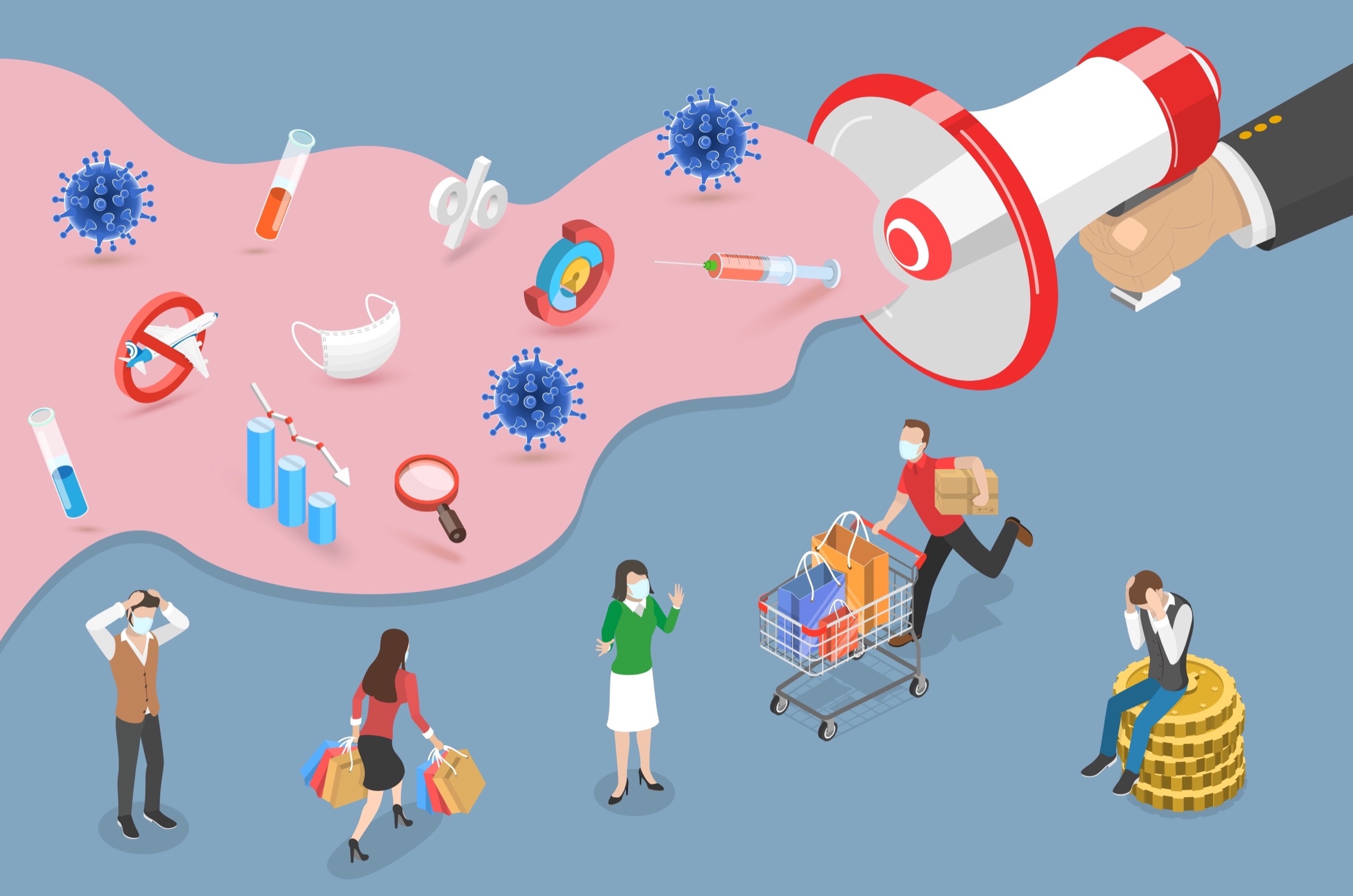
Adding to this mix of challenges are mis- and disinformation. Misinformation encompasses the sharing of seemingly plausible, albeit inaccurate, information; the more dangerous, intentionally spread disinformation aims to drive behaviour that can undermine health and fuel fear and distrust, while politically or economically benefitting those spreading it. Already a growing challenge before the Covid-19 pandemic, both mis- and disinformation spiralled in intensity and reach during the pandemic, which was a period of acute uncertainty, ever-changing control measures, heightened emotions and a new vaccine produced, in the minds of many, all too quickly – particularly among those prone to conspiracy views.
In recent years, both the World Economic Forum Risk Report and the UN Global Risk Report have ranked misinformation as the top global risk in the world. Neither has focused explicitly on health, but from the perspective of the Ottawa Charter, misinformation is clearly one of the critical challenges and ecological issues that needs to be acknowledged and considered in the context of promoting health.
The World Economic Forum has disaggregated the data by age and identified people aged 18 to 39 as being the most concerned about misinformation. This is the same age group that the Vaccine Confidence Project identified as having the most precipitous decline in vaccine confidence during the Covid-19 pandemic. While exposure to misinformation contributed to the decline, psychological reactance – a negative reaction to rules and recommendations – to restrictive Covid-19 control policies was also an influence. In short, there is never one determinant of health at play. The information environment, policy measures, social and cultural context, epidemic situation and the oft-forgotten emotional determinants of health – among others – drove health behaviours and outcomes.
Beyond false information
But what does ‘misinformation’ actually mean and how does it affect health? The health impacts of mis- and disinformation range from suspended clinical trials and disrupted health programmes (including vaccination) to a systematic erosion of trust in health institutions and science more broadly. The problem is that current responses remain reactive and often narrowly focused on correcting false information, when the most damaging narratives often operate through emotional manipulation and the distortion of risks and perceived social norms – not explicit falsehoods.
Risk scientists have long recognised these dynamics in the ‘social amplification of risk’ framework. Rare adverse events feel common, extreme views feel mainstream and silence from trusted institutions gets interpreted as concealment. This is why content-based interventions (such as fact-checking or debunking) can underperform. They miss all the key points of the Ottawa Charter – “the overall ecological issue of our ways of living”.
Rethinking the response
So, what is needed? Two commissions are currently investigating and mapping new ways to understand and approach both the information ecosystem as well as its place in the larger ecosystem of the multiple determinants of health. Nature Medicine is hosting the commission on ‘Quality Health Information for All’ and The Lancet recently launched another on ‘Rethinking Misinformation, Health and Human Security’. We look forward to these two commissions helping to inform health promotion as we move forward in the new era of the Ottawa Charter 2.0.