

China has cut fine-particle pollution faster than any major country in modern records, turning the smog emergency of 2013 into a public health success story. But the job is not finished. National PM2.5 remains about five to six times the World Health Organization guideline; northern cities rebounded in 2026; and the coal that fouls winter skies still anchors Beijing’s idea of energy security. How China closes that gap – at home through stricter standards and a genuine coal peak, abroad through hardware and finance only it can scale – will shape its people’s life expectancy and the world’s chance of tackling climate change.
Significant progress
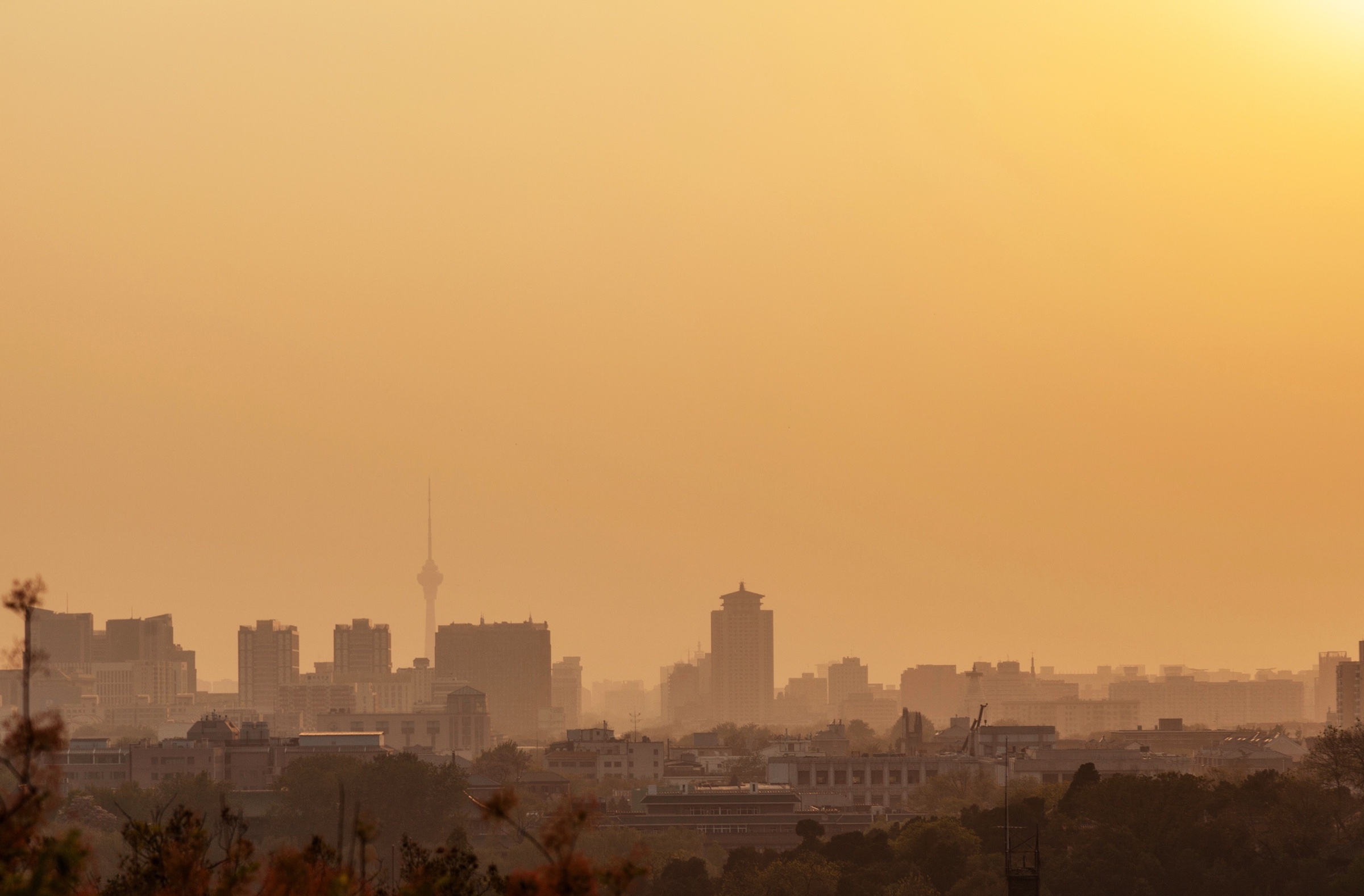
Since the January 2013 ‘airpocalypse’, China has delivered one of the century’s largest public health interventions. Population-weighted PM2.5 peaked at the mid-60s micrograms per cubic meter around 2013. By 2025 the national figure sat near 28–30 μg/m³ – almost 60% below the peak. Beijing’s annual average fell from 89.5 μg/m³ in 2013 to 27 in 2025. And exposure shifted downward: by 2023–2024, several hundred million more people lived in areas meeting China’s old standard of 35 μg/m³ than in 2015.
The health return is substantial: by 2023, lower PM2.5 was associated with about 0.9 million fewer premature deaths a year than in 2013, and a roughly 30% fall in the share of hospital admissions attributed to it.
In February 2026, China issued GB 3095–2026, its first rewrite of the Ambient Air Quality Standards since 2012. The annual PM2.5 limit tightens from 35 μg/m³ to a transitional 30 for 2026–2030, then to 25 from 2031. That 25 matches the WHO Interim Target 2 – not the guideline of 5 – but the ratchet will reclassify cities once counted as clean.
How much remains
The gains are incomplete and fragile. Many provincial capitals, especially on the North China Plain, still breach the transitional 30 μg/m³ line; in the first half of 2026, 18 of 31 missed it. The easy cuts are mostly spent. After falling by about 3 μg/m³ a year from 2015 to 2022, the decline has slowed to roughly 1 μg/m³ a year. Each extra microgram now costs more.
That is what early 2026 showed, not a new trend. In March, PM2.5 in Beijing, Tianjin and Hebei jumped 57% year on year, to 66 μg/m³. Analysts mainly blame stagnant, inversion-prone weather. The other familiar drivers were still there: coal-to-chemicals and other heavy industries, and a more permissive season for crop-residue burning. Weather revealed the ceiling. It did not set it.
Underneath the weather lies structure. Coal still supplies about half of the country’s power; China burns more than the rest of the world combined; and new plants keep winning approval as an energy-security ‘backstop’. Ozone climbed for years even as PM2.5 fell, because cutting nitrogen oxides reshapes atmospheric chemistry. That rise has since eased, but ozone remains the unfinished co-pollutant. Momentum is politically vulnerable, too: once skies look ‘good enough’, the next increment is easier to defer when growth and security come first.
The same machine
The campaign that cut PM2.5 also built the industrial base that now sets global clean energy prices. China makes more than 80% of the world’s solar modules and battery cells, and nearly three-quarters of its electric cars. With the United States out of the Paris Agreement on climate change again since January 2026, the factory floor is diplomatic whether Beijing treats it that way or not.
The overseas record is mixed, not a conversion. President Xi Jinping’s 2021 pledge to stop building new coal plants abroad was a real turn: the policy banks have approved no new loans since, and renewables have taken a much larger share of new overseas power capacity. Yet plants approved before the pledge kept entering operation through 2025. Captive industrial coal – especially for Indonesian nickel – remains a loophole. Oil and gas deals still dominate by dollar value.
The political choices ahead
These are choices, not residual engineering. Domestically, the new standard has to be a binding constraint, not a target gamed by one clean winter; cadre incentives, industrial closures and heating policy have to follow the number. Northern coal is a health policy, not merely an energy one. Abroad, Beijing could name an earlier peak year and a steeper 2035 cut. Its first absolute pledge – 7–10% below peak by 2035 – is a start, but independent assessments see it as well short of 1.5°C-aligned leadership.
The drop since 2013 is real. So is the harm that remains. The question is no longer whether China can clear its skies. It is whether the state will defend those gains as a floor, or spend them as a slogan.