

The world has achieved extraordinary gains in life expectancy. But the next frontier of progress is not simply adding years to life. It is ensuring that those years are lived in good health, with people able to remain independent, productive and engaged in society.
This is becoming one of the defining policy challenges of our time. By 2050, 2.1 billion people globally are expected to be aged 60 or older, and two-thirds will live in low- and middle-income countries. The demographic transition is placing growing pressure on health systems, workforces and public finances.
Healthy ageing must be elevated accordingly. It is not only a healthcare issue. It is a question of economic resilience, human capital, social stability and national development. Healthspan should be treated as a sovereign policy priority, reflected in national health strategies, research agendas, innovation policies and long-term economic planning.
From managing disease to addressing ageing
Ageing is a major risk factor for many of the world’s leading non-communicable diseases. Yet healthcare systems have traditionally been structured around diagnosing and treating diseases individually, often after they emerge.
Geroscience offers a complementary approach: understanding the biological mechanisms of ageing that contribute to multiple age-related conditions and identifying interventions that can preserve health and function for longer.
The economic case is substantial.
A 2021 Nature Ageing study estimated that slowing ageing enough to increase life expectancy by one year could be worth approximately $38 trillion in the United States, based on its economic valuation model. Extending healthy years is not simply an investment in healthcare. It is an investment in human capability, productivity and participation.
Saudi Arabia: building for a healthier, longer-lived society
Saudi Arabia demonstrates how healthspan can support national transformation.
Under Vision 2030, the Kingdom has made human wellbeing, innovation, economic diversification and scientific capability central to national development. Life expectancy reached 79.7 years in 2024, according to the Vision 2030 Annual Report 2025, against a target of 80 years by 2030. The next challenge is to ensure that these additional years are healthy years.
The National Biotechnology Strategy reinforces this ambition. It aims to make Saudi Arabia a leading regional biotechnology hub by 2030 and a global leader by 2040. The strategy targets a cumulative economic impact of SAR 130 billion by 2040, equivalent to 3% of non-oil GDP, and approximately 55,000 quality jobs. These ambitions create an ecosystem in which research, investment and healthcare can reinforce one another.
Genomics, artificial intelligence and other technologies can accelerate discovery and enable more precise approaches to prevention and treatment. But technology alone is not enough. Scientific infrastructure, talent, capital and regulatory frameworks are also essential.
Catalysing a global healthspan ecosystem
This is where Hevolution Foundation has a distinctive role.
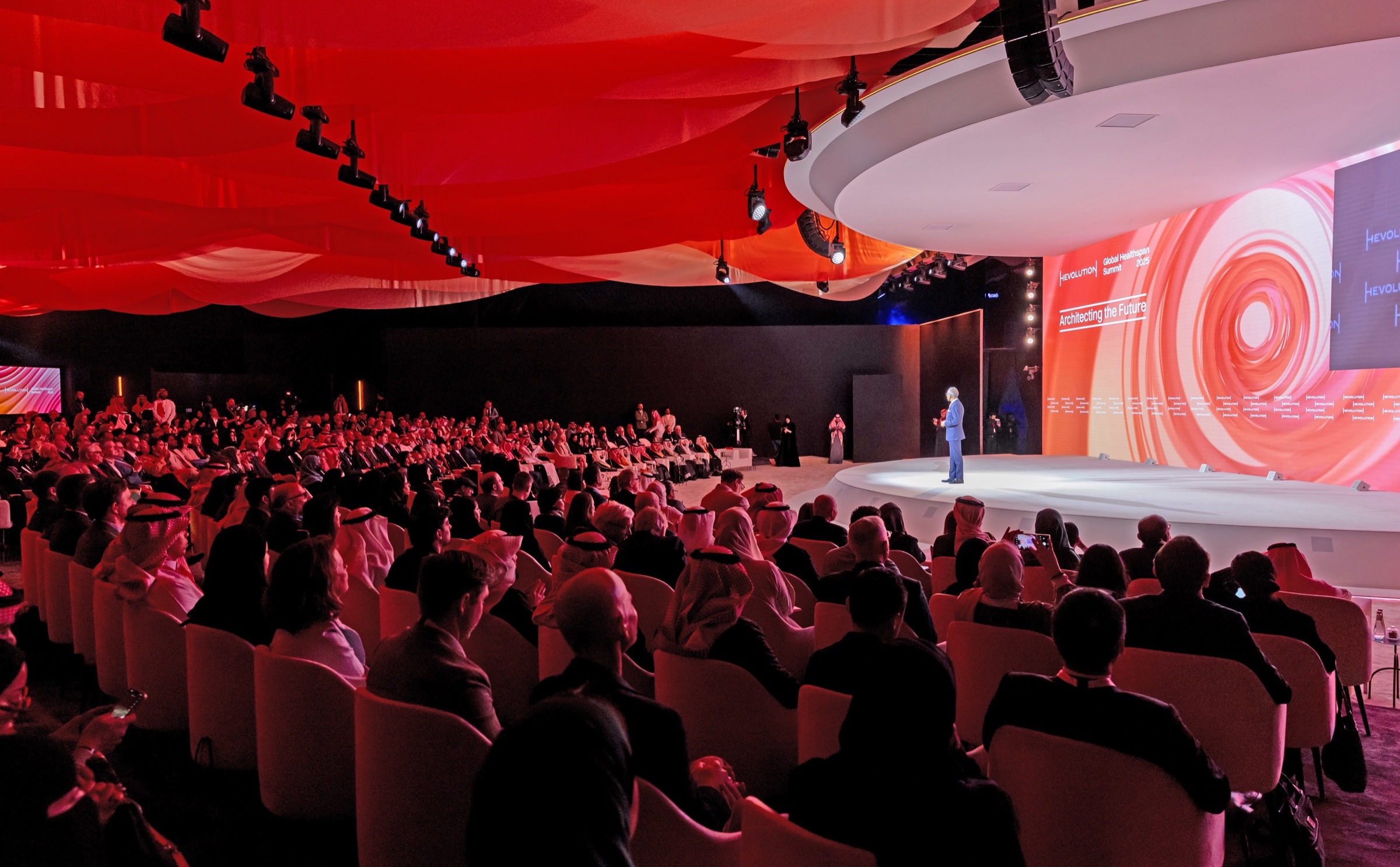
Established by Saudi Arabia as a global nonprofit dedicated to extending healthy human lifespan, Hevolution is working to address a critical gap in the healthspan ecosystem: translating scientific discovery into interventions that can benefit people.
As reported in Hevolution’s 2025 Global Healthspan Report, Saudi Arabia has allocated approximately $400 million through Hevolution to advance healthspan science. This has supported more than 230 research grants representing around 200 researchers worldwide, 25 strategic partnerships and four biotechnology companies progressing toward human clinical translation.
The Foundation’s commitment extends beyond this $400 million allocation. It includes five-year partnerships with Northwestern University and Albert Einstein College of Medicine, the XPRIZE Healthspan competition, and continued investments in U.S.-based biotechnology companies. Supported by Hevolution, the XPRIZE competition is advancing teams developing interventions aimed at restoring muscle, cognitive and immune function in older adults. Hevolution’s support for XPRIZE includes a $40 million contribution to the $101 million competition, making it its single-largest funding contribution to the initiative.
Together, these efforts reflect sustained engagement across research, innovation and translation, with the aim of accelerating progress from scientific discovery towards interventions that can ultimately benefit people.
But scientific progress will only fulfil its promise if its benefits can reach people beyond the wealthiest countries and markets.
That means access must be considered from the outset. Governments, industry, philanthropy and international institutions will need to work together on affordability, manufacturing capacity, technology transfer, regulatory alignment and health-system readiness. Because most of the world’s older population will live in low- and middle-income countries, this is essential to the healthspan agenda.
It also means recognising healthy ageing as a cross-government objective, not a niche scientific agenda. Decisions on research funding, prevention, workforce policy, regulation and investment will shape whether longer lives translate into healthier societies or longer periods of illness and dependency.
A political choice for the next generation
G7 and G20 governments have an opportunity to make healthy ageing an explicit part of national and international policy.
This can include dedicated strategies for geroscience and ageing biology, greater investment in translational research, stronger public-private partnerships, regulatory pathways and incentives that mobilise private capital. International cooperation can help ensure that breakthroughs are translated across borders rather than concentrated in a small number of markets.
The demographic transition will affect virtually every major area of government: healthcare, labour, pensions, education, innovation and economic growth.
Saudi Arabia is demonstrating how national ambition, biotechnology and scientific investment can come together around this objective.
Through Vision 2030, the National Biotechnology Strategy and Hevolution Foundation’s global mission, the Kingdom is helping build the foundations for a future in which longer lives can also be healthier lives.
The opportunity now is to make that ambition global.
Healthspan should not be a privilege of geography or income. It should become a shared objective of modern health and economic policy: a sovereign mandate, an investment in human capital and a foundation for more resilient societies.