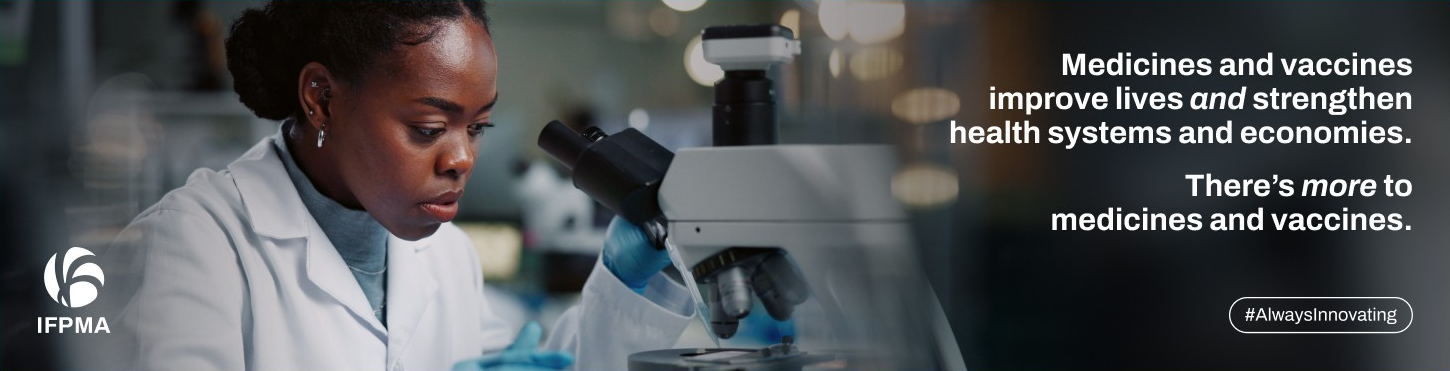



Governments around the world are confronting increasingly common challenges: how to drive economic growth, address demographic changes and productivity pressures, and how to strengthen national resilience. Investment in health is fundamental to achieving these goals, and medicines and vaccines are central to this effort.
We are at the cusp of the next golden age in medical discovery, where decades of R&D investment can unlock solutions to some of our biggest health demands. Governments should engage with the companies that are making these medicines and vaccines possible as strategic partners in order to unlock their benefits.
The return on investment will go far beyond delivering better population health. It will give healthcare systems the resilience to adapt; support economic growth through improved productivity; and provide greater health security from future shocks.
Better health
Over the past two decades, nearly 1,000 new medicines1 have been launched globally, transforming the treatment of diseases such as cancer and cardiovascular disease. Pharmaceutical innovation is estimated to have contributed to 70% of gains in life expectancy since the 1990s.2
The pace of innovation shows no signs of slowing. Today, over 12,700 medicines are in development, including over 9,600 medicines targeting non-communicable diseases (NCDs) and more than 1,000 immunotherapies that have the potential to transform cancer care.3
This matters because the global burden of chronic disease continues to rise. As NCDs place growing pressure on societies, economies and health systems, pharmaceutical innovation will be critical to preventing disease, delivering more effective treatments that help people live more productive, healthier lives for longer.
The cost of failing to invest will be worsening health outcomes and higher associated costs of economic inactivity – a challenge that all governments must confront.
Stronger healthcare systems
As populations age, healthcare systems face growing pressure from rising rates of chronic disease and increasingly complex patient needs. By 2030, 1 in 6 people in the world will be aged 60 years or over, while the number of people aged 80+ is expected to triple to 426 million by 2050.4
Healthcare systems need to adapt and pharmaceutical innovation will be a critical enabler of that transformation. The returns can be significant: every USD 1 invested in NCD prevention and control will generate USD 7 in return5, while adult immunisation programmes can generate returns of up to 19 times their initial investment.6 In lower- and middle-income countries, IFPMA’s analysis indicates that an additional 1% of GDP investment in total public healthcare expenditure can save up to 5 million lives each year.7
The benefits extend beyond budgets. Across OECD countries, employment rates of adults aged 50–64 fall by around 20% among those living with one chronic condition, and by 40% among those with two or more conditions.8 By helping people prevent, manage and delay disease, pharmaceutical innovation can strengthen healthcare systems resilience, support workforce participation and improve quality of life.
The latest medicines and vaccines give healthcare professionals the tools they need to treat people better, and reduce the burden on healthcare systems. Improving therapeutic approaches enables clinicians to intervene earlier, personalise treatment and improve patient outcomes.
Economic growth
Healthy populations are more productive populations. Healthy ageing enables people to remain active for longer, while poor health and chronic disease impose significant costs through higher healthcare spending and reduced workforce participation. Across G20 economies, preventable conditions are estimated to result in more than USD 1 trillion in lost productivity each year.9
The benefits of pharmaceutical innovation extend beyond improved health. The pharmaceutical sector is a major engine of innovation-led growth. It is one of the world’s most research-intensive industries, employing 7.8 million people worldwide, with more than 1 million dedicated to research and development (R&D). For every dollar of GDP generated directly by the sector, more than two additional dollars are created across the broader economy through supply chains and related activities.10
As governments compete for investment, talent and technological leadership, fostering life sciences innovation is a strategic economic imperative. Countries that support innovation and enable the conditions for it to thrive, including through the protection of intellectual property, will be best placed to attract high-value research, advanced manufacturing and the skilled jobs of the future.
Health security
Health security is another dividend. Recent analysis suggests that there is a 50% probability of a COVID-19-scale pandemic within the next 25 years.11 Medicines and vaccines were central to responding to the last pandemic, and will be just as critical to confronting the next shock.
Yet scientific breakthroughs cannot be produced on demand. They are the product of years of sustained investment in research and development, effective public-private collaboration, rapid sharing of scientific information across borders, and policy environments that enable innovation.
Preparedness begins long before the next emergency. Countries that value and invest in pharmaceutical innovation and foster access to medicines and vaccines will be better equipped to protect their populations.
Medicines and vaccines should be seen not only as healthcare products, but as strategic assets that underpin health security, economic resilience, and long-term prosperity. Countries that recognise this today will be better positioned to meet the challenges of tomorrow.
References
1. QVIA. Global trends in R&D 2024. https://www.iqvia.com/insights/the-iqviainstitute/reports-and-publications/reports/global-trends-in-r-and-d-2024-activity-productivity-and-enablers. 2. Pharmaceutical innovation and longevity growth in 30 developing and high-income countries, 2000–2009. https://www.sciencedirect.com/science/article/abs/pii/S2211883713000646. 3. Clarivate. Cortellis Competitive Intelligence. https://clarivate.com/products/biopharma/portfolio-strategy-business-development/competitive-intelligence-and-analytics/. 4. WHO. Ageing and Health. https://www.who.int/news-room/fact-sheets/detail/ageing-and-health. 5. WHO. Saving lives, spending less. The case for investing in non-communicable diseases. https://iris.who.int/server/api/core/bitstreams/ac85a63e-2a16-4eec-8ae8-147b9c686f8c/content. 6. OHE. Socio-economic value of adult immunization programmes. https://www.ohe.org/publications/the-socio-economic-value-of-adult-immunisation-programmes/. 7. Airfinity. Value of investment on non-communicable diseases: Impact on health outcomes in low- and middle-income countries. https://www.ifpma.org/publications/value-of-investment-on-ncds-impact-on-health-outcomes-in-low-and-middle-income-countries/. 8. OECD. Building Health, Productive Workforces for Our 21st Century. Paris. OECD Publishing. https://www.oecd.org/content/dam/oecd/en/topics/policy-sub-issues/ageing-and-long-term-care/Paper_OECD_GCOA_LTC.pdf. 9. International Longevity Centre. UK. A window of opportunity: Delivering prevention in an ageing world. https://ilcuk.org.uk/governments-urged-to-invest-at-least-6-of-health-budgets-in-prevention-as-g20-economies-lose-more-than-1-trillion-a-year-from-preventable-health-conditions/#:~:text=The%20report%20by%20ILC%2C%20the,%241.02%20trillion%20in%20lost%20productivity. WifOR Research Report. The economic impact of the global pharmaceutical industry. https://www.ifpma.org/publications/the-economic-impact-of-the-globalpharmaceutical-industry Center for Global Development. The next pandemic could come soon and be deadlier. https://www.cgdev.org/blog/the-next-pandemic-could-come-soon-and-be-deadlier. 10. WifOR Research Report. The economic impact of the global pharmaceutical industry. https://www.ifpma.org/publications/the-economic-impact-of-the-globalpharmaceutical-industry. 11. Center for Global Development. The next pandemic could come soon and be deadlier. https://www.cgdev.org/blog/the-next-pandemic-could-come-soon-and-be-deadlier