

Health is shaped by the social, economic, political and physical environments in which people live. Affordable housing, education, employment, public transportation, green space and health care all influence health outcomes and the distribution of health inequalities. Thus, political choices shape the conditions in which health is created or constrained.
Health inequalities are closely related to the distribution of income, power, resources and living conditions. Health policy therefore extends beyond hospitals and medical services to include housing, education, employment, mobility, environmental protection and urban development. The 1986 Ottawa Charter for Health Promotion similarly emphasises the importance of healthy public policy and supportive environments.
For approximately a century, Vienna has developed a model of social policy that includes housing, infrastructure, public services and urban development as components of social welfare. Its origins lie in ‘Red Vienna’ in the 1920s and ’30s, when extensive investment in municipal housing, sanitation, education and public infrastructure sought to address overcrowding, poverty and poor living conditions. Urban policy functioned as a form of long-term public health policy.
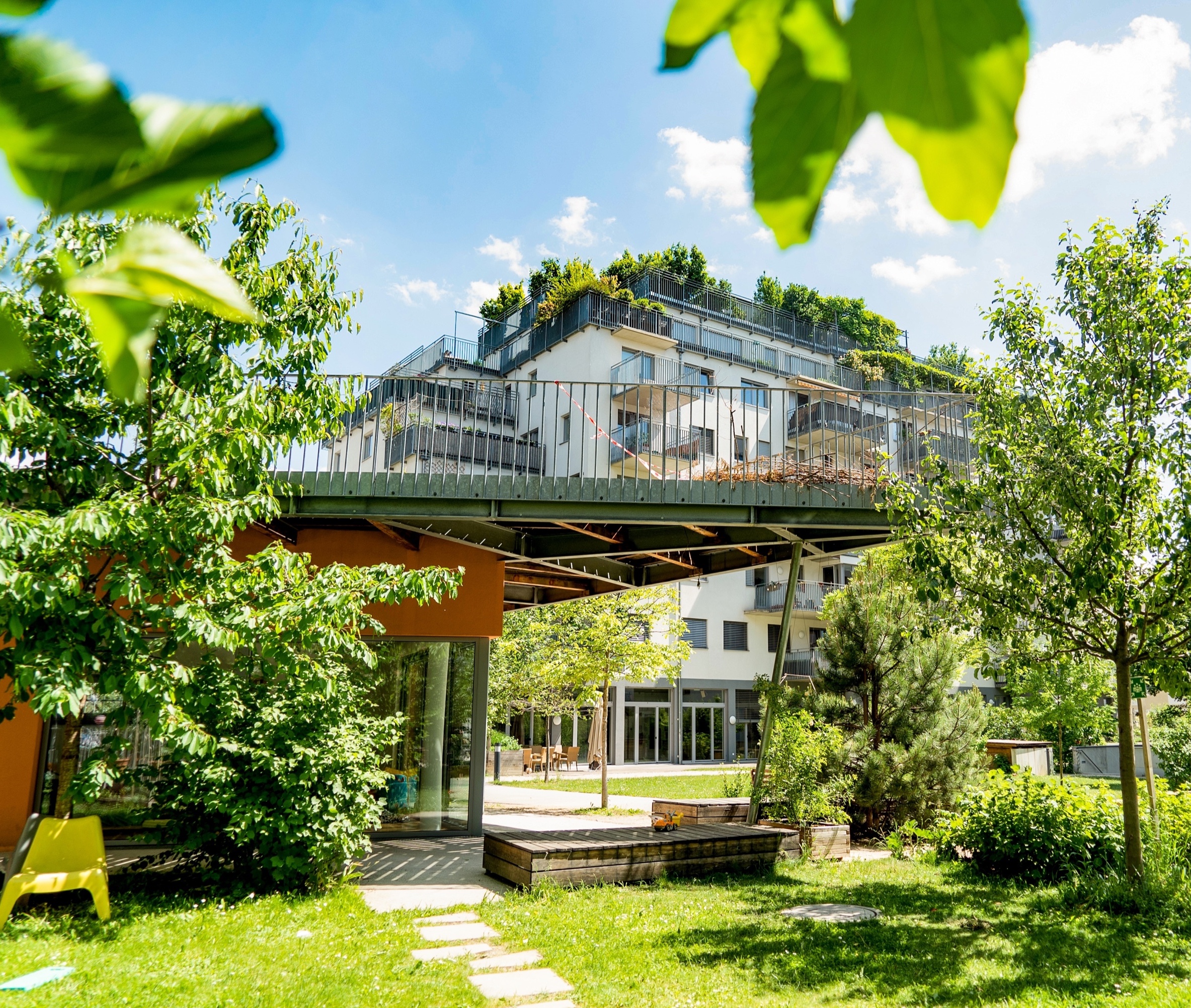
Vienna’s extensive system of municipal and subsidised housing protects a substantial proportion of residents from housing-market volatility. Housing provides not only physical shelter but also security, stability and access to social networks and services. These conditions affect both physical and mental health. Investment in affordable housing should thus be understood not merely as social expenditure but also as an investment in population health.
Designing health into the city
Vienna’s contemporary urban development projects extend this principle to entire neighbourhoods. Aspern Seestadt combines housing, employment, education, public transport, green space and public amenities. Its lake, parks, promenades and pedestrian-oriented spaces are integral elements. By integrating everyday destinations and reducing dependence on private cars, it illustrates how urban design can simultaneously support physical activity, social interaction, mobility and environmental resilience.
Similarly, the redevelopment of Nordwestbahnhof, a former railway site, is being transformed into a mixed-use district with thousands of homes, employment opportunities, public spaces and green infrastructure. It reconnects previously separated parts of the city, creates a socially mixed neighbourhood and produces additional housing. Decisions about land use consequently become decisions about access to health-promoting resources such as housing, mobility, recreation and environmental quality.
The RothNEUsiedl development, as a climate-oriented neighbourhood, combines housing, employment, mobility and extensive green infrastructure. Its ‘Green Ring’ and principle of short distances illustrate how climate adaptation and public health can be addressed through the same urban framework.
These projects demonstrate that healthy urban development increasingly depends on integrating social, environmental and spatial objectives rather than treating them as separate policy fields.
This connection has become particularly visible in Vienna’s response to climate change. The Raus aus dem Asphalt programme transforms streets and squares by removing sealed surfaces, planting new trees and providing shade, water elements and additional opportunities for social use. By 2025, 344 projects had been implemented, were under construction or planned, generating approximately 85,500 square metres of new greenery and more than 3,300 new trees.
Every square metre allocated to parking or vehicle movement is one that cannot simultaneously provide shade, vegetation, recreation, stormwater retention or space for social interaction. The question is therefore not whether cities should become greener, but how scarce urban space should be distributed among competing interests.
If development is assessed according to people’s capabilities to live lives they value rather than focusing on economic growth, then adequate housing, education, health care, mobility and safe public environments expand those capabilities. Urban policy can therefore either increase or restrict the substantive freedoms available to residents.
Investing in healthier living environments
This perspective is increasingly important as European societies face ageing populations, rising healthcare expenditure and pressure on public budgets. Hospitals will remain indispensable. But better housing, active mobility, green space, climate adaptation and preventive services may reduce avoidable illness and help people remain independent longer. Investment in healthier living environments complements – not substitutes for – healthcare investment.
The electoral success of Elke Kahr in Graz and New York’s Zohran Mamdani, who both prioritise affordable housing and public intervention, suggests that voters increasingly consider housing, public services and the urban environment questions of social security and quality of life rather than solely as market issues.
This leads to a fundamental question: Should health, housing, education and essential public services be treated as commodities, or social rights and public goods? When access to essential services depends predominantly on purchasing power, socioeconomic inequalities likely translate into health inequalities. Public policy can reduce the extent to which income determines exposure to health risks and access to health-promoting environments.
Vienna’s experience demonstrates that the healthy city is not produced by the healthcare system alone. It emerges from the cumulative effects of housing policy, urban planning, transportation, environmental policy, social protection and public investment. Vienna’s historical housing model and contemporary climate-adaptive developments show how social and urban policy can function as long-term health policy.
The conditions in which health is created are political. Governments cannot guarantee individual health, but they can influence access to secure housing, education, mobility, green space, social protection and safe public environments. As cities confront ageing, climate change, inequality and rising costs, society must decide what kind of cities it chooses to build and for whom. Investment in social and urban infrastructure is thus an investment in health, resilience and human capability.