

By Anika Rao
India produces roughly one-twelfth of the world's fish. That scale places the sector well beyond the bounds of a domestic agriculture story and into the core of debates on food security, trade standards, coastal resilience and marine governance. For G20 governments, India's fisheries trajectory matters because it will shape how a major developing economy balances production growth, export ambition and resource sustainability at the same time.
This is also a test case for multilateral policy. India's fisheries sector sits at the intersection of climate adaptation, rural employment, public health, supply-chain traceability and ocean stewardship. The wider case for treating marine systems as part of the solution to shared development pressures is already clear in debates on how the ocean can help solve global challenges. India brings that agenda into practical focus because scale makes every policy choice consequential.
The central question is not whether India can expand fisheries output. It is whether institutions, incentives and international cooperation can keep pace with that expansion. For international partners, the most useful contribution is not generic blue economy rhetoric. It is targeted support on data systems, sustainability standards, cold-chain infrastructure, stock management, and fair market access for small-scale producers.
Table of Contents
- India's Ascendance as a Global Fisheries Power
- Profiling the Three Pillars of Indian Fisheries
- The Socio-Economic Backbone of Coastal and Rural India
- Navigating the Complex Web of Fisheries Governance
- Balancing Growth with Ecological and Market Realities
- Charting a Course for a Sustainable and Equitable Future
- A Call to Action for Global Partnership on India's Blue Economy
India's Ascendance as a Global Fisheries Power
Nearly one in every twelve fish produced globally now comes from India. As noted earlier, the country ranks as the world's second-largest fish producer, a scale that places its fisheries sector firmly within the G20 policy agenda rather than at the margins of it.
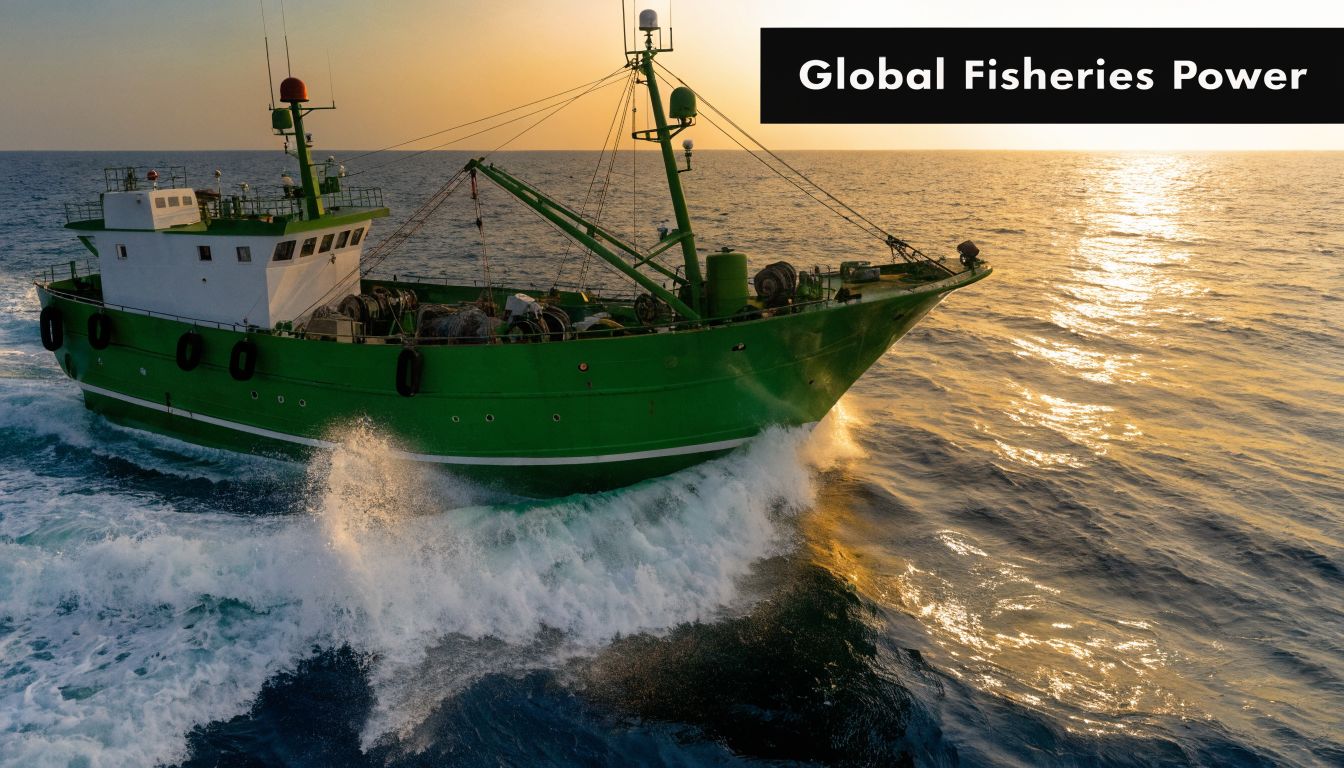
The more consequential shift, however, is structural. Indian fish production is now driven primarily by inland fisheries and aquaculture rather than by marine capture alone. That changes the policy mix. It shifts attention from vessels and coastal landings toward water governance, feed systems, cold chains, disease control, input quality, and the regulation of dispersed production across states.
For G20 delegates, this matters for three reasons. First, India's production profile increasingly links fisheries to food systems, rural development, and freshwater management, not only to ocean policy. Second, a sector of this size can shape market norms on traceability, residue compliance, and sustainability assurance. Third, India's domestic policy choices now carry cross-border effects through seafood trade, technology demand, and the terms on which small producers are integrated into formal value chains.
Three policy tensions define India's rise as a fisheries power:
- Output growth and ecological limits. Higher production can strengthen food supply and export earnings, but weak controls on stocking density, water use, habitat pressure, or coastal effort can raise long-run risks.
- Livelihood protection and market formalisation. Modern value chains reward consistency, certification, and traceability. Without targeted support, those gains can bypass small-scale fishers and fish farmers.
- National development goals and international standards. India must serve domestic nutrition and employment priorities while meeting stricter import requirements in major overseas markets.
At this scale, governance quality affects competitiveness as much as production volume.
That is why fishery in India should be understood as part of a wider multilateral agenda on food security, climate resilience, trade governance, and blue economy finance. The case for treating oceans and aquatic food systems as a core development issue is set out clearly in analysis on how the ocean can help solve global challenges. India is one of the clearest examples of why that argument now carries operational weight for the G20.
The strategic takeaway is straightforward. India's ascent brings influence, but it also increases exposure to regulatory failure. If traceability remains uneven, if environmental stress outpaces management, or if public investment does not keep pace with structural change, the costs will show up in export access, producer incomes, and resource stability.
This creates a practical opening for multilateral cooperation. International partners can add value through better fisheries data systems, interoperable standards, climate-resilient infrastructure, aquatic animal health cooperation, and financing models that include small producers instead of displacing them. For G20 economies looking for actionable blue economy partnerships, India's fisheries sector is no longer a national case study. It is a test case for whether growth, sustainability, and inclusion can be aligned at scale.
Profiling the Three Pillars of Indian Fisheries
The phrase fishery in india often gets used as if it describes a single sector. It doesn't. Policymakers need to think in terms of three distinct pillars that operate under different ecological conditions, involve different communities, and require different regulatory responses.
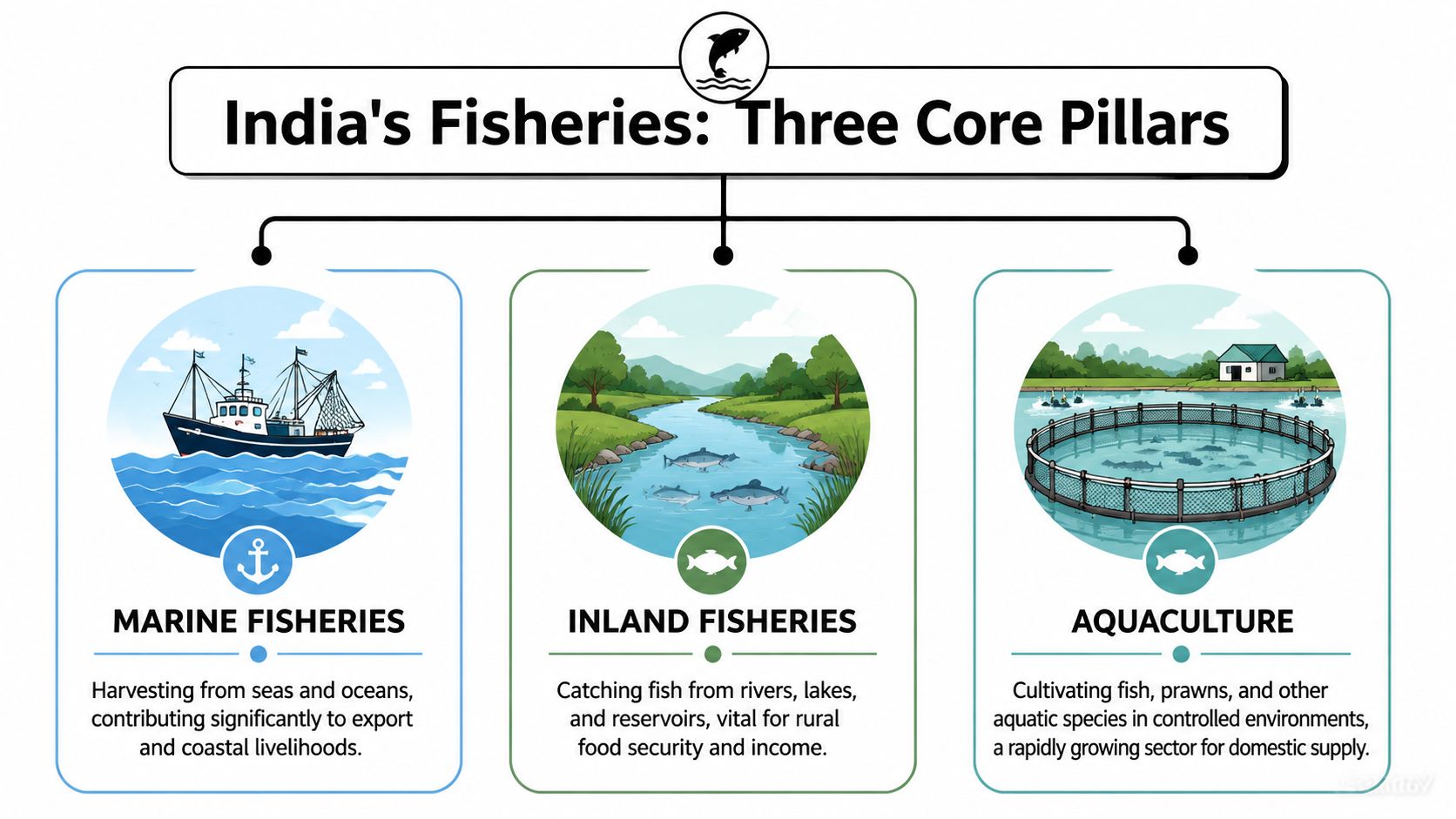
Marine fisheries
Marine fisheries are the most visible part of the sector internationally because they connect directly to coastal economies, ports and seafood exports. They operate in sea-based environments where resource management is tied to seasonal patterns, vessel regulation, landing infrastructure and coastal ecosystem health.
This pillar is where many of the classic fisheries governance problems appear first. Competition over nearshore resources, weak monitoring capacity, habitat stress and fragmented enforcement all matter here. Marine fisheries also carry a diplomatic dimension because trade standards, import checks and sustainability expectations often focus most heavily on export-oriented marine products.
A simple policy error is to assume marine fisheries define the whole sector. They don't. They are strategically important, but they're no longer the dominant production base.
Inland fisheries
Inland fisheries are frequently under-analysed in international debates, even though they matter greatly for rural incomes and local nutrition. They operate across rivers, reservoirs, lakes, wetlands and other inland water bodies, often in settings where administration is shared across multiple layers of government.
Their development logic differs from marine fisheries in two ways. First, inland systems are closely tied to local resource governance and community use patterns. Second, they often serve domestic consumption and local markets rather than the premium export channels that shape coastal policy debates.
Inland fisheries rarely dominate trade headlines, but they often determine whether fisheries policy reaches poorer households.
From a development perspective, that makes inland fisheries central to inclusion. They connect the sector to rural policy, water governance and local employment in ways that a marine-only lens misses.
Aquaculture
Aquaculture is the sector's growth engine. It covers the cultivation of fish, prawns and other aquatic species in more controlled settings and has become the defining feature of India's fisheries transition.
That matters because aquaculture changes the state's role. Wild-catch fisheries depend heavily on resource stewardship and access regulation. Aquaculture also requires attention to seed quality, feed, water use, disease management, input standards, extension services, traceability and market integration.
Here is the key distinction:
| Pillar | Core setting | Main policy concern |
|---|---|---|
| Marine fisheries | Seas and coasts | Resource pressure, enforcement, export compliance |
| Inland fisheries | Rivers, lakes, reservoirs | Local governance, rural access, food security |
| Aquaculture | Farmed production systems | Biosecurity, quality control, market standards |
India's current production profile shows why this framing matters. A fisheries strategy that over-invests in marine regulation while under-investing in inland systems and aquaculture governance will miss where most production now sits. Conversely, a strategy that pushes aquaculture output without credible safeguards will create downstream problems in trade and sustainability.
For G20 delegates, the lesson is practical. International cooperation on fisheries must differentiate between sub-sectors. The tools that help a coastal landing site won't necessarily help a shrimp farm. The standards that shape aquaculture exports won't necessarily solve inland governance failures. Treating all three as one policy category leads to weak design and poorer outcomes.
The Socio-Economic Backbone of Coastal and Rural India
Roughly 28 to 30 million people depend on India's fisheries sector, which contributes about 1.07% of national GDP, according to the Handbook on Fisheries Statistics referenced by Rural India Online. For G20 policymakers, that places fisheries in a category far larger than a niche coastal industry. It is a large employment system, a food system, and a source of export earnings with direct implications for social stability in poorer regions.
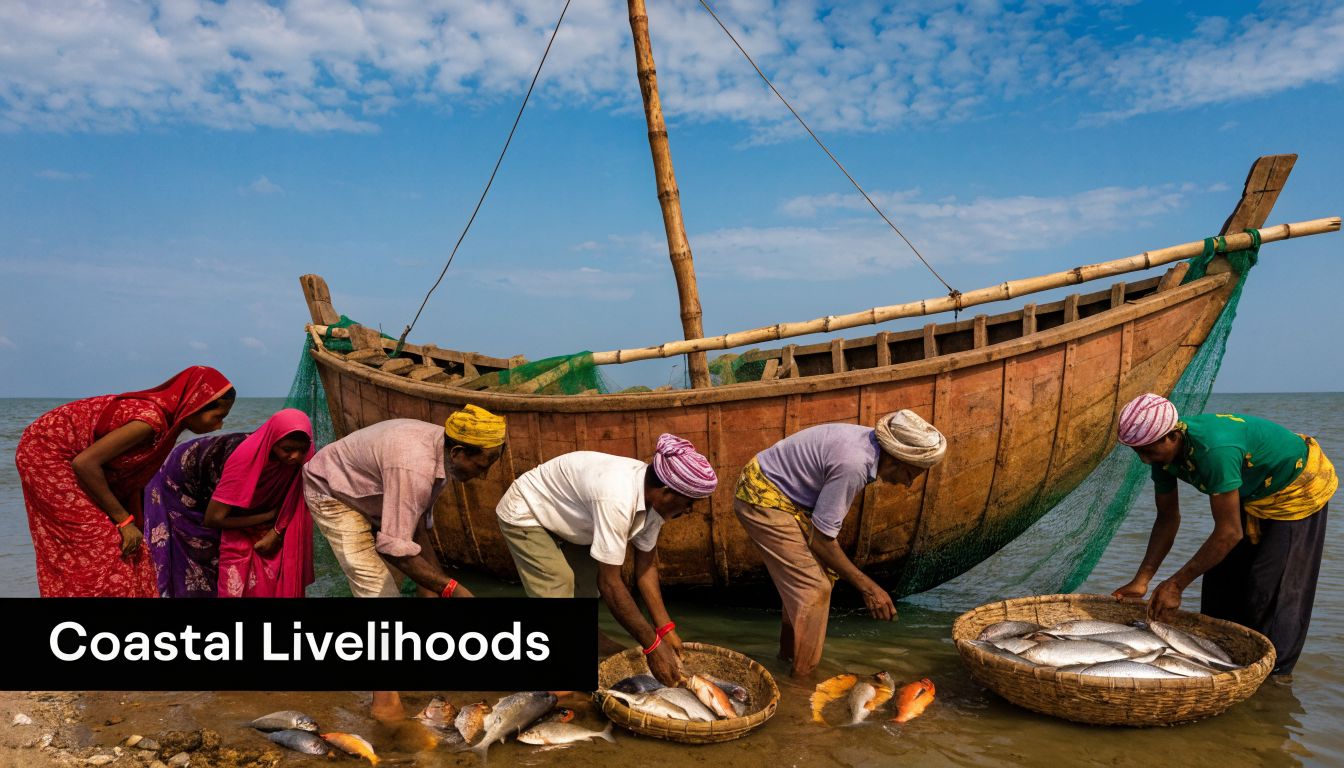
Its social footprint is also wider than many external observers assume. Fisher populations are heavily concentrated not only in coastal states but also in inland states such as Bihar, Uttar Pradesh, West Bengal and Assam, as noted earlier. That matters for international cooperation. A fisheries agenda framed only around ports, marine enforcement and seafood exports will overlook a large share of the households whose welfare depends on inland waters, local markets and small-scale value chains.
The labour profile sharpens that point. Women account for a substantial share of the sector's workforce, with a strong presence in sorting, drying, processing, vending and other post-harvest activities. Marine employment is also differentiated between full-time and part-time workers. Policy design needs to reflect that diversity. A fuel subsidy, a landing-centre upgrade, a sanitation intervention in a fish market, and a credit product for women traders do not reach the same groups or solve the same problem.
Trade exposure raises the stakes. India's fisheries exports reached 1.78 million metric tonnes valued at Rs. 60,523.89 crores, while public investment since 2014-15 exceeded Rs. 38,572 crore, as noted earlier in the same statistical source. Those figures show why the sector sits at the intersection of livelihoods and external competitiveness. They also show why disruption travels quickly. A disease event in aquaculture, a food safety compliance failure, or a sharp regulatory restriction can move from a local production shock to a national export concern and then to a household income crisis.
This is a distributional policy challenge as much as a production challenge.
For development institutions and G20 governments, three implications follow:
- Protect labour-intensive segments of the value chain. Post-harvest activities support large numbers of women and informal workers, yet these functions often receive less policy attention than capture or farm output.
- Target support by geography and production system. Inland fishing communities, reservoir fisheries, coastal artisanal fleets and export-oriented aquaculture clusters face different risks and require different instruments.
- Connect trade policy with social protection and standards upgrading. Export compliance affects incomes on the ground. Households and small enterprises need support to meet requirements rather than absorb the cost alone.
A short documentary on fishing communities in India offers a useful field-level perspective on these pressures and adaptations: watch the video on YouTube.
For multilateral partners, the practical lesson is clear. Fisheries cooperation with India should combine market access, decent work, local infrastructure, and resource stewardship within a single programme logic. That approach aligns with wider debates on collective action to protect fisheries and oceans. It also reflects the political economy of reform. Measures that improve sustainability are more likely to hold when they also protect incomes, reduce exclusion, and spread adjustment costs fairly across the chain.
Navigating the Complex Web of Fisheries Governance
Fisheries governance in India is not controlled by a single authority acting through a single rulebook. It is a layered system spread across central ministries, state departments, local institutions, enforcement agencies and market regulators. That complexity is not incidental. It shapes outcomes.
A system spread across many authorities
At the national level, the central government sets broad policy direction, allocates budgetary support and drives flagship reform schemes. National initiatives can create momentum, especially where they support infrastructure, technology adoption, value-chain upgrading and formalisation.
States then sit at the operational centre. They manage much of the day-to-day regulatory and administrative reality, including licensing frameworks, local fisheries administration, landing centres, inland water access and enforcement capacity. In practice, the quality of implementation often depends on state capability rather than national ambition.
Local bodies and community institutions matter too. In many fisheries contexts, especially inland and nearshore, rules only work when local actors recognise them as legitimate and practical. Where that link is weak, formal regulations often exist on paper but don't shape behaviour consistently.
Why implementation remains uneven
Three governance problems recur.
First, jurisdiction is fragmented. Marine, inland and aquaculture systems each create different regulatory demands. A rule designed for one sub-sector can produce limited effect, or even unintended harm, in another.
Second, enforcement capacity varies sharply. Rules around licensing, biosecurity, landing practices, quality assurance and environmental compliance depend on frontline institutions that are often uneven in staffing, equipment and technical expertise.
Third, policy incentives are mixed. Governments want production growth, export earnings, rural employment and sustainability at the same time. Those goals can complement each other, but they can also pull in different directions in the short term.
A useful way to read India's fisheries governance is through the distinction below:
| Governance layer | Main role | Typical constraint |
|---|---|---|
| Central government | Strategy, finance, national schemes | Distance from local realities |
| State governments | Regulation and implementation | Uneven capacity and coordination |
| Local institutions | Compliance and community legitimacy | Limited authority or resources |
Governance test: If a fisheries reform cannot be implemented by state and local institutions, it isn't yet a reform. It is only a policy statement.
That is why international partners should resist the temptation to focus only on national frameworks. Multilateral cooperation becomes effective when it strengthens the interfaces between levels of government, not just the top layer. This is particularly relevant to discussions on collective action to protect fisheries and oceans, where coordination failures often matter as much as funding gaps.
A senior policy lesson follows. India's governance challenge isn't whether it has enough fisheries policy. It is whether policy is sufficiently joined-up across ecological systems, jurisdictions and market requirements. That is a harder task than announcing new schemes, but it is the task that will determine long-term credibility.
Balancing Growth with Ecological and Market Realities
A fifth of shrimp consignments rejected at the border can wipe out the commercial gains implied by export growth. For India, that is the policy signal. Fisheries performance can no longer be judged by production and export volumes alone. Ecological management, food safety and traceability now shape whether growth is durable.
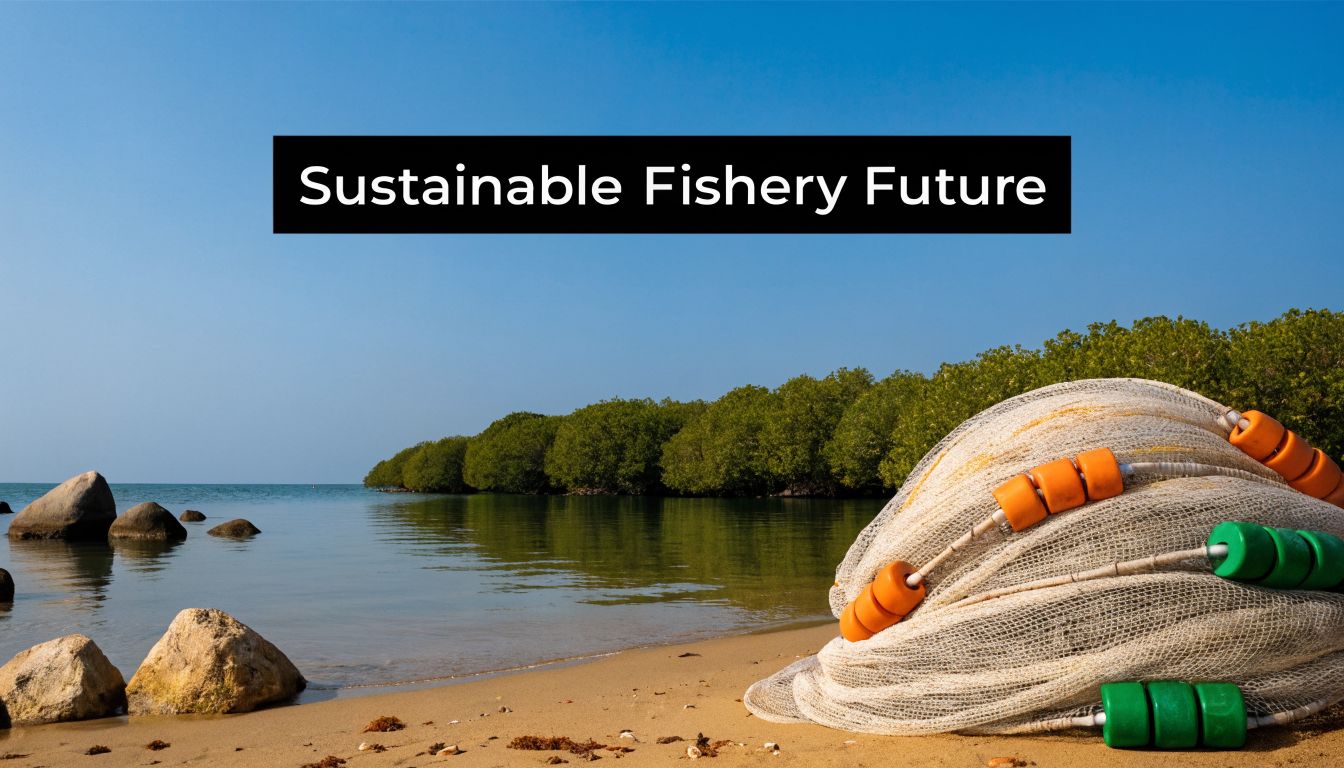
Sustainability now shapes competitiveness
Marine stress, habitat degradation, weak input oversight and inconsistent traceability do not stay local. They move through value chains and appear in laboratory tests, audit failures and border inspections. In higher-value markets, regulators and buyers increasingly treat sustainability and product integrity as linked questions.
That changes the strategic calculation for the fishery in India.
A growth model centred only on higher volumes looks less secure once importing countries tighten residue checks or demand stronger proof of origin and production practices. Export exposure then becomes a transmission channel through which domestic regulatory weaknesses turn into commercial losses. For G20 economies, this is a familiar pattern. Environmental underinvestment often surfaces first as a trade problem.
The UK example matters beyond bilateral trade
A concrete case illustrates the point. According to the PMF IAS analysis cited in the verified data, UK seafood imports from India reached £129 million in 2022. The same source notes that the UK rejected 20% of Indian shrimp shipments in late 2023 due to antibiotic residues.
The significance goes beyond one bilateral relationship.
First, demand does not guarantee market access. Trade can remain commercially attractive while sanitary controls, residue standards and documentation requirements exclude suppliers that lack testing and compliance capacity.
Second, standards rarely affect all firms equally. Larger exporters are usually better placed to absorb certification costs, maintain audit systems and correct shipment failures. Smaller producers face a sharper penalty, even when the original compliance problem began upstream in hatcheries, feed supply or farm-level input use.
Growth without credible quality assurance is unstable growth.
The UK case also matters for multilateral policy because it shows how trade governance is changing. Fisheries exporters now compete not only on price and volume, but on the credibility of their control systems. For India, this places domestic regulation and export strategy in the same policy frame. For G20 partners, it creates a practical agenda for cooperation on testing, equivalence, surveillance and traceability support.
The policy challenge beneath the trade signal
The central task is to build high-trust growth. That means production systems, residue monitoring, cold-chain integrity and traceability must be strong enough to protect both ecosystems and market access. Export promotion without those foundations increases risk across the value chain.
Several implications follow for G20 policymakers and development partners:
- Standards cooperation is economic inclusion policy. If compliance systems only work for large firms, trade upgrading will concentrate gains and exclude smaller producers.
- Sustainability commitments need operational tools. Producers and regulators need workable pathways on testing, input control, chain-of-custody systems and verification, not broad language alone.
- Trade resilience depends on upstream reform. Border rejections often originate much earlier, in hatchery practices, feed contamination, veterinary misuse, landing hygiene, storage failures or fragmented inspection systems.
- Multilateral action can lower adjustment costs. Shared laboratory methods, technical assistance and better recognition of control systems can reduce frictions while raising standards.
The wider conclusion is clear. Ecological stress and weak quality control do not only damage fish stocks and coastal habitats. They also narrow India's room for manoeuvre in export markets and weaken the resilience of smaller participants in the sector. For a country of India's scale, sustainability is now a competitiveness issue and a G20 cooperation issue.
Charting a Course for a Sustainable and Equitable Future
India now has enough scale in fisheries that incremental fixes won't be sufficient. The next phase requires a more disciplined policy architecture. Domestic reform remains essential, but it won't be enough on its own. International standards, market access regimes, climate pressures and technology gaps all have cross-border dimensions.
Three priorities for domestic reform
The first priority is institutional coherence. Fisheries policy needs stronger alignment across marine management, inland systems, aquaculture regulation, export control and livelihood support. Fragmented administration produces fragmented outcomes.
The second is compliance capacity for small and medium producers. If regulatory upgrading only works for the largest firms, the sector will become less inclusive. Public policy should therefore focus not only on setting standards, but on helping producers meet them through extension services, testing infrastructure, better input oversight and traceability support.
The third is socially anchored sustainability. Conservation rules that ignore income realities often fail in practice. But support measures that ignore ecological limits are equally self-defeating. The credible path is a just transition approach that protects resource health while cushioning vulnerable communities during adjustment.
A practical domestic agenda would include:
- Improve farm-to-market traceability so export compliance isn't left to final-stage processors alone.
- Strengthen water, feed and input oversight in aquaculture, where quality failures can quickly become trade failures.
- Target support for smaller operators so standards don't become a mechanism for exclusion.
- Integrate livelihood policy with regulation through training, financial support and transitional assistance where rules tighten.
What multilateral partners should do
The G20 and development institutions can make a real difference here. The most useful international role is not broad endorsement of the blue economy. It is targeted cooperation on the bottlenecks that national systems struggle to solve alone.
The agenda should focus on four areas.
Technology transfer matters because sustainable aquaculture and credible monitoring depend on production and assurance systems that many smaller operators cannot access independently.
Climate-resilient fisheries research matters because changing water conditions, coastal stress and ecosystem shifts are already altering risk profiles, even where the evidence in day-to-day policy remains unevenly integrated.
Standards harmonisation matters because exporters face growing complexity across markets. Better alignment, or at least better translation between regimes, would reduce unnecessary friction without diluting safeguards.
Finance for a just transition matters because compliance upgrades, cold-chain improvements, testing systems and local monitoring all require sustained capital and technical assistance.
International cooperation works best when it lowers the cost of compliance for legitimate producers rather than simply raising the cost of failure.
A workable G20 compact on fisheries would therefore treat India and similar economies not as passive recipients of sustainability rules, but as co-designers of practical solutions. That means shared work on certification pathways, digital traceability tools, residue management, port and inspection systems, and community-sensitive transition support.
The larger policy argument is simple. Fisheries can't be governed effectively through siloed summit tracks. Trade ministers, agriculture ministries, development banks, standards bodies and climate negotiators all influence outcomes. A multilateral strategy that joins those dots would do far more for the fishery in India than another round of generic declarations about ocean stewardship.
A Call to Action for Global Partnership on India's Blue Economy
India's fisheries sector now sits at the convergence of four strategic priorities: food security, livelihood protection, trade credibility and ocean sustainability. That combination makes it consequential far beyond India's coastline and inland waters.
For G20 leaders, the central insight is this. India's fisheries rise is a global asset, but it is also a governance test. If one of the world's largest producers can build a path that is productive, inclusive and ecologically credible, that model will carry significance for other developing economies facing the same pressures. If it cannot, the costs will also travel across borders through disrupted trade, stressed ecosystems and greater insecurity for vulnerable communities.
The policy agenda is no longer obscure.
- National governments need to align production incentives with stronger standards and enforcement.
- International partners need to support technology access, testing systems and transition finance.
- Trade frameworks need to recognise that compliance capacity is uneven and often weakest where livelihoods are most exposed.
- Multilateral forums need to stop treating fisheries as a marginal issue and place them within mainstream economic and development diplomacy.
That final point matters most. Fisheries are often discussed as if they belong only to environment ministries. They don't. They belong equally to ministries responsible for trade, rural development, food systems, women's economic participation, coastal infrastructure and international cooperation.
A resilient blue economy isn't built by conservation rhetoric alone. It is built by institutions that help producers, workers and ecosystems endure together.
This is why G20 engagement should move beyond broad endorsement of sustainable fisheries and towards implementation coalitions. India's scale gives that effort both urgency and opportunity. The right partnerships could help turn market pressure into productive reform, channel public investment towards higher-trust value chains, and ensure that smaller fishing and farming communities aren't left to absorb the costs of transition alone.
The wider case for doing so is consistent with the need to keep investments aligned with ocean health. In practice, that means making fisheries part of how the international system thinks about resilience, development and shared prosperity.
A serious G20 fisheries agenda should therefore back three commitments. Support sustainable production. Expand inclusive compliance capacity. Build fairer pathways into global markets. Anything less will leave one of the world's most important fisheries economies carrying global expectations without the global partnership required to meet them.
Global Governance Media brings decision-makers, analysts and institutions into the same conversation on the issues that shape effective multilateral action. If you want more evidence-led briefings on fisheries, ocean governance, trade and the wider G20 agenda, follow Global Governance Media.