

By Dr Eleanor Markham, Senior Policy Analyst
The most expensive part of drought isn't always the lack of rain. It's the delay in decision-making that turns a manageable shortage into a fiscal, political and ecological crisis. For G20 governments, that is the counterintuitive but increasingly practical lesson from countries that have treated drought as a governance problem rather than a seasonal misfortune.
That distinction matters in advanced economies as much as in drought-prone low and middle income countries. In England, drought preparedness already sits inside a formal national architecture: the Environment Agency was established by the Environment Act 1995 and became operational on 1 April 1996, creating a single national regulator for environmental protection in England, including water-resources oversight central to drought readiness, as outlined in this institutional note on drought governance. The wider planning system requires all 17 large water and sewerage companies in England to publish Water Resource Management Plans, revised on a five-year cycle, using a 25-year outlook and often testing resilience against one-in-200-year drought scenarios, according to the same UK drought governance reference.
That's why the key question for ministers isn't whether a national drought management authority is relevant. It's whether existing institutions can integrate warning, planning, finance and political accountability fast enough to keep climate stress from becoming economic insecurity. The policy debate on resilience increasingly turns on exactly that issue, as argued in this G20-focused analysis on turning data into decisive action.
Table of Contents
- Introduction From Inevitable Crisis to Manageable Risk
- Defining the Modern Drought Management Authority
- The Four Pillars of a Resilient NDMA Framework
- Governance Models and Legal Mandates
- Lessons from Kenya's NDMA A Global Case Study
- Data Metrics and Financing for Effective Action
- Conclusion Actionable Recommendations for G7 and G20 Leaders
Introduction From Inevitable Crisis to Manageable Risk
Drought is no longer a sectoral environmental issue. For G20 governments, it is a test of economic security, fiscal discipline and state capacity under climate stress.
A rainfall deficit starts as a meteorological event, but losses in output, household welfare and public confidence are shaped by institutions. The decisive variables are whether governments can detect risk early, trigger action across agencies, and protect critical systems before shortages become politically and economically disruptive. That is why a National Drought Management Authority should be treated as part of national resilience architecture, alongside energy security, public health preparedness and financial stability planning.
This matters as much in advanced economies as in arid and semi-arid states. The policy question is no longer whether drought belongs on the core economic agenda. The question is whether existing institutions can convert early signals into preventive action at the speed required by a warmer, more volatile climate. The wider G20 debate on turning early warning into decisive disaster resilience action points in the same direction.
The UK illustrates the governance problem clearly. Drought risk now sits at the intersection of water regulation, infrastructure planning, agricultural resilience, environmental protection and crisis coordination. In practice, governments must manage demand restraint, leakage reduction, temporary use restrictions, water transfers, abstraction controls and public communication in a coherent sequence. If those functions remain fragmented, ministers inherit a crisis that could have been contained months earlier.
The deeper lesson comes from the Global South. Kenya's experience showed that drought becomes catastrophic when early warning, local planning, finance and political authority sit in separate compartments. Its institutional response matters beyond East Africa because it treated drought as a recurring governance problem rather than an occasional humanitarian shock. That is the strategic insight many developed countries still lack.
For G20 ministers, the implication is straightforward. A drought authority is not merely an administrative reform for dry regions. It is a standing mechanism for protecting food systems, water-dependent industry, energy reliability, municipal finance and social stability against a class of climate risks that is spreading into places that long assumed abundance.
Drought becomes economically dangerous when governments respond to visible scarcity instead of escalating risk.
That distinction is particularly important in countries such as the UK, where hydrological stress often lags behind rainfall deficits. Reservoir levels, river flows, groundwater recharge and ecological constraints can deteriorate on different timelines, especially in heavily stressed catchments and chalk aquifer systems. Ministers therefore need institutions that integrate meteorological monitoring with regulatory decision-making, utility operations and contingency finance. Without that integration, warning exists but action does not.
The shift from inevitable crisis to manageable risk begins with governance. It requires a permanent authority, or a functional equivalent across existing institutions, that can translate fragmented technical evidence into coordinated decisions before the emergency is obvious to markets, the media and the public.
Defining the Modern Drought Management Authority
A modern National Drought Management Authority is economic security infrastructure. Its purpose is to reduce drought losses before they cascade through food markets, water services, energy systems, public budgets and regional politics. For G20 governments, that makes the institution relevant well beyond traditionally arid regions.
A capable authority manages the full risk cycle: surveillance, preparedness, pre-agreed triggers, coordinated response and recovery. The institutional test is simple. Can government convert early signals into timely decisions across sectors with different incentives, data systems and legal mandates?
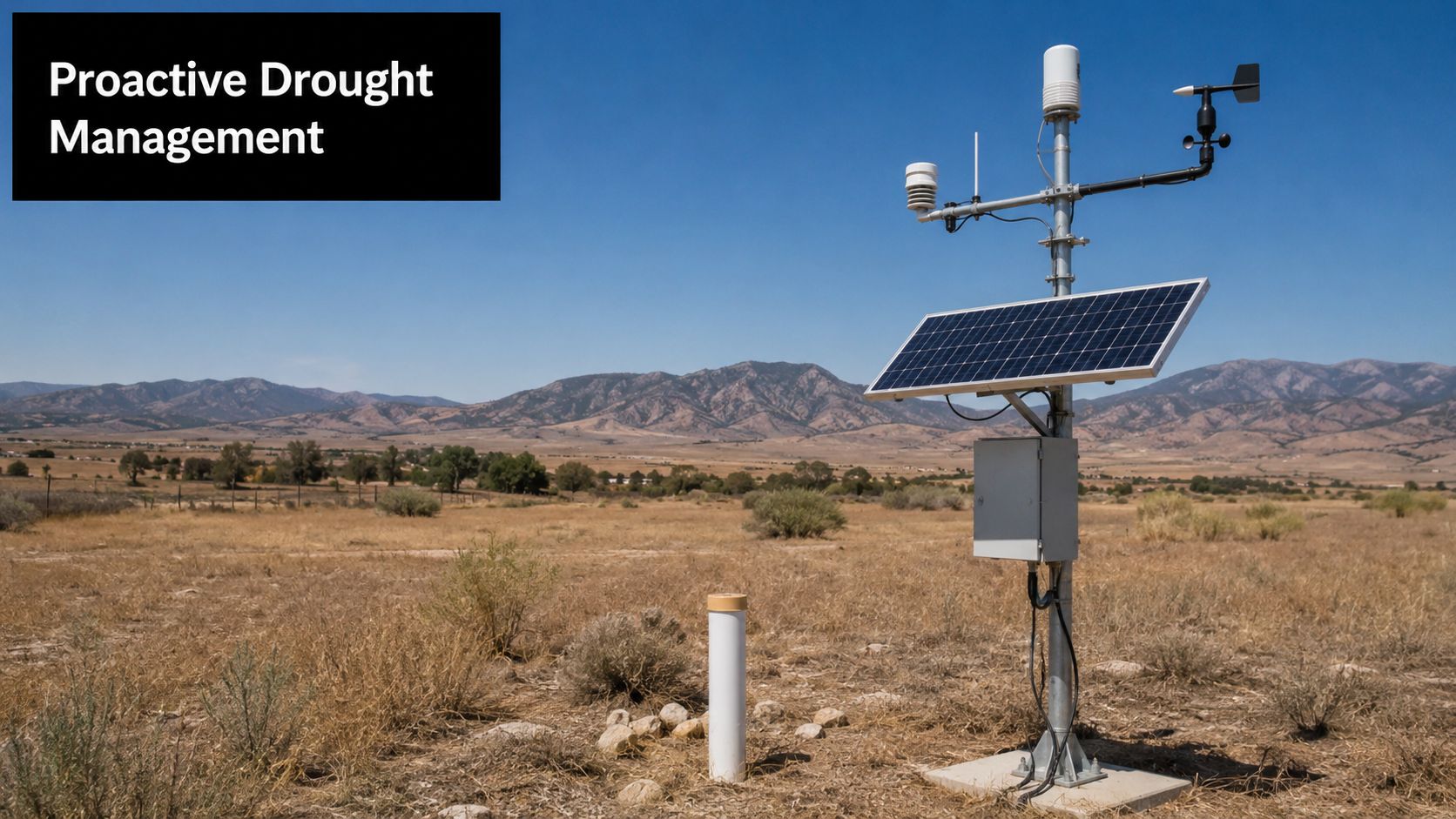
What makes the model different
The defining feature is not the agency's name. It is a mandate that joins risk assessment to authority, financing and execution. Without that link, governments often produce technically sound warnings that do not alter reservoir operations, agricultural advisories, utility restrictions, social protection planning or fiscal decisions.
In practice, a modern drought authority performs four governance functions at once:
- It converts monitoring into decisions: Indicators are tied to operational thresholds, escalation protocols and named institutional responsibilities.
- It stages action in advance: Drought plans specify what ministries, regulators, utilities and subnational authorities must do under worsening conditions.
- It authorises early intervention: Response begins before visible system failure, which is usually the point at which options become more expensive and politically harder.
- It clarifies accountability: Ministers can identify who issues alerts, who activates measures, who pays, and who reports results.
This design solves a recurring public-sector failure. Drought risk is cumulative, but government authority is usually fragmented. Meteorological agencies observe rainfall deficits. Water regulators oversee abstraction and environmental flows. Utilities manage supply. Agriculture ministries focus on farm impacts. Finance ministries enter late, often after losses are already fiscal. A drought management authority, or a formal equivalent across existing institutions, creates a single operating logic across those functions.
Why developed economies still need the model
Advanced economies often assume dense institutions are enough. In many cases, they are not. Capacity spread across multiple agencies does not guarantee coordinated action when hydrological stress develops unevenly across river basins, aquifers and utility systems.
The UK illustrates the point. Rainfall deficits, soil moisture, river flows, groundwater recharge, reservoir storage and peak demand do not deteriorate on the same timetable. That creates a governance problem as much as a technical one. A minister may receive evidence of emerging stress from several competent bodies and still lack one institution responsible for integrating the evidence, defining the escalation stage, and forcing cross-sector action at catchment level.
That is where the Kenyan lesson becomes relevant to higher-income states. Kenya's NDMA model was built in response to chronic climate exposure and fiscal vulnerability, yet its underlying logic travels well. Treat drought as a permanent governance issue, assign institutional responsibility before crisis, and connect early warning to rules, budgets and delivery systems. Developed countries entering a period of less predictable water security need that same discipline, even if their risk profile is different.
A drought authority creates public value before scarcity becomes politically visible.
The primary strategic shift
The strongest case for a national drought management authority is political and fiscal. It changes the state's role from compensating for losses after the fact to governing risk before losses spread across sectors. That shift improves spending efficiency, reduces reliance on ad hoc ministerial intervention and gives markets clearer signals about how the state will respond under stress.
For G20 governments, the implications are wider than drought policy alone. An effective NDMA supports climate adaptation, food and water security, infrastructure resilience and macro-fiscal stability. It also strengthens credibility. Governments that can show clear triggers, legal authority, financing arrangements and accountability lines are better placed to manage compound shocks than governments that rely on fragmented emergency powers once scarcity is already obvious.
The Four Pillars of a Resilient NDMA Framework
An effective drought authority isn't one programme or one dashboard. It is a system. Its strength comes from how four pillars reinforce one another, so that warning leads to planning, planning leads to finance, and finance supports coordinated action across sectors.
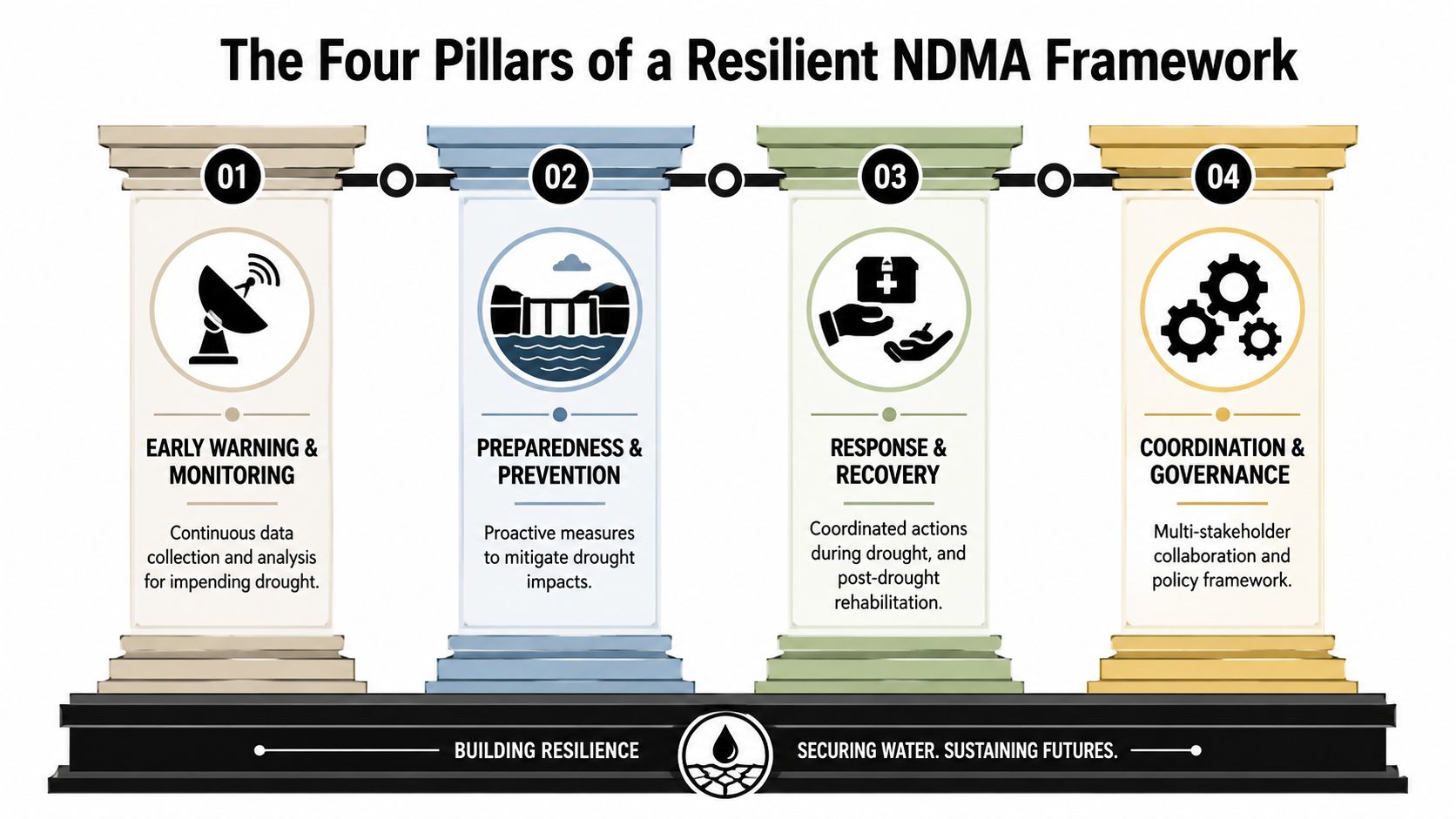
The clearest way to understand that architecture is to treat each pillar as a governance function rather than a technical silo. A good drought system doesn't just observe risk. It governs risk end to end. That same logic also matters for water, rural development and food systems, as discussed in this analysis of the water, rural development and food security nexus.
Early Warning and Information Systems
Warning systems are the front end of the institution. But most governments still underuse them. They collect climate data, issue periodic bulletins and stop there.
A resilient authority does more. It aligns meteorological, hydrological and demand-side data into operational thresholds that specific agencies must act on. In the UK context, that means combining rainfall deficits with water-resource status and supply stress, not treating them as separate conversations.
Three design principles matter most:
- Integrated indicators: Rainfall alone won't tell ministers when supply systems are tightening.
- Regional resolution: National averages can conceal catchment-level stress.
- Actionable outputs: Warnings must trigger pre-agreed measures, not only communication.
Risk Reduction and Contingency Planning
Preparedness is where many drought strategies fail. Plans exist, but they often sit on shelves because they don't contain explicit triggers, delegated authority or operational sequencing.
A strong authority turns contingency planning into a live management tool. It identifies who does what under worsening scenarios. Utilities adjust pressure management. Regulators approve staged measures. Local authorities coordinate demand-reduction messaging. Emergency planners prepare for escalation only if resilience tools fail.
A useful ministerial test is simple:
| Question | Weak system | Strong system |
|---|---|---|
| Are triggers explicit? | Broad and discretionary | Defined and operational |
| Are roles assigned? | Diffuse | Named by institution |
| Are measures staged? | Reactive | Sequenced in advance |
| Is review routine? | Irregular | Built into planning cycles |
Sustainable Livelihoods and Risk Financing
Drought is never only a water problem. It becomes a social and economic problem when households, firms and public services lack buffers. That is why financing should be designed before the event, not assembled during it.
For a National Drought Management Authority, risk financing has two functions. First, it ensures that early action can happen. Second, it protects political credibility by reducing the gap between warning and delivery.
This pillar should blend several instruments:
- Budgeted preparedness funding: So agencies can act without waiting for emergency appropriations.
- Contingency reserves: So worsening conditions don't create administrative paralysis.
- Social protection linkages: So vulnerable groups receive support through existing systems where relevant.
- Risk-transfer tools: Where governments judge them appropriate as part of a broader financing strategy.
Systems fail less often when finance is tied to triggers, not to last-minute political negotiation.
Coordination and Partnership
The final pillar is usually the least visible and the most decisive. Drought cuts across portfolios that rarely share incentives: finance, agriculture, environment, local government, energy, infrastructure and social policy. Without a coordinating centre, each ministry optimises for its own mandate.
A strong drought authority creates disciplined coordination. It doesn't replace sector agencies. It forces them into a common operational logic. That may involve statutory powers, cabinet committees, joint planning rules, or formal protocols with utilities and regulators.
Lessons from the Global South matter most for G20 countries. In many lower-income settings, drought institutions evolved because fragmented governance proved too costly. Advanced economies now face a similar coordination challenge, even if the symptoms look different. Their bottleneck isn't always scarcity alone. It's fragmented authority.
Governance Models and Legal Mandates
Drought governance fails first as a problem of public authority, not hydrology. For G20 ministers, the central design question is whether the state has created a body that can convert risk signals into binding action across water, agriculture, energy, local government and fiscal policy.
Institutional form matters because legal form determines who can compel coordination, who can release funds, and who carries responsibility when thresholds are crossed. Countries do not need a single template. They do need a mandate that survives electoral cycles, departmental rivalry and the tendency to treat drought as a temporary environmental issue rather than an economic security risk.
Three institutional options
Most governments cluster around three arrangements.
| Model | Strength | Main weakness | Best fit |
|---|---|---|---|
| Standalone statutory authority | Clear mandate, public visibility, separate budget identity | Can duplicate sector bodies if roles are poorly defined | Countries needing a cross-government centre with operational authority |
| Unit near the head of government | Strong reach across ministries and budget processes | Can lack technical depth and day-to-day delivery capacity | Countries where the main failure is coordination rather than sector capability |
| Body within a line ministry | Easier integration with existing administrative systems | Often has weaker convening power outside its parent ministry | Countries with a dominant lead ministry and clear vertical hierarchy |
The choice is not administrative housekeeping. It shapes whether drought policy remains advisory or becomes operational. A unit close to the centre of government can force trade-offs across ministries. A body anchored in a technical ministry may manage planning and implementation better. In either case, weak legal powers usually become visible at the same moment pressure rises, when restrictions, emergency procurement, budget reallocations and local compliance all need quick decisions.
The UK as a statutory analogue
England illustrates a different but relevant path for advanced economies. Its nearest functional analogue is not a body labelled NDMA, but a statutory regulator with enduring authority over water resources, environmental oversight and drought planning. The Environment Agency sits inside a wider legal architecture that gives drought management a continuing institutional home rather than leaving it to ad hoc crisis arrangements.
That distinction has direct policy relevance for developed countries now entering a period of recurrent water stress. A statutory model can embed drought preparedness into ordinary regulation, utility planning and investment review. It can also create continuity between dry-period restrictions, long-term resource planning and climate adaptation. For ministers in G7 and G20 countries, that is the more transferable lesson. The issue is less whether to replicate Kenya's institutional label than whether to establish Kenya's level of permanence, authority and trigger-based discipline inside a high-income legal system.
What a legal mandate must actually do
A sound mandate does more than create an organisation. It allocates decision rights.
At minimum, legislation or binding executive instruments should answer four questions:
- Who must participate? The authority needs a legal basis to convene ministries, regulators, utilities and subnational authorities, not merely invite them.
- Who can activate measures? Trigger points should be tied to pre-agreed operational steps, including demand restrictions, emergency supply actions, or targeted livelihood support where relevant.
- Who controls or influences financing? Preparedness fails when the coordinating body can identify risk but cannot affect budget release, contingency funds, or investment sequencing.
- Who is accountable after the event? Post-drought review should be mandatory, time-bound and linked to revisions in plans, regulations and capital programmes.
Many systems often underperform. They create advisory committees with broad memberships and unclear powers, then expect coordination to emerge under stress. It rarely does. Agencies revert to their formal mandates, utilities protect service obligations, finance ministries resist unplanned spending, and local authorities act unevenly.
A stronger legal mandate changes those incentives. It clarifies who decides, who implements, and what follows when risk thresholds are met. That is why NDMA-style institutions should be treated as part of national economic governance. In a warming climate, drought authority belongs in the same category as energy security coordination, financial stability oversight and civil contingency planning.
Lessons from Kenya's NDMA A Global Case Study
Kenya's National Drought Management Authority should be read as economic governance infrastructure, not as a niche institution for drylands. That is the main lesson for G20 governments now confronting water stress, food-system volatility, energy disruption and fiscal exposure from climate shocks.
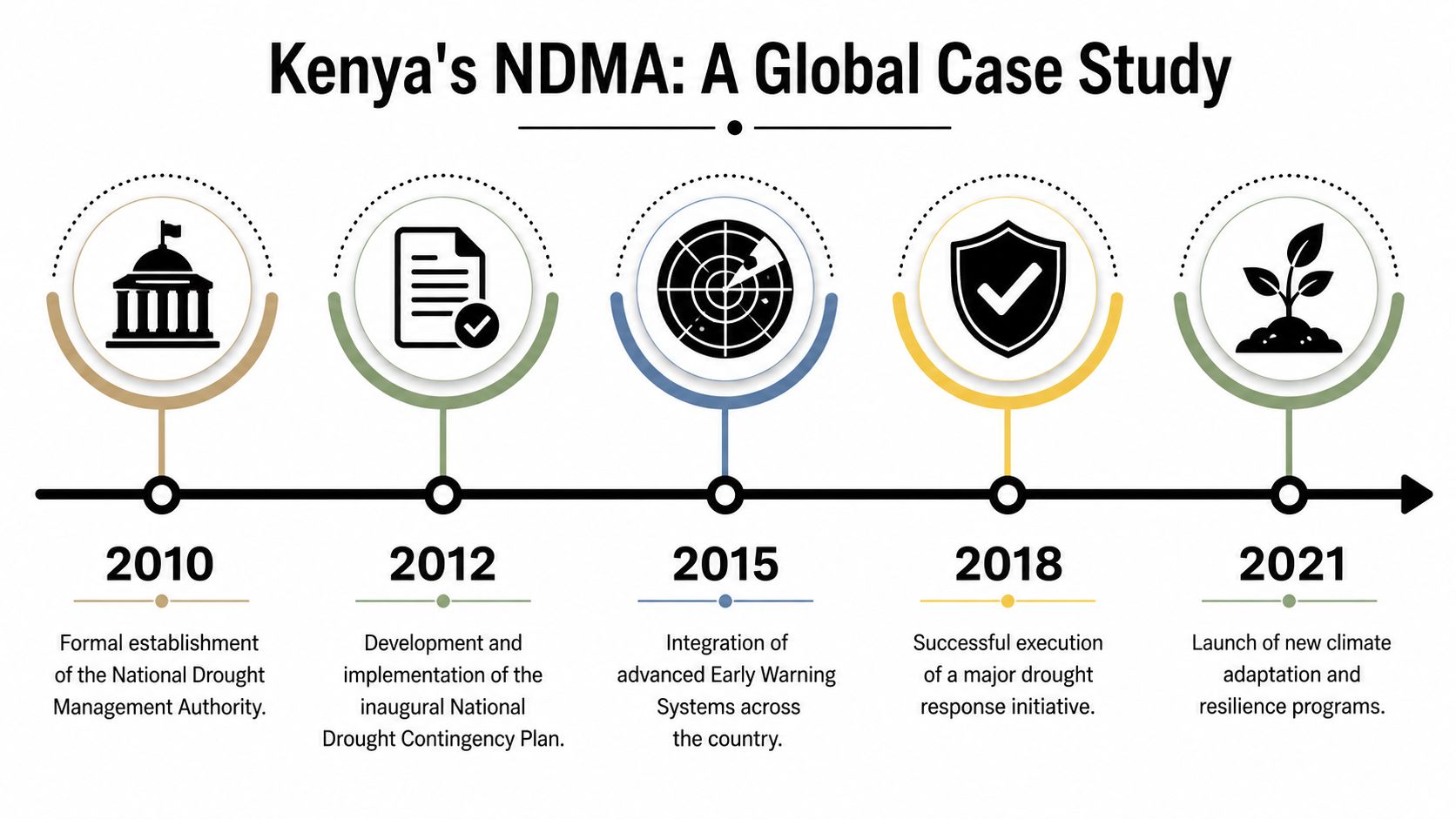
Kenya matters because it built an authority around a practical governance problem: warnings do not reduce losses unless they are connected to decisions, local implementation and pre-arranged finance. That design challenge is no longer confined to low-rainfall economies. It is now relevant to advanced economies whose water systems were built for a more stable climate and whose institutions remain fragmented across regulators, utilities, ministries and local government.
What ministers should notice
The most important question for ministers is not whether the UK resembles Kenya climatically. It does not. The policy question is whether a dedicated drought authority can reduce economic losses in countries where risks are dispersed across many institutions and therefore easy to under-manage.
The answer is increasingly yes. England already faces a structural water security challenge. The Environment Agency's long-term water resources analysis states that, by 2050, England will need around 5 billion extra litres of water a day to secure future public water supply, as set out in the National Framework for Water Resources. In that context, drought governance is no longer a narrow environmental function. It is part of infrastructure planning, economic resilience and climate security.
A short explainer on Kenya's model is useful here:
The transferable insight for developed economies
Kenya's NDMA offers a governance blueprint with three features that developed economies often lack.
First, it creates an institutional centre of gravity. Ministries and agencies still retain their sector mandates, but one authority is expected to maintain risk surveillance, coordinate action and keep political attention on deteriorating conditions before they become a national emergency.
Second, it links national systems to local execution. That matters because drought is experienced locally, through falling reservoir levels, groundwater stress, crop losses, restrictions on water use, or pressure on vulnerable households and firms. National warning systems without local operating channels produce slow and uneven action.
Third, it normalises anticipatory action. In many high-income countries, governments still respond decisively only when service failure or acute scarcity becomes visible. Kenya's experience shows that institutional routines can be organised around thresholds, contingency planning and early intervention rather than post-impact relief.
This is the deeper translation lesson from the Global South to the G20. Countries with fewer fiscal and infrastructural buffers have often had to become more disciplined about climate risk governance. Wealthier states should study that discipline carefully.
Why this matters for the UK and other G20 members
For the UK, the central problem is institutional fragmentation. Responsibility is spread across water companies, environmental regulators, central departments, devolved governments and local responders. Each body can identify part of the risk. No single body is clearly responsible for turning that fragmented picture into a coordinated national strategy with operational authority.
That gap carries economic consequences. Delayed restrictions, uncoordinated investment signals, inconsistent local preparedness and reactive public communication all increase the cost of drought. The policy failure is not exclusively technical under-preparedness. It is the absence of a governance mechanism that can convert early concern into timely, cross-government action.
Kenya's NDMA shows that this mechanism can be built. The institutional form would differ in the UK, Germany, Australia or Canada. The governing logic should not. G20 countries need a recognised authority, or an authority with equivalent powers, that treats drought as a systemic risk to growth, public services and social stability.
That is why the NDMA concept deserves attention well beyond arid and semi-arid regions. It offers a tested principle for climate governance under stress: when risks cut across sectors and jurisdictions, states need clearer authority, faster coordination and earlier intervention.
Data Metrics and Financing for Effective Action
An NDMA that cannot convert signals into financed action is an early-warning system without a policy function. For G20 governments, that is not an administrative weakness. It is a macroeconomic risk, because delayed drought decisions raise costs across food systems, energy generation, public health, utilities, and fiscal planning.
Data architecture and financing architecture therefore need to be designed as one governance system. If indicators are disconnected from legal triggers, governments collect information but hesitate to act. If funding is disconnected from triggers, ministries recognise the risk but still wait for emergency appropriations. Kenya's experience matters here because it shows that drought management becomes more credible when monitoring, thresholds, and pre-agreed financing sit inside a single operational framework. That lesson now applies as directly to the UK and other advanced economies as it does to drought-prone states in the Horn of Africa.
Data must reflect how drought actually unfolds
The first design principle is simple. Rainfall on its own is an incomplete policy metric.
In temperate, highly regulated systems such as the UK, drought risk moves through a lagged chain: precipitation deficits, weaker recharge, lower reservoir and river levels, groundwater pressure, rising demand, and then service disruption or ecological stress. A capable authority therefore needs a multi-layered indicator set that combines meteorological, hydrological, operational, and demand-side information. As noted earlier, both international practice and UK institutions already point in this direction. The governance gap is not the absence of data. It is the absence of a single authority mandated to translate those data into staged national action.
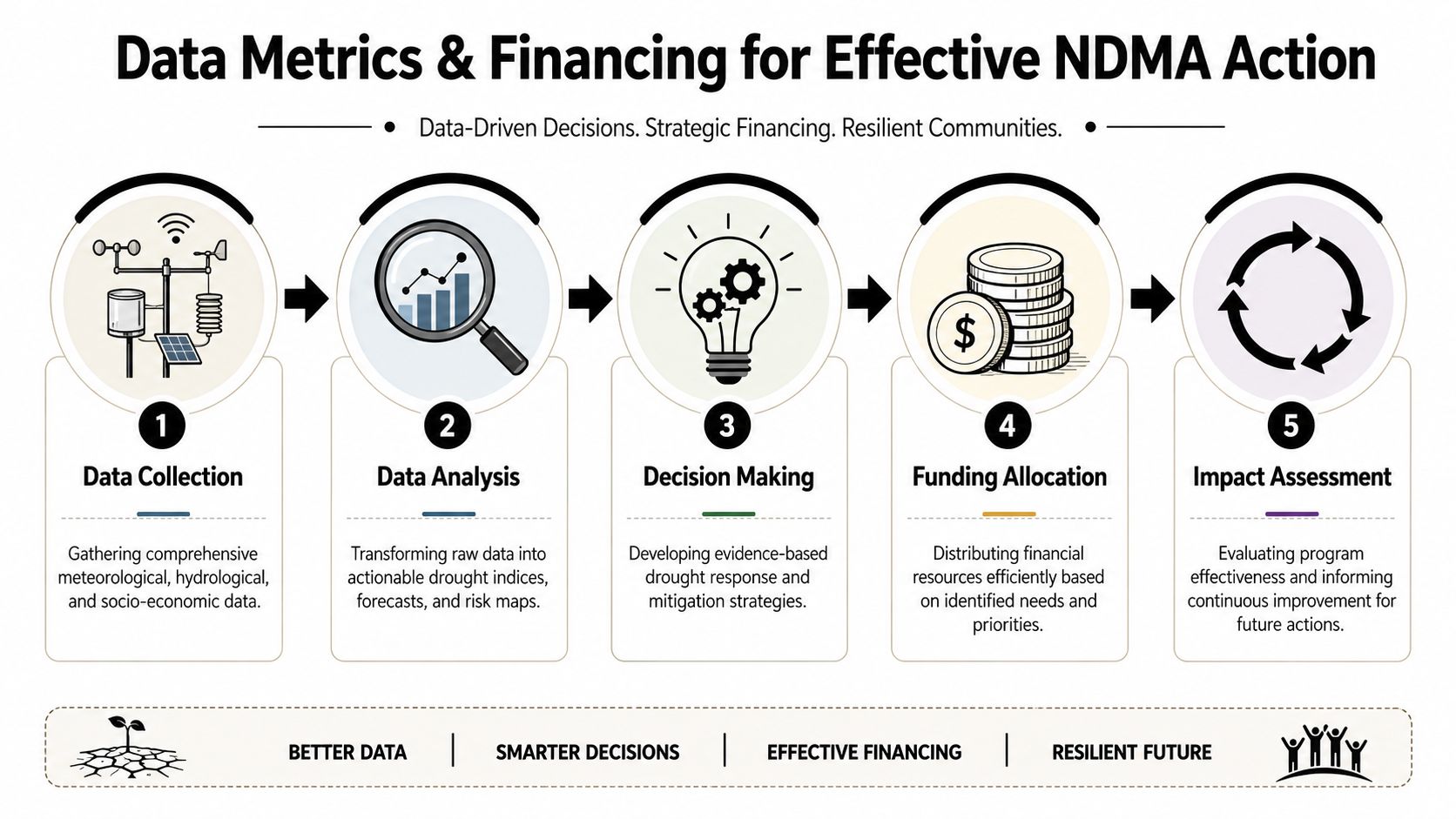
For readers seeking a plain-language explanation of how structured information systems are built, this guide to what a dataset is provides useful background.
The policy question is not how much data a government can collect. It is whether decision-makers can use that information to answer five operational questions in time:
- What is changing across climate, hydrology, and water demand?
- Where is stress appearing first in the system?
- Which communities, sectors, or assets face the earliest disruption?
- Which intervention is triggered at this threshold?
- How will performance be reviewed after the event?
These questions force a shift from monitoring to accountability. They also expose a common weakness in richer countries. Agencies often produce technically sound assessments, yet no institution is clearly required to convert those assessments into restrictions, transfers, contingency planning, or public communication at the right moment.
The most useful drought metric is the threshold linked to a named institutional action.
That is the governance test G20 ministers should apply. A national indicator matters only if it changes behaviour inside utilities, regulators, finance ministries, and emergency coordination systems.
Financing should be layered, not improvised
Financing needs to mirror the time profile of drought risk. Annual budgets keep institutions functional between crises. Contingency finance supports early intervention once thresholds are crossed. Emergency allocations cover severe disruption. Long-term capital finance reduces structural exposure through storage, network resilience, transfer capacity, ecosystem restoration, and demand management.
| Financing layer | Purpose | Governance implication |
|---|---|---|
| Baseline budget funding | Maintain monitoring, planning and institutional capacity | Prevents drought policy from becoming dormant between events |
| Contingency funding | Support early action under worsening conditions | Reduces delay after triggers are crossed |
| Emergency allocations | Cover severe response where resilience measures prove insufficient | Preserves flexibility for extreme cases |
| Longer-term capital and resilience finance | Strengthen infrastructure, transfers and demand management systems | Links drought policy to investment planning |
This layered model matters because drought losses are heavily shaped by timing. Early spending on leakage reduction, targeted restrictions, emergency borehole management, agricultural advisories, or inter-system transfers is usually cheaper than late spending once reservoirs fall sharply, crops fail, or utilities require crisis support. Evidence from practice across climate-vulnerable systems also shows that institutions with pre-arranged financing can act sooner and coordinate more coherently under stress, including in contexts facing compound shocks and infrastructure strain, as discussed in this learning brief on drought governance, climate stress and institutional response.
For developed G20 economies, the non-obvious lesson from Kenya is not merely that drought should be funded. It is that preparedness finance should be governed with the same discipline as fiscal stabilisation tools. Ministers would not manage banking stress without indicators, triggers, and liquidity instruments. Drought now requires the same logic.
Conclusion Actionable Recommendations for G7 and G20 Leaders
G7 and G20 governments no longer have the luxury of treating drought as a sectoral issue handled at the edge of government. The central challenge is institutional: converting fragmented information and fragmented authority into timely, lower-cost action.
A practical agenda for leaders should include the following.
- Create a clear national drought mandate: Every country should designate a lead institution, or a formal equivalent, with authority to coordinate climate monitoring, water planning, utility action and contingency decisions.
- Embed trigger-based planning in law or regulation: Drought plans should specify thresholds, named responsibilities and staged interventions rather than rely on discretionary escalation.
- Link data systems to operational action: Governments should integrate meteorological, hydrological and demand-side information so that warnings automatically inform policy and utility decisions.
- Fund preparedness, not only response: National budgets and climate finance frameworks should support monitoring, planning, resilience measures and contingency action before emergency restrictions are required.
- Learn across income groups: G20 members should treat Kenya's National Drought Management Authority not as a niche developing-country case, but as a governance innovation with direct relevance for advanced economies facing climate volatility.
- Align drought policy with infrastructure strategy: Water security, ageing networks, demand management and resilience investment should sit in the same planning conversation.
The strategic conclusion is straightforward. Drought resilience is not a soft environmental agenda. It is a hard test of state capability, economic management and climate credibility. Governments that build National Drought Management Authority functions into the centre of public administration will be better placed to protect growth, social cohesion and water security in the years ahead.
For more policy analysis, summit-focused briefings and evidence-led commentary on climate resilience, economic security and multilateral governance, explore Global Governance Media.