

By Alex Morgan
The most consequential people in development rarely appear in summit photographs, yet they determine whether G7 and G20 commitments become funded programmes, administrative routines, and measurable results. This is a question of state capacity. Communiqués set direction, but project design, budgeting, procurement, data systems, and community engagement determine implementation.
“The Architects of Action: Beyond the Summit Communiqué” examines the professional roles that convert high-level commitments into operational decisions across ministries, agencies, multilateral institutions, NGOs, and delivery partners. The focus is not on prominent individuals. It is on the working structure of international development: the managers who sequence delivery, the specialists who design accountability systems, the advisors who align technical evidence with political timetables, and the field teams who test policy assumptions against local conditions.
This perspective matters for a G7 and G20 audience because current priorities, from health security and education recovery to climate adaptation, food systems, and workforce participation, depend less on diplomatic signalling than on administrative follow-through. The OECD has argued that effective public governance and implementation capacity are central to delivering policy goals across complex institutions and levels of government. In practice, that makes development outcomes highly sensitive to professional roles that are often treated as secondary to leadership.
The argument of this article is straightforward. Development performance is shaped not only by what governments promise, but by who is tasked with turning those promises into systems that can operate under fiscal pressure, political turnover, and uneven local capacity. Understanding these roles offers a more useful guide to implementation than another profile of visible leaders.
Table of Contents
- 1. Project Manager
- 2. Monitoring, Evaluation & Learning Specialist
- 3. Policy Advisor/Technical Specialist
- 4. Field Officer/Community Mobiliser
- 5. Research & Evidence Analyst
- 6. Partnership & Engagement Director
- 7. Finance & Resource Mobilisation Specialist
- 8. Communications & Knowledge Management Officer
- 8 Development Roles Comparison
- From Roles to Results A Roadmap for Policymakers
1. Project Manager
Project managers sit closest to the point where global ambition becomes administrative reality. In development systems linked to G7 climate, health, food security, and infrastructure agendas, they convert broad political commitments into workplans, sequencing decisions, risk logs, procurement steps, and reporting routines. Without that translation layer, even well-financed commitments stall.
Their policy relevance is straightforward. G7 and G20 frameworks often depend on multi-actor delivery across ministries, multilateral banks, implementing partners, and local institutions. Project managers create the governance architecture that lets these actors move in the same direction. In a World Bank climate adaptation programme, a Gavi rollout effort, or a UNDP country platform aligned with nationally determined contributions, the project manager is the person who reconciles donor conditions, local administrative capacity, and political deadlines.
Operational discipline under political pressure
What distinguishes strong project management in development is not generic efficiency. It is the ability to maintain delivery integrity while the policy environment shifts. Summit priorities change. Elections interrupt continuity. Exchange-rate pressures, security concerns, and procurement bottlenecks alter timelines. A competent project manager doesn't treat these as surprises. They build contingency into the delivery model from the start.
That has direct implications for G20 implementation. When leaders endorse supply-chain resilience, pandemic preparedness, or climate adaptation, ministries need project managers who can map responsibilities across agencies and identify where decisions will fail if authority is unclear.
Practical rule: assign one accountable owner for each implementation milestone, then document which institution can unblock delays.
A few operating habits matter more than they usually receive credit for:
- Define governance early: Specify who approves scope changes, who signs off spending, and who resolves inter-agency disputes.
- Link outputs to commitments: Map each deliverable to a summit pledge, national strategy, or financing condition so reporting remains policy-relevant.
- Review on political cycles: Align internal reviews with budget rounds, ministerial meetings, and summit calendars, not only with internal project schedules.
People in development often describe project management as an administrative role. In practice, it is a state-capacity role. It determines whether international cooperation produces visible outputs before political attention moves on.
2. Monitoring, Evaluation & Learning Specialist
Monitoring, evaluation and learning specialists decide whether a development system can distinguish activity from progress. That sounds technical. It is constitutional for modern governance, because G7 and G20 accountability depends on evidence systems that can test whether commitments are being implemented, adjusted, or abandoned.
In public debate, MEL is often reduced to indicators and donor reporting. That understates its strategic function. A strong MEL specialist designs the feedback architecture that links field delivery, administrative data, and high-level review. In health security, climate finance, or social protection, that means building a framework that allows policymakers to ask not only whether money was spent, but whether the spending changed institutional performance, access, or resilience.
Why accountability systems fail without design discipline
Many accountability systems fail because they privilege what is easy to count over what decision-makers need to know. MEL specialists correct that by choosing indicators that capture both implementation quality and outcome relevance. They also make sure data can move from national systems into multilateral review processes without becoming detached from context.
This is especially important where AI and digital delivery are entering public systems. UK labour-market analysis from the Office for National Statistics indicates that AI-related hiring is concentrated in digitally intensive occupations rather than spread evenly across the workforce. For development institutions, that means the primary bottleneck is often the availability of people who can implement, evaluate, and maintain systems, not broad rhetorical support for AI. MEL design has to reflect that skills constraint rather than assuming every agency can absorb complex tools at speed.
A strong accountability culture also depends on synthesis. Quantitative dashboards rarely explain implementation friction on their own. Qualitative learning, process tracing, and structured feedback from delivery teams remain essential. That is why serious analysis of Sustainable Development Goals progress depends on both measurement and interpretation.
Good MEL systems don't just report upwards. They send usable signals back to programme teams quickly enough to change behaviour.
For G7 and G20 policymakers, the lesson is simple. If you want summit commitments to survive the year after the communiqué, fund the people who build learning loops, not just reporting templates.
3. Policy Advisor/Technical Specialist
Policy advisors and technical specialists shape what governments can realistically commit to, and what they can later defend, cost, and implement. Their work is most visible during negotiations, but their deeper impact comes earlier and later. Earlier, when they frame options and define trade-offs. Later, when they help institutions interpret summit language into regulations, standards, budget notes, and administrative guidance.
This role matters in every major G7 and G20 track. Climate negotiations need advisers who understand emissions accounting, adaptation planning, and fiscal implications. Health security requires specialists who can connect epidemiological evidence to legal preparedness and procurement systems. AI governance now requires policy professionals who can move between technical model risks, labour-market implications, and public-sector capability constraints.
The bridge between evidence and political timing
The strongest advisers don't merely produce technically sound recommendations. They sequence them around political windows. A recommendation that is analytically strong but detached from cabinet timing, legislative calendars, or financing negotiations usually goes nowhere. Technical specialists who influence outcomes know when to simplify, when to hold complexity, and when to offer implementation pathways instead of maximalist positions.
That becomes particularly important in AI and digital policy. Independent UK research has reported that organisations most commonly adopt AI in customer operations, process automation, and content generation, while progression from experimentation to scaled deployment remains uneven because governance, data quality, and model-risk controls repeatedly block scale. For policymakers, the implication is clear. AI adoption in development administration is not mainly a tool-access problem. It is a production-readiness problem involving auditability, evaluation pipelines, and human review.
That is the kind of issue policy advisers must translate into usable statecraft. They need to tell ministers not only what is desirable, but what institutional preconditions must exist before a commitment is credible. Thoughtful work on building consensus for fair and sustainable development depends on that translation function.
- Frame options comparatively: Show how different jurisdictions approached a similar problem and what implementation burdens followed.
- Test political feasibility: A recommendation that ignores administrative load or coalition resistance won't survive contact with government.
- Write for decision-makers: Cabinet briefs, annexes, speaking points, and technical notes require different levels of detail.
The people in development who occupy this role often determine whether summit language remains aspirational or becomes actionable.
4. Field Officer/Community Mobiliser
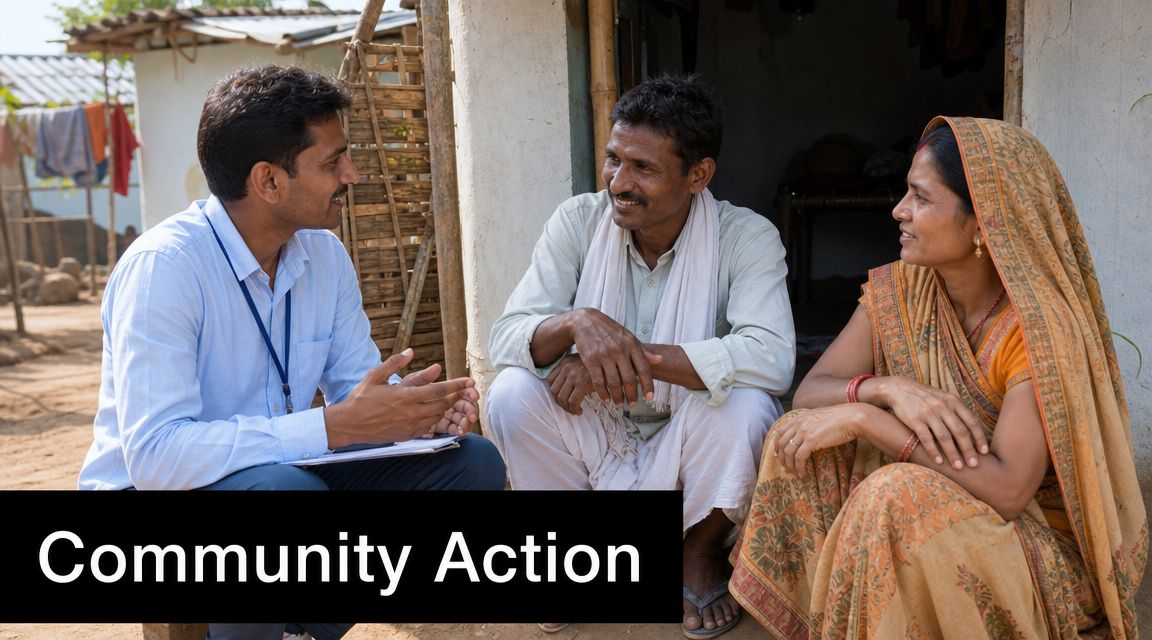
Field officers and community mobilisers are where legitimacy is tested. They work at the point where policy intent meets lived conditions, which means they see the mismatch between programme design and community reality earlier than almost anyone else in the system. In refugee protection, agricultural adaptation, primary healthcare, or local livelihoods, they are often the first to detect whether a supposedly implementable model is culturally unsuitable, administratively unrealistic, or inaccessible.
That makes them far more than delivery staff. They are diagnostic assets. G7 and G20 agendas regularly emphasise inclusion, resilience, and locally led development. None of those principles can be meaningfully implemented if field staff have no route to feed operational intelligence back into programme design or policy review.
Ground truth as a policy input
A field officer working with farmer cooperatives may discover that the obstacle to uptake is not training quality but transport, land tenure uncertainty, or seasonal cash-flow pressure. A community health mobiliser may find that service availability exists on paper but women cannot access it because of care responsibilities or local trust deficits. Those findings should alter programme assumptions, not sit in a monthly report unread.
One underexplored development question gains practical significance. UK employment and skills research has repeatedly shown that training alone often doesn't move people into better jobs when constraints are low pay, weak local demand, transport barriers, or childcare costs. The same logic applies internationally. Development interventions fail when designers assume the bottleneck is knowledge, while field teams can already see that the bottleneck is demand, access, or institutional quality.
Field intelligence should be treated as evidence, not anecdote.
The operational consequence is that field teams need structured feedback channels, safe escalation pathways, and enough authority to trigger design adjustments.
A useful discussion of frontline realities can start here:
Field officers are among the most overlooked people in development because their work is coded as local rather than strategic. In fact, they are central to whether global governance becomes grounded governance.
5. Research & Evidence Analyst
Research and evidence analysts shape the policy field before ministers, donors, or delivery teams act. They determine which populations are visible in official metrics, which disparities can be measured credibly, and which implementation failures remain hidden behind national averages. In G7 and G20 processes, that function carries direct policy weight because commitments on inclusive growth, health equity, food security, gender equality, and climate resilience depend on target-setting, disaggregation, and performance review.
The central problem is not only insufficient data. It is weak category design, uneven coverage, and inconsistent comparability across systems. Analysts working on development policy have to examine how administrative data, survey instruments, census categories, and monitoring frameworks classify people before those classifications are used to allocate resources or assess progress. Poor classification produces poor implementation.
This matters for groups that are regularly merged into broad headings or missed altogether. The UK Statistics Authority has repeatedly argued for better disaggregated data to understand unequal outcomes, and the Office for National Statistics has identified quality challenges in ethnicity and migration statistics for smaller groups. The 2021 Census for England and Wales reported that 18.3% of usual residents identified with Asian, Black, Mixed, or Other ethnic groups combined. That headline figure is informative, but it does not by itself solve the analytical problem. Broad aggregation can still conceal major differences in housing conditions, labour market position, health access, and exposure to public service failure.
For G7 and G20 implementation, the consequence is practical. If analysts cannot distinguish between groups facing different constraints, policymakers may design universal programmes that reproduce unequal take-up, or targeted programmes that miss the populations they claim to prioritise. Averages then create false reassurance. Administrative success can coexist with distributional failure.
This is why research analysts sit closer to implementation than their job title suggests. They influence eligibility design, indicator selection, baseline quality, and the credibility of claims made in communiqués and progress reports. Under the G20 agenda on reducing inequalities and improving social protection, for example, the value of a financing package or labour market reform depends partly on whether analysts can show who benefits, who is excluded, and where the delivery system breaks down.
Three practices separate high-value evidence functions from routine reporting:
- Examine classification before analysis: Check who is grouped together, who is omitted, and whether categories are stable enough for comparison across time and institutions.
- Combine statistical and operational evidence: Service records, grievance data, and frontline qualitative research often identify exclusion earlier than large datasets do.
- Make methods and limits explicit: Transparent assumptions, replication files, and stated caveats improve policy use because decision-makers can judge confidence and risk directly.
The strongest research teams do more than produce findings. They improve the evidentiary basis on which G7 and G20 commitments are translated into budgets, delivery choices, and accountability.
6. Partnership & Engagement Director

Partnership and engagement directors operate in the space between institutional incentives. That sounds soft. It isn't. Most G7 and G20 commitments require implementation across organisations with different mandates, different accountability structures, and different tolerances for risk. Someone has to broker alignment before fragmentation becomes failure.
This role is often misunderstood as relationship management. In practice, it is coalition design. A partnership director has to establish governance, convening rhythm, escalation channels, and shared outcomes for actors that may compete for funding, visibility, or policy influence. In vaccine alliances, food systems coordination, climate platforms, or blended-finance vehicles, this work determines whether a coalition can act collectively under pressure.
Coalition management, not just stakeholder management
A weak partnership model creates performative collaboration. Meetings multiply, decisions drift, and accountability disappears into collective language. A strong model does the opposite. It clarifies who contributes what, what gets shared, what remains bilateral, and how disputes are resolved.
Many development failures are not technical failures, but coordination failures. Ministries duplicate effort. Donors fund adjacent systems with incompatible reporting rules. Private partners enter too late to shape implementation design. Civil society is consulted after key decisions have already hardened.
Shared ambition is not a delivery mechanism. Governance is.
Partnership directors are especially important where G20 agendas intersect with private capital, industrial policy, or digital standards. These are areas where governments can't implement alone, but also can't cede control of public objectives. The partnership function protects that balance.
Some practices consistently improve outcomes:
- Create common results frameworks: Partners need one shared logic for success, even if their internal metrics differ.
- Solve conflict early: The first unresolved dispute usually becomes a precedent for future paralysis.
- Record lessons institutionally: Partnership models should improve over time rather than restarting from scratch with each initiative.
The people in development who excel here make multilateralism operational. They turn broad cooperation into governed cooperation.
7. Finance & Resource Mobilisation Specialist
Finance and resource mobilisation specialists do more than raise money. They determine whether funding structures match implementation realities. That distinction is central to G7 and G20 agendas because many summit pledges assume resources can move smoothly from commitment to deployment. In practice, the design of the financing instrument often shapes what can be delivered.
A finance specialist working on climate adaptation, health systems, or inclusive infrastructure has to manage grants, concessional lending, guarantees, donor conditions, treasury rules, and increasingly private co-financing expectations. The hard part isn't only assembling capital. It is building a financing stack that supports the pacing, risk profile, and reporting requirements of the underlying programme.
Why financing logic must match delivery logic
Poorly designed finance can distort delivery. Short funding cycles encourage visible outputs over institution-building. Highly earmarked funding fragments programme management. Complex reporting burdens consume administrative capacity that frontline institutions don't have. Good finance specialists anticipate those effects and redesign instruments accordingly.
Their role is especially important now because G7 and G20 governments increasingly rely on mobilisation narratives that presume public and private finance can be combined around shared objectives. That can work, but only when incentives are explicit and governance is credible. Private actors need clarity on risk and return. Public actors need assurance that equity, resilience, and access won't be subordinated to easier commercial opportunities.
Work on financing development strategies is strongest when it starts from delivery constraints rather than financial abstraction.
A disciplined finance function usually asks a tighter set of questions than public debate suggests:
- What costs are recurrent: If local institutions can't sustain operations after initial funding, the model is incomplete.
- Where does risk sit: Currency, political, and implementation risks need named owners.
- What evidence informs allocation: Funding should follow demonstrated need, absorptive capacity, and policy priorities, not only donor preference.
Finance specialists are among the most strategic people in development because they shape what ambition is fiscally executable.
8. Communications & Knowledge Management Officer

Communications and knowledge management officers are often treated as the final step in the chain, brought in to explain work that others have already done. That is too late, and it badly undervalues the role. In effective development systems, these professionals shape how evidence circulates, how institutional memory is preserved, and how policymakers receive information in time to act on it.
This role has become more important as development institutions adopt digital tools and AI-assisted workflows. The issue is no longer simple access to tools. It is whether organisations can document decisions, preserve provenance, and create knowledge products that are auditable, reusable, and intelligible across teams. Without that discipline, lessons from one programme don't transfer and governance risks multiply.
Turning implementation into institutional memory
Knowledge management matters because development systems forget quickly. Staff move, ministers change, platforms are replaced, and reporting formats evolve. Unless someone curates and structures learning, the same implementation errors return under new branding. A communications officer working well does more than publish success stories. They create policy briefs, operational notes, stakeholder updates, evidence summaries, and narrative framing that keep institutions aligned.
This has a direct G7 and G20 relevance. Summit processes generate bursts of attention, then disperse across bureaucracies. Communications professionals make commitments legible after the spotlight fades. They help ministries explain why a pledge matters domestically, help delivery teams understand what must be reported, and help external stakeholders judge whether implementation is credible.
A knowledge product is part of the delivery system if it changes what an institution remembers, funds, or does next.
The strongest officers in this role usually combine several capabilities:
- Audience adaptation: A minister, a technical unit, and a community partner each need different forms of clarity.
- Evidence translation: Complex monitoring, research, and finance material must be converted into decision-useful formats.
- Archiving with purpose: Lessons learned should be indexed and retrievable, not buried in scattered folders or one-off slide decks.
Among the people in development, communicators and knowledge managers often receive the least strategic recognition. Yet they determine whether implementation experience becomes public accountability and institutional learning, or disappears into organisational amnesia.
8 Development Roles Comparison
| Role | 🔄 Implementation complexity | ⚡ Resource requirements & efficiency | 📊 Expected outcomes | 💡 Ideal use cases | ⭐ Key advantages |
|---|---|---|---|---|---|
| Project Manager | High, multi‑level coordination 🔄🔄🔄 | Moderate–High (team, systems, budget) ⚡⚡ | Operationalised commitments; improved accountability 📊 ⭐⭐⭐ | Complex, cross‑sector programmes; summit implementation | Ensures delivery and aligns policy to action ⭐ |
| Monitoring, Evaluation & Learning (MEL) Specialist | Medium–High, data systems & methodology 🔄🔄 | High (data collection, analysis, time) ⚡⚡⚡ | Evidence for course correction; transparency 📊 ⭐⭐⭐⭐ | Tracking commitments; impact evaluation; adaptive management | Enables evidence‑based decisions and learning ⭐ |
| Policy Advisor / Technical Specialist | Medium, consensus & political navigation 🔄🔄 | Moderate (expertise, modelling tools) ⚡⚡ | Policy‑ready recommendations; agenda influence 📊 ⭐⭐⭐ | Summit briefs; negotiation support; policy design | Bridges evidence and political feasibility ⭐ |
| Field Officer / Community Mobiliser | Medium, local complexity and logistics 🔄🔄 | Moderate (field teams, logistics) ⚡ | Service delivery; community uptake; real‑time feedback 📊 ⭐⭐ | Community implementation; beneficiary engagement; pilot testing | Provides ground‑truthing and builds trust ⭐ |
| Research & Evidence Analyst | Medium, study design and rigor 🔄🔄 | High (research capacity, time) ⚡⚡⚡ | Robust evidence and publications informing policy 📊 ⭐⭐⭐ | Long‑term studies; generating causal evidence | Produces credible, rigorous knowledge base ⭐ |
| Partnership & Engagement Director | High, multi‑party negotiation 🔄🔄🔄 | Moderate–High (networks, coordination) ⚡⚡ | Coordinated action; pooled resources; broader buy‑in 📊 ⭐⭐⭐ | Multi‑stakeholder initiatives; scaling interventions | Leverages diverse partners and builds ownership ⭐ |
| Finance & Resource Mobilisation Specialist | Medium–High, complex financing instruments 🔄🔄 | High (financial expertise, investor networks) ⚡⚡⚡ | Secured funding; sustainable financing pathways 📊 ⭐⭐⭐ | Funding mobilisation; blended finance and scaling | Unlocks resources and optimises allocation ⭐ |
| Communications & Knowledge Management Officer | Low–Medium, messaging & platforms 🔄🔄 | Moderate (content production, platforms) ⚡⚡ | Increased visibility; stakeholder engagement 📊 ⭐⭐ | Advocacy, knowledge dissemination, policy communications | Amplifies impact and shapes narratives ⭐ |
From Roles to Results A Roadmap for Policymakers
The central lesson is not that development needs more admiration for frontline professionals. It is that global governance needs a clearer theory of implementation. G7 and G20 processes are strong at signalling priorities and weaker at consistently building the professional architecture required to execute them. The eight roles above show where that architecture resides: in project control, evidence design, policy translation, field intelligence, research quality, coalition governance, financing structure, and institutional communication.
Policymakers should respond accordingly. First, they should fund capability, not just programmes. A commitment without project management, MEL capacity, and knowledge systems is a press event with a delayed failure built into it. Second, they should align mandates across institutions so that implementation staff are not trapped between incompatible reporting lines, financing rules, and political expectations. Third, they should treat disaggregated evidence and local feedback as core infrastructure for policy, not optional enhancements.
The UK evidence cited earlier points in that direction. Skills constraints in AI-related work are concentrated in digitally intensive occupations, and progression from experimentation to scaled deployment remains uneven when governance and model controls are weak. That is a warning for every government trying to modernise development administration. Institutional readiness depends on specialised people, clear processes, and sustained learning capacity. Technology won't substitute for those foundations.
There is also a broader social policy lesson. Training and employability interventions can fail when the actual barriers are transport, childcare, local job quality, or weak employer demand. Applied to international development, the implication is that implementation roles must be enabled to identify structural constraints early, not merely report activity once programmes are already off course. Better delivery depends on better diagnosis.
For G7 and G20 leaders, that means asking harder operational questions after every summit. Who owns delivery? Which institution can correct course? Where is the evidence weak or incomplete? Which communities remain poorly measured? What financing mechanism supports long-term implementation rather than short-term visibility? And which professionals have the authority to surface uncomfortable truths before failure becomes public?
The people in development examined here are not ancillary to policy success. They are the mechanism through which policy acquires institutional form. If governments want stronger outcomes on climate, health, inclusive growth, AI governance, and resilience, they should build systems that recruit, retain, and enable these professionals with clearer mandates, better data, practical coordination tools, and accountability structures tied to implementation rather than rhetoric.
For deeper analysis of multilateral delivery, summit accountability, and the policy systems that turn commitments into results, subscribe to Global Governance Media and follow its ongoing coverage of G7 and G20 implementation.
Stay connected with Global Governance Media for rigorous analysis, expert commentary, and practical insights on how global commitments are translated into real-world policy action.