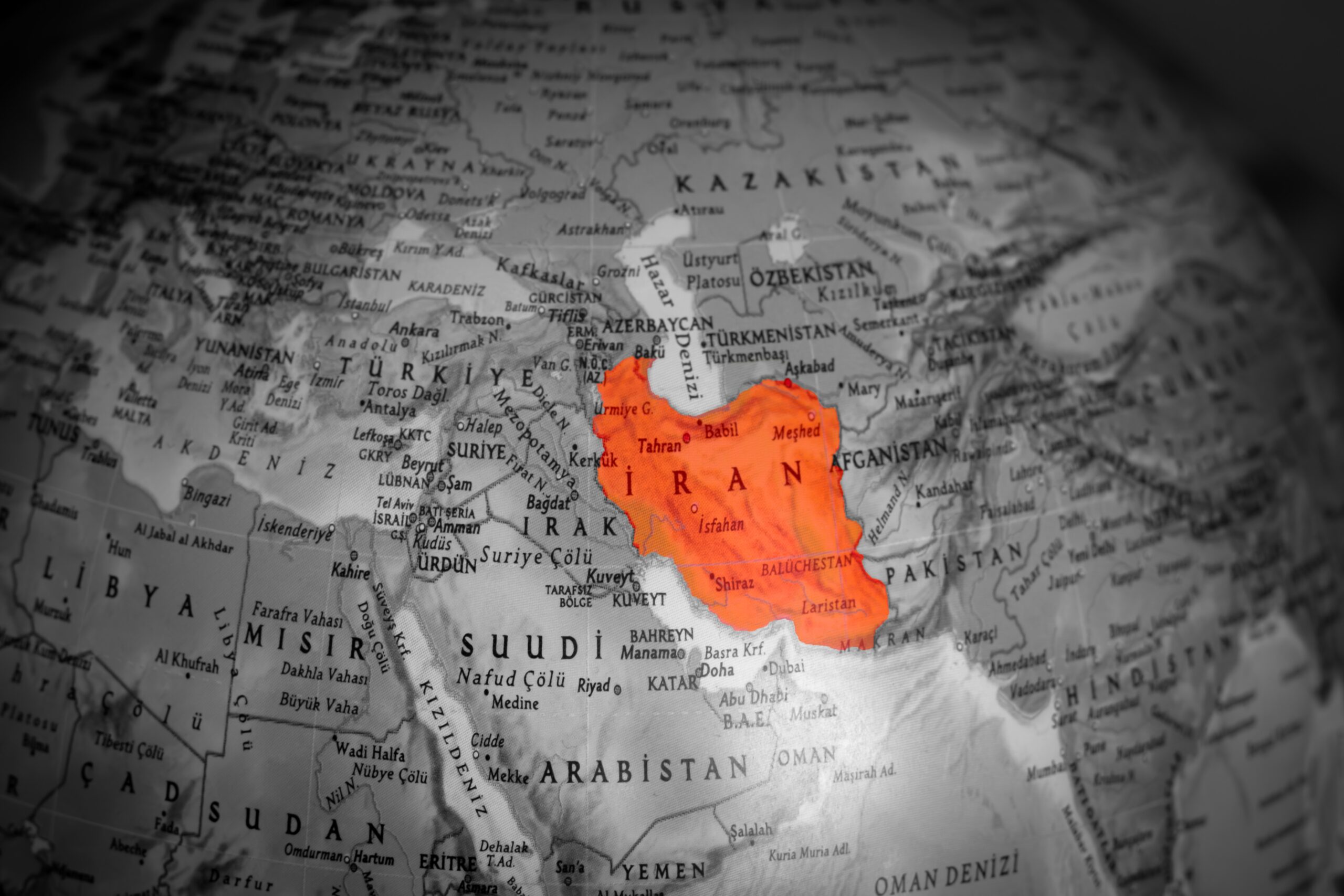


The G7 Évian Summit comes at a time of significant geopolitical instability that is diverting attention from climate change. The conflict involving Iran, Israel and the United States has disrupted global energy markets and increased environmental damage from attacks on shipping and energy infrastructure. Oil spills, tanker fires and other forms of marine pollution are producing severe damage. The Évian Summit offers an important opportunity for G7 leaders to act on climate change, despite divisions among G7 members.
Deliberation
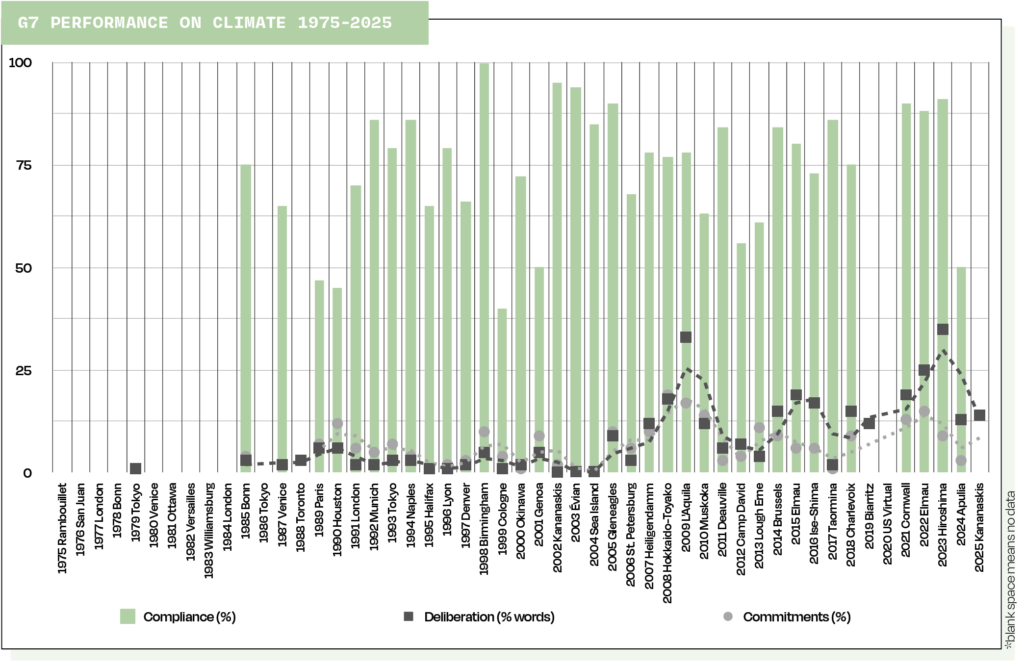
Climate change has taken 56,161 words in G7 communiqués for an average of 5% per summit, since the issue first appeared at the 1979 summit. The average number of words has risen in response to international negotiations and energy and environmental crises. In 2022 climate change accounted for 25% in summit documents, reflecting sustained engagement after the global negotiations at the 2021 United Nations Climate Change Conference. In 2023 it increased to 35% – the highest to date – followed by 33% in 2009 and 25% in 2022. Climate references dropped to 13% in 2024 and 14% in 2025.
Commitments
G7 leaders have made 571 commitments on climate change since making one in 1985 through to 21 in 2025. Climate commitments began appearing consistently on the G7’s agenda in 1989, averaging 7% per summit. From 2005 to 2010, G7 leaders made 185 commitments – 32% of the 571 total – reflecting an increase in global climate diplomacy. After a two-year dip, the number of commitments trended higher from 2013 to 2015 during the negotiation of the 2015 Paris Agreement. These commitments include those on key areas such as climate finance, decarbonisation of transportation, and the phase-out of international coal financing.
No climate commitments were made in 2019 and 2020, but there was a surge in climate diplomacy from 2021 to 2023, when climate change commitments counted for 29% of total commitments in only three years. This dipped to 3% in 2024, and rose again to 14% in 2025.
Compliance
Delivery of these decisions by G7 governments averages 74%, based on the 103 commitments assessed by the G7 Research Group. This is below the G7’s all-time, all-subject average of 78%.
Based on these assessments, compliance averaged 69% from 1985 to 1997 before it peaked at 100% or three commitments made in 1998. From 1999 to 2018 compliance averaged 74%, ranging from 40% for 1999 to 90% for 2005. It rose to 90% in 2021, 88% in 2022, 91% in 2023, but plunged to 50% in 2024. By December 2025, compliance with the four assessed climate commitments from 2025 averaged 69%.
Recommendations
Compliance with climate change commitments rose by 10% in years when G7 environment ministers’ meetings were held. It increased to 79% when commitments referenced the United Nations Framework Convention on Climate Change. Climate commitments with a one-year or multiyear deadline had 76% compliance.
France, holding the 2026 G7 presidency, hosted a meeting of G7 environment ministers in Paris on 23–24 April, and may follow up by having the ministers meet in other formats as well. At Évian, leaders should make their climate-focused commitments with specific deadlines and refer specifically to the UNFCCC. They should build on the innovative 21 commitments made in 2025 on wildfires, especially as the one to take “actions that support biological diversity and restore nature” already had 94% compliance by the end of 2025.
More broadly, climate considerations should be integrated into discussions and decisions on energy security, critical minerals and disaster resilience, as G7 members’ compliance with energy commitments is 83% (based on 33 assessed commitments made from 2001 to 2024). G7 leaders should strengthen international cooperation to monitor and mitigate climate risks arising from conflict-related disruptions to global energy supply chains, particularly in the Strait of Hormuz, where attacks on oil tankers risk severe marine pollution and increased emissions.
The 2026 Évian Summit presents a critical opportunity for G7 leaders to give strong, broad attention to climate change and take action, despite – but also due to – competing geopolitical pressures and the renewed attention to energy security. Building on lessons from the 2025 Kananaskis Summit, the G7 should coordinate international monitoring and response mechanisms to prevent environmental disasters in conflict zones and accelerate the transition from fossil fuels to cleaner, more secure energy sources and to other climate-friendly measures.