


In recent years, transnational organised crime has undergone a profound transformation. While its fundamental motive remains unchanged – to generate profit – its structure, reach and methods have evolved at a pace that challenges even the most capable institutions.
Today’s criminal networks resemble multinational enterprises: agile, diversified and deeply interconnected. They outsource services, exploit emerging technologies and operate seamlessly across borders, often staying one step ahead of those tasked with stopping them.
These networks thrive in the gaps between jurisdictions, in the spaces where information is not shared, where coordination falters and where collective resolve is tested. In a world defined by growing geopolitical complexity, these blind spots have become their most valuable asset.
It is precisely for this reason that multi-lateralism is not a choice. It is a necessity.
From coordination to impact: delivering results
At Interpol, every day we see that no country, no agency, no region can confront transnational crime alone. Our strength lies in our ability to connect systems, intelligence and, above all, people. Strategic coordination with multi-lateral forums such as the G7 interior and security track is essential to ensuring that political commitments are matched by operational impact.
In April 2026, Interpol had the privilege of hosting the Roma-Lyon Group at our General Secretariat headquarters in Lyon. This engagement reflects a shared understanding: effective global security must be built on trust, dialogue and a willingness to act together. It allows us to bring the voice of front-line law enforcement into global decision-making, ensuring that policies are informed not only by strategy, but also by the realities on the ground.
And it reinforces a core principle – multilateral cooperation must deliver results.
Those results are tangible. In July 2025, Operation Lionfish-Mayag III, coordinated by Interpol, led to record-setting seizures of synthetic drugs valued at $6.5 billion, including quantities of fentanyl capable of causing unimaginable harm. Just months later, Operation Liberterra III helped safeguard more than 4,000 potential victims of human trafficking and identified nearly 13,000 irregular migrants, offering both protection and pathways for further investigation.
In the Amazon region, Interpol supported Operation Boiuna – coordinated through the Amazon International Police Cooperation Centre – which demonstrated the power of regional collaboration, disabling nearly 300 illegal dredges and striking at the environmental and criminal harm caused by illicit gold mining.
And between July and November 2025, Operation Catalyst brought together six African countries to target terrorism financing and its enablers, from fraud and kidnapping for ransom to online scams and the misuse of virtual assets, resulting in 83 arrests and the identification of 160 persons of interest.
These operations are not isolated successes. They are proof of what is possible when countries move beyond coordination in principle and embrace cooperation in practice.
The next phase of cooperation
Yet, as significant as this progress is, the challenges ahead are equally clear.
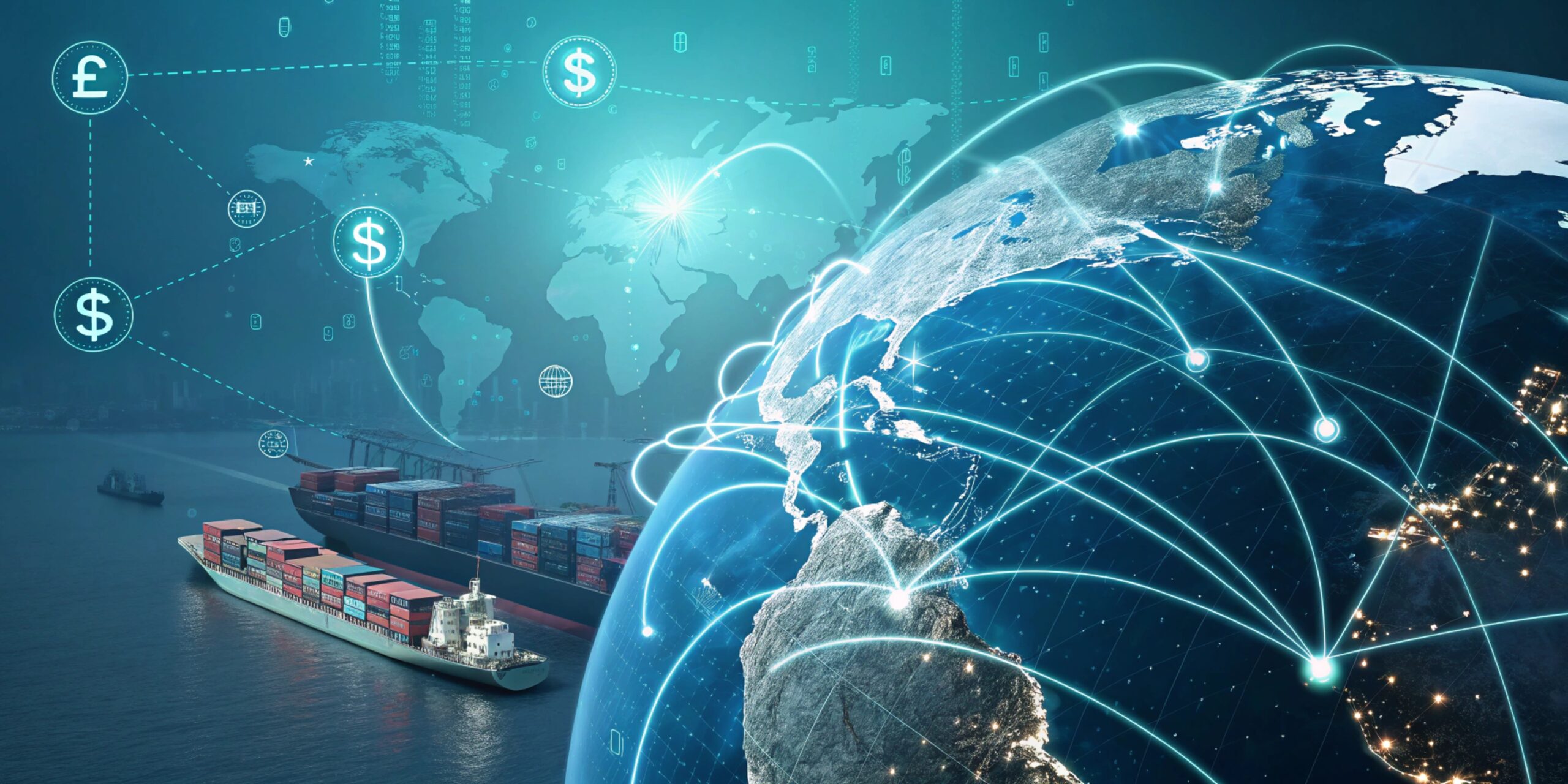
Criminal networks are increasingly embedding themselves within the arteries of the global economy. They exploit the very systems that connect us – global trade routes, supply chains and financial systems – to move illicit goods, traffic human beings and finance their operations. The scale and complexity of this threat demand a response that is equally integrated.
This is why Interpol is advancing a global, action-driven public-private partnership framework to safeguard supply chains. Our objective is straightforward but ambitious: to bridge the data gap between law enforcement and industry, to build a shared understanding of criminal methodologies, and to enable faster, more effective operational responses.
This is necessary because in today’s interconnected world, security is a shared responsibility.
The G7’s Évian Summit offers a critical opportunity. At a time when divisions can so easily overshadow common purpose, the G7 can reaffirm the value of multilateralism as a practical tool for delivering security and stability.
This means investing in information-sharing mechanisms, strengthening trust between partners and ensuring that global frameworks translate into real-world capabilities. It means recognising that the fight against transnational crime is deeply intertwined with economic resilience, development and the rule of law.
And above all, it means choosing cooperation over isolation.
The lesson we have learned time and again is simple: when we come together, we are stronger than the networks we pursue.