

How has the Iranian war affected regional stability, geopolitics and the interests of G7 members?
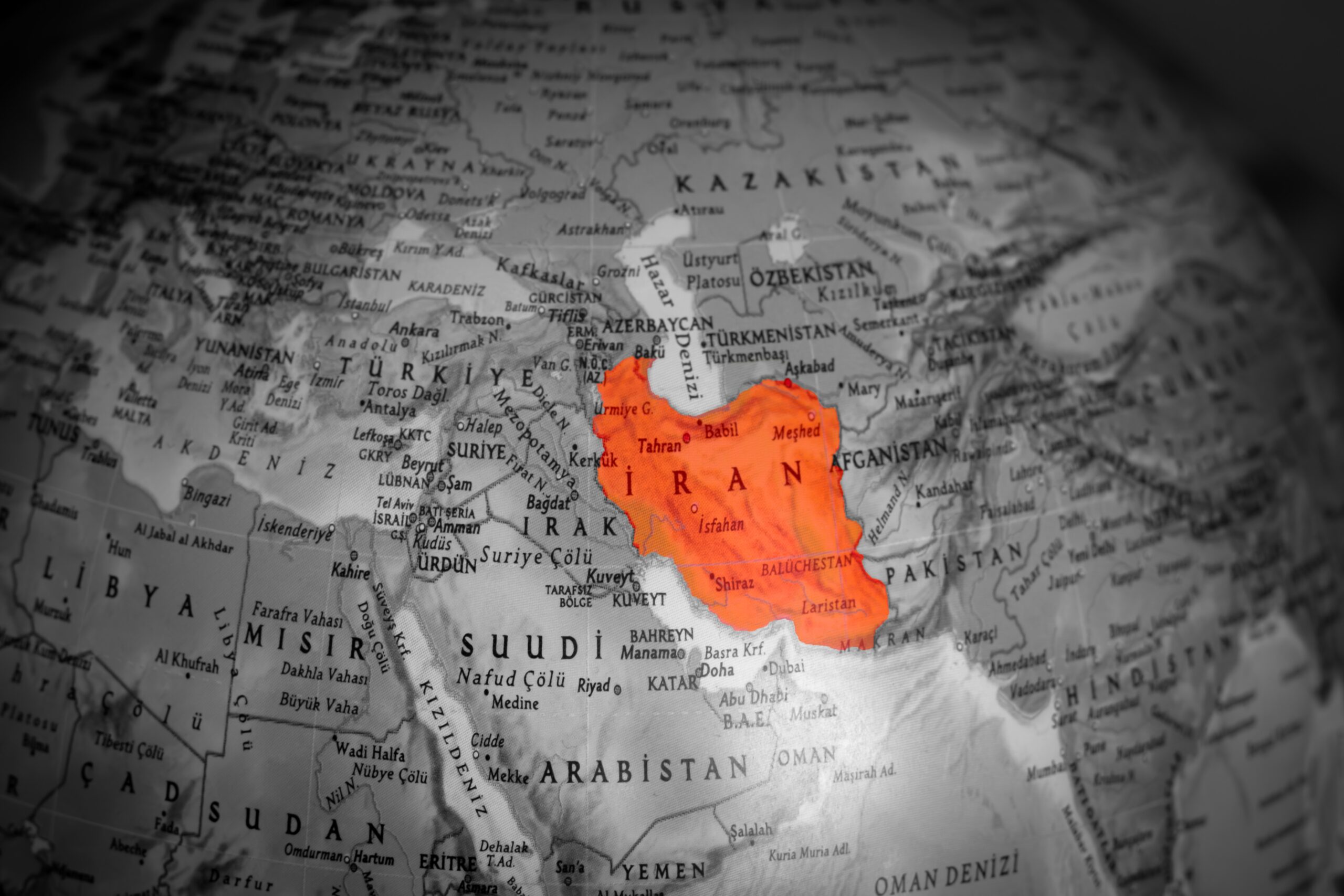
This war was not a quick, easy or decisive conflict that remained limited to Iran. It quickly turned into a regional conflagration with global implications. There was always an anticipated risk that Iran might retaliate against its neighbours, where US bases are located, or Israel, but the fero-city and the scale and scope of the actual Iranian attacks were unforeseen.
Another surprise was that Iran went right for its doomsday weapon – to close the Strait of Hormuz. Every war game anticipated that Iran might deploy that tool, but as a last resort, not in its opening salvo.
So this war demonstrates how a weak country, from a conventional military perspective, can use asymmetric warfare and alliances with US adversaries Russia and China to outgun a stronger power by externalising the pain of the conflict to the rest of the world.
How have G7 members responded to the conflict and its impacts?
The G7 has tried to walk a tightrope by condemning Iranian actions, recognising Israel’s right to self-defence and advocating deescalation. But that position undermines the international norms that have kept conflicts within a certain framework more than it helps deescalate tensions. The very fact that self-defence is recognised for Israel and Ukraine but not Iran – which was the subject of a war of aggression, against the United Nations Charter – demonstrates that the G7 is not trying to uphold international norms. Double standards undermine the G7’s credibility.
This conflict has created new fissures within the G7. The US expected its allies to participate in ensuring freedom of navigation in the Persian Gulf and the Strait of Hormuz. But its G7 allies were not consulted prior to this conflict, which caused the Strait’s closure. Some G7 members have tried to pursue parallel military solutions to a problem that has only a political and diplomatic solution. No maritime coalition could preserve safety and security in open seas in a world where one drone hitting one vessel can stop the traffic in critical waterways. These problems require diplomatic tools. G7 members with good relations with both sides could have done more in finding middle ground solutions.
What are the prospects for bringing an enduring end to the conflict?
Several problems between Iran and the US need to be resolved for a stable situation to emerge. But that would be insufficient because of the animosity between Iran and Israel, and the deep fissures now between the two sides of the Persian Gulf. A more comprehensive solution must be found.
Iran might agree to suspend its enrichment programme for a period, but it is hard to imagine it would forego its right to nuclear fuel cycle technology as a member of the Non-Proliferation Treaty. Iran has paid several trillion dollars in economic damages through years of sanctions and in the added damages inflicted upon it in less than a year. It is unlikely to capitulate on this question.
On the Strait of Hormuz, Iran insists that its geography grants it an advantage in controlling the traffic, and it will continue to do so after the war ends, for revenue for reconstruction. The US and regional allies will find this hard to stomach.
In both these challenges, there is a solution by pursuing a mutually beneficial regional approach. If Iran agrees to suspend its enrichment until there is a regional consortium to provide access to all Gulf states to enrichment or nuclear fuel production, that’s a win-win-win for everyone: the Gulf states’ involvement would ensure the nuclear fuel would not be easily convertible into a weapons programme, and both sides of the Gulf would be bound in a cooperative project towards a new regional security arrangement.
The same could be applied to the Strait. For example, a consortium of Iran and Iraq on one side and the Gulf states on the other, to manage the traffic, is mutually beneficial: both sides could charge transit fees to contribute to a regional fund for recovery from this war in lieu of reparations. So there has to be a mechanism for generating resources without undermining international law. This consortium could be endorsed by a UN Security Council resolution so it supersedes international conventions for freedom of navigation. It also has to be time bound, so it doesn’t set a precedent for other critical international waterways.
Then it’s also possible to have a non-aggression understanding between Iran and the US that would implicitly apply to their regional allies, which could include Israel. Iran would be reintegrated into the immediate near abroad and have a path to recovery and reconstruction. It also removes the threat that Iran imposes on Israel. The US could ensure the safety and security of international waterways and its allies in the region. This is the kind of solution the G7 should support.
What should the G7 leaders do?
At the Évian Summit G7 leaders could express support for a mutually beneficial diplomatic solution. They could also convey support and provide technical assistance for implementing such solutions. As no inclusive, cooperative infrastructure covers both sides of the Gulf, the G7 and its members can thereby assist countries in the region.
The G7 should not support only one side of this conflict. It must support a mutually beneficial solution that sets a new stage for multilateral, win-win diplomacy, which is now becoming the exception. The sooner that trend is reversed, the more it will benefit international peace and security. The G7 can play a very important role here.