


A new challenge
When heads of state and government gather at a G7 summit, they make choices about what the world’s most powerful democracies treat as urgent. Climate, trade, security – these have long commanded summit-level attention, but children’s safety in digital environments has not. A strong G7 statement on children and social media is a test of whether G7 governments are serious about governing the technologies that are reshaping human development.
Across G7 members, we now have a substantial and convergent body of research linking heavy social media use in adolescence with elevated rates of anxiety, depression, disordered eating and sleep disruption – with girls bearing disproportionate harm. We also have whistleblower disclosures, legislative hearings and internal industry documents demonstrating that platform companies have long possessed this evidence and have optimised their work for engagement. We have epidemiological data showing that the deterioration in adolescent mental health correlates temporally and geographically with the proliferation of smartphones and social media platforms.
An uneven landscape
The G7 presents a deeply uneven landscape in relation to the governance of the digital determinants of health. The three European Union country members (France, Germany and Italy) operate within the Digital Services Act but are pursuing divergent national approaches. France – as this year’s G7 host – has moved from political declaration to technical implementation. It enacted its social media age verification law (Sécuriser et réguler l’espace numérique, or SREN) in 2024, requiring platforms to verify that French users are at least 15 years old before creating accounts, with age verification systems going live in April 2025 and full enforcement from September 2026. More recently, French lawmakers passed a bill in late January that would ban social media for children under 15, although the bill still needs to pass the senate before a final vote in the lower house.
Italy’s regulatory engagement is more fragmented, with a bill proposing restrictions on social media use introduced in May 2024 but not yet adopted. In Germany the government has established a high-level committee to explore a social media ban for users under age 16 and several political parties have come out in favour. The United Kingdom is the most advanced in an actual regulatory architecture, with its Online Safety Act in active enforcement. As of July 2025, platforms have a legal obligation to protect children online.
Canada has not yet passed its Online Harms Act. Japan has favoured voluntary approaches. The United States continues to debate the Kids Online Safety Act, which currently leaves large loopholes for the tech industry. At the same time, high-profile litigation cases are contributing to turning the tide.
This fragmentation is precisely why a G7-level statement setting a common position would carry such value. Several non-negotiable elements could be included to guide national policymaking:
Mandatory age assurance – not voluntary self-declaration – for platform access by minors, with technical standards harmonised across jurisdictions so that circumvention across borders is foreclosed;
A prohibition on algorithmic amplification that actively directs harmful content towards minors, with independent audit rights for regulators;
Data minimisation requirements that prevent the commercial exploitation of children’s behavioural data for targeted advertising;
Accessible and effective redress mechanisms – not buried reporting buttons, but enforceable pathways to content removal and account protection;
A common research access framework that requires platforms to provide independent researchers and public health authorities with the data necessary to monitor harm in real time, not years after the fact.
Critics argue that this is regulatory overreach, that it threatens free expression or that enforcement is technically unfeasible. These arguments have been made and have been defeated in other domains of public health – from tobacco advertising to pharmaceutical safety to car seat standards. We do not allow the commercial sector to self-govern when the harm accrues to children and the profit accrues to corporations. There is no principled reason to treat digital environments differently.
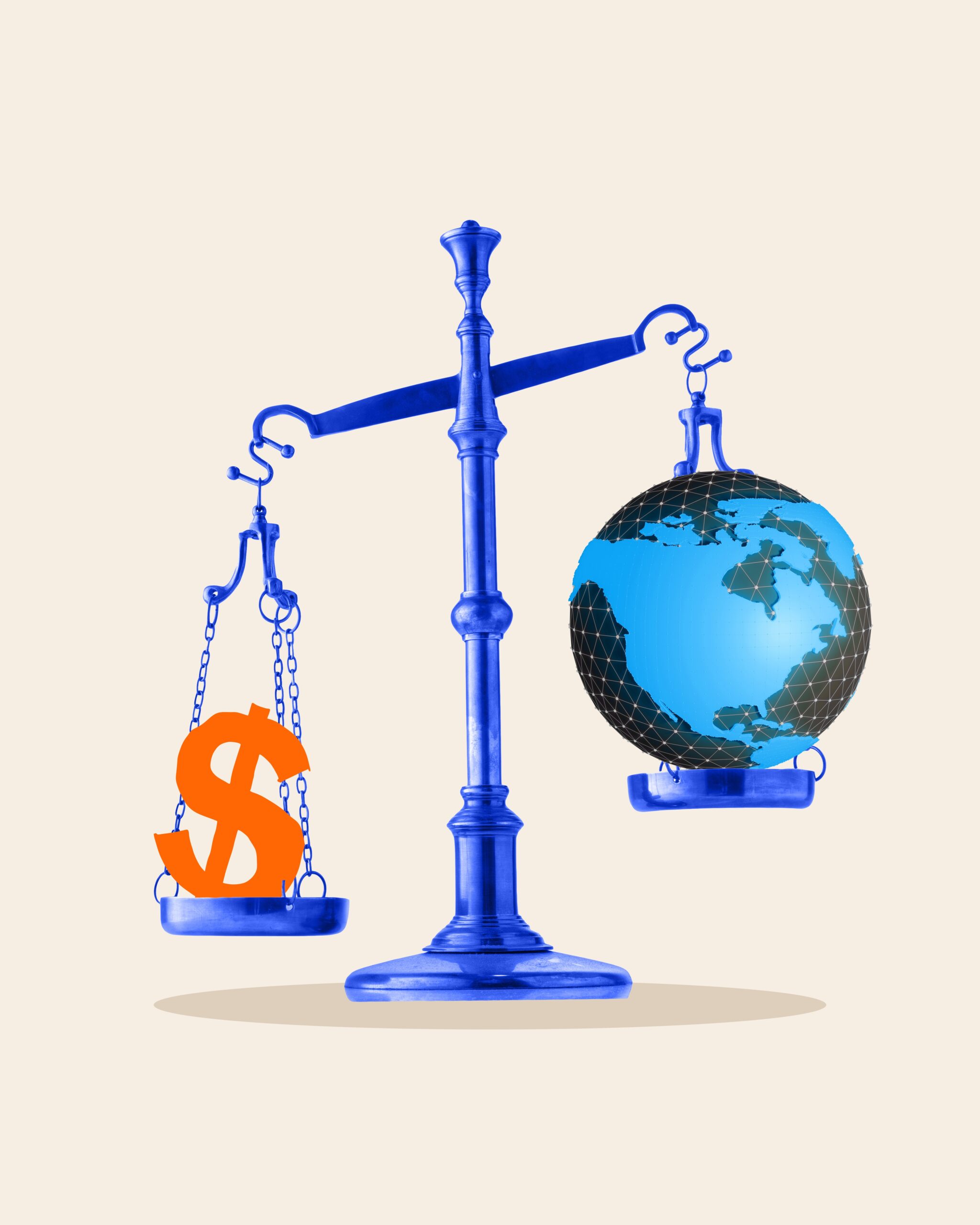
Most importantly, public opinion has shifted in many G7 members. Parents, clinicians, educators and increasingly young people themselves are demanding accountability. The political window for decisive action is open. One could argue that the global child population is largely in the Global South and the G7 only represents about 13% of the world’s children. But a G7 statement that puts genuine, accountable, enforceable standards for children’s safety in digital environments on the political agenda would be a strong signal that could be carried to the G20. And it would be a statement of values – that the world’s leading democracies (or at least the G6) will not sacrifice children’s development on the altar of economic growth.