

France has placed global imbalances – surpluses and deficits in trade and savings – at the centre of the agenda of its 2026 G7 presidency. Imbalances are a polite framing of US president Donald Trump’s concerns about trade.
But there is a fundamental reason for imbalances to return to the international economic agenda: China. China’s growth since the Covid-19 pandemic – and since its property boom went bust – has been lopsided. Domestic demand has been anaemic. Since 2020, net exports have added six percentage points to China’s growth – and three over the last two years. Its physical exports have increased by around 40%. Yet there has been no real growth in China’s imports. Its automobile imports have fallen from around one million cars a year to under half a million; vehicle exports have gone from around one million a year to over nine million.
This directly relates to Europe’s concern about unbalanced trade. China’s exports have grown over two times as much as its global trade over the last three years. Europe’s exports have stagnated. Nowhere is this more true than in Germany – where net exports have subtracted four points from growth over the last six years. China’s boom has come at Germany’s expense.
Asia’s surpluses and the currency question
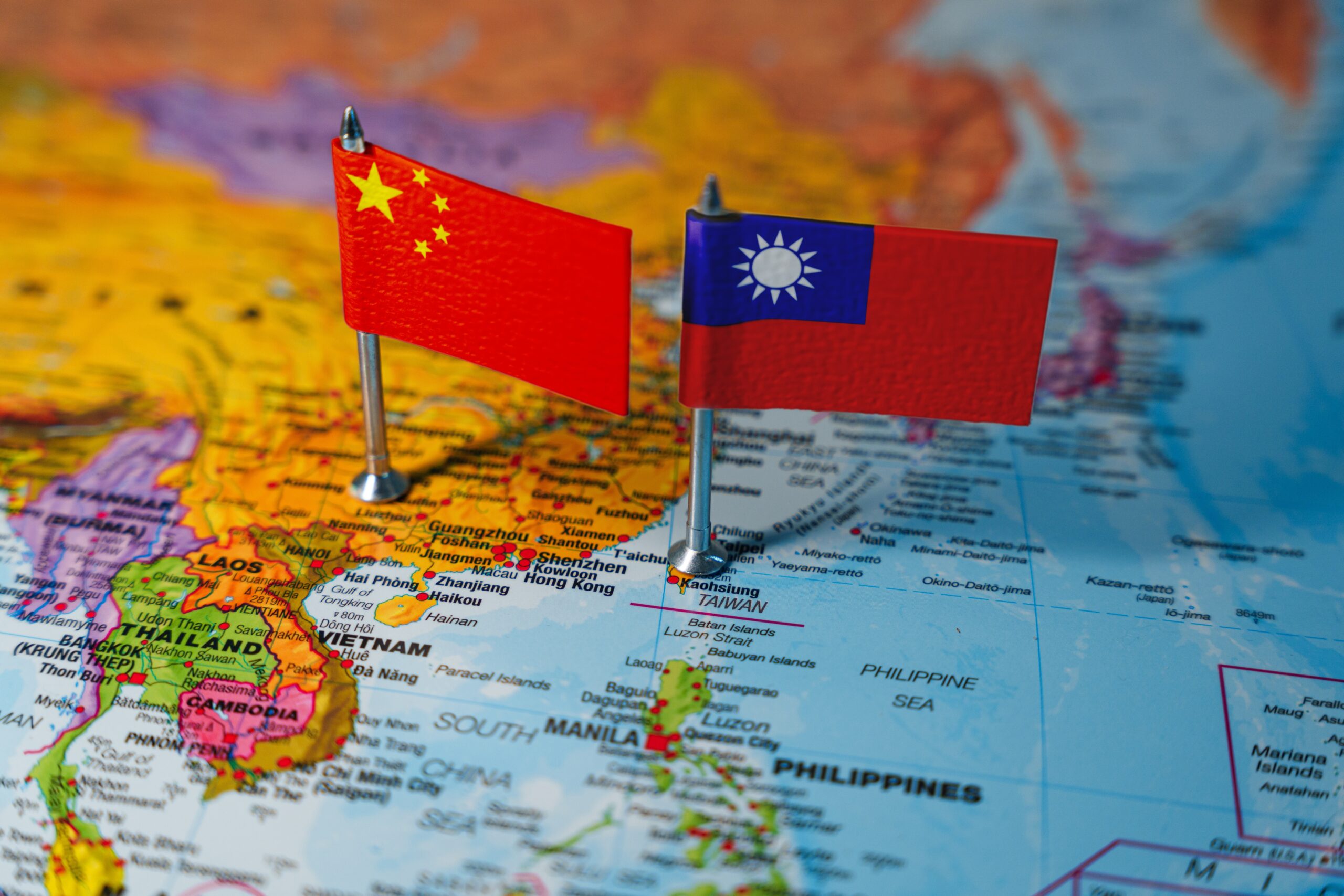
China’s export boom has undercut Europe’s surplus – Europe’s customs surplus disappears if the impact of US companies avoiding US tax by producing and exporting from Ireland is netted out. But thanks to strong demand for chips, Korea and Taiwan are posting record trade surpluses. Taiwan’s current account surplus reached an astonishing 20% of its gross domestic product in the fourth quarter of 2025.
The world’s biggest surpluses are thus concentrated in Asia, in countries whose currencies have weakened against the dollar over the last five years, even as their trade surpluses soared. Or rather, their trade surpluses soared in part because of their weak currencies.
It is easy to make any solution to imbalances seem impossible without fundamental changes in China’s domestic political model and America’s budget trajectory. But history has shown that trade responds to currency moves, so the most straightforward way to reduce trade imbalances would be an appreciation of the currently weak currencies of Asia’s big surplus countries.
Most have long managed their currencies. China and Taiwan are clearly putting their thumb on the market’s scale to hold their currencies down. Chinese state banks have increasingly been buying US dollars – with monthly purchases reaching $100 billion before the Strait of Hormuz shock. Taiwan changed the regulation of its large life insurance firms to encourage them to increase their open foreign exchange position and reduce their hedging (creating a bid of dollars), and discouraging the Taiwan Semiconductor Manufacturing Company from bringing its export windfall home. Korea and Japan, with large foreign exchange reserves and sovereign pension funds that do not generally hedge their foreign exposure, equally have tools to act directly in the foreign exchange market – and both would like their currencies to strengthen, particularly if it means no loss of competitiveness relative to China.
Policy constraints and the limits of coordination
The International Monetary Fund understands reserve accumulation, but not China’s unique tools – notably the use of entrusted loans to move foreign currency off the People’s Bank of China’s balance sheet and its requirement that state banks intervene to assure the stability of the foreign exchange market, even if that risks creating a currency mismatch on their balance sheet. The IMF’s call for structural reforms to China’s growth model and for fiscal restraint in the United States are directionally correct, but it remains reluctant to call on China to let its currency move – which would require China to accept sluggish growth or change its model; and might create market pressure for the US to adjust its budget.
France has thus clearly succeeded at drawing new attention to the world’s widening payments imbalances (masked by China’s changes to its balance of payments methodology in 2022) and at getting the IMF to focus as much on imbalances as on its old bugbear of fragmentation. But it is not yet clear if there will be any concrete deliverables from the Évian Summit.
Chinese president Xi Jinping will not attend. The Europeans have not figured out how to do currency diplomacy after the creation of the euro. And the Americans do not seem interested. Trump is convinced, incorrectly, that the fall in the US bilateral deficit with China means that the problem has been solved. He should look at China’s massive global surplus instead. More over, he is focused on maintaining the trade truce through the two planned US-China state visits, and his treasury secretary Scott Bessent seems to want to avoid throwing any currency punches.
The result is an impasse. China does not seem ready to negotiate away its growth model or change its currency policy. It seems confident that the world needs Chinese supply, including its rare earths, so much that the world will not erect barriers that slow its exports. It thus seems easier to let a weak currency propel export growth than take real action to propel domestic consumer demand. The G7 is happy to complain about imbalances but not yet willing to consider acting jointly to erect barriers to Chinese (and East Asian) exports if trade does not become more balanced. The odds are that nothing much will change this year, except that an already unbalanced world economy will become more so. Stresses are apparent; but nothing quite seems ready to break.