

We stand at a defining moment in the history of human health. Artificial intelligence has the potential to be the greatest equaliser of our time, capable of bridging longstanding gaps in prevention and access, accelerating diagnosis, transforming health systems, and improving outcomes for billions of people worldwide. Yet today, that potential is largely unrealised. The technology is advancing at an unprecedented speed, but the governance is not keeping pace. And the populations who stand to benefit most are the ones being left furthest behind.
This is why the conversation at the G7 matters now. France has placed digital governance and the ethics of artificial intelligence firmly on the Évian agenda, reflecting a wider recognition that technological progress without public trust will not deliver real-world impact. In health, that principle is especially clear: Innovation will move at the speed of trust.
The governance deficit is real — and the G7 must lead
The world’s most advanced economies have made bold investments in AI innovation. What has lagged is the corresponding investment in governance that allows innovation to scale responsibly. Without strong regulatory capacity, ethical guardrails and international coordination, even the most promising AI solutions will struggle to move beyond pilots or reach those who need them most.
This is not a call to slow down innovation. It is precisely the opposite. It is an argument for making innovation sustainable. Trust is what gives regulators the confidence to assess AI tools, clinicians the confidence to use them and citizens the confidence to accept them. When governance is weak, adoption slows, confidence erodes and health systems miss the chance to use AI to improve care, efficiency and resilience.
For low- and middle-income countries, the stakes are even higher. AI could help expand access to quality health care and support overstretched systems. But if governance capacity is built only in wealthy markets, the AI revolution will widen inequalities rather than reduce them.
HealthAI: building the governance infrastructure the world needs
HealthAI – The Global Agency for Responsible AI in Health is a Geneva-based, independent nonprofit working at the intersection of AI, health and governance. Its mission is to advance the development and adoption of responsible AI solutions in health through the collaborative implementation of regulatory mechanisms and global standards. As an implementation partner, HealthAI works with governments, regulators and health systems to translate principles into practice.
A central pillar of this work is the HealthAI Global Regulatory Network (GRN), a first-of-its-kind platform that brings together health ministries and regulators. Ten governments have already formally joined: the United Kingdom, Singapore, India, Vietnam, Brazil, Indonesia, Zambia, Peru, the Philippines and Portugal. Together, these countries represent nearly 30% of the world’s population.
This is no symbolic partnership; it is an actionable commitment by governments to strengthen national capacity for responsible AI governance in health while learning from one another across regions and income levels.
Beyond the GRN, the HealthAI Community of Practice has grown to more than 500 institutions across more than 75 countries, spanning academia, civil society, government and the private sector. This reflects a belief that responsible AI governance cannot be built by any one actor alone.
Several G7 countries and their development finance partners are already among the donors, investing in responsible AI governance as an international public good. While this is a strong commitment, the world needs more.
Three calls to action for the G7
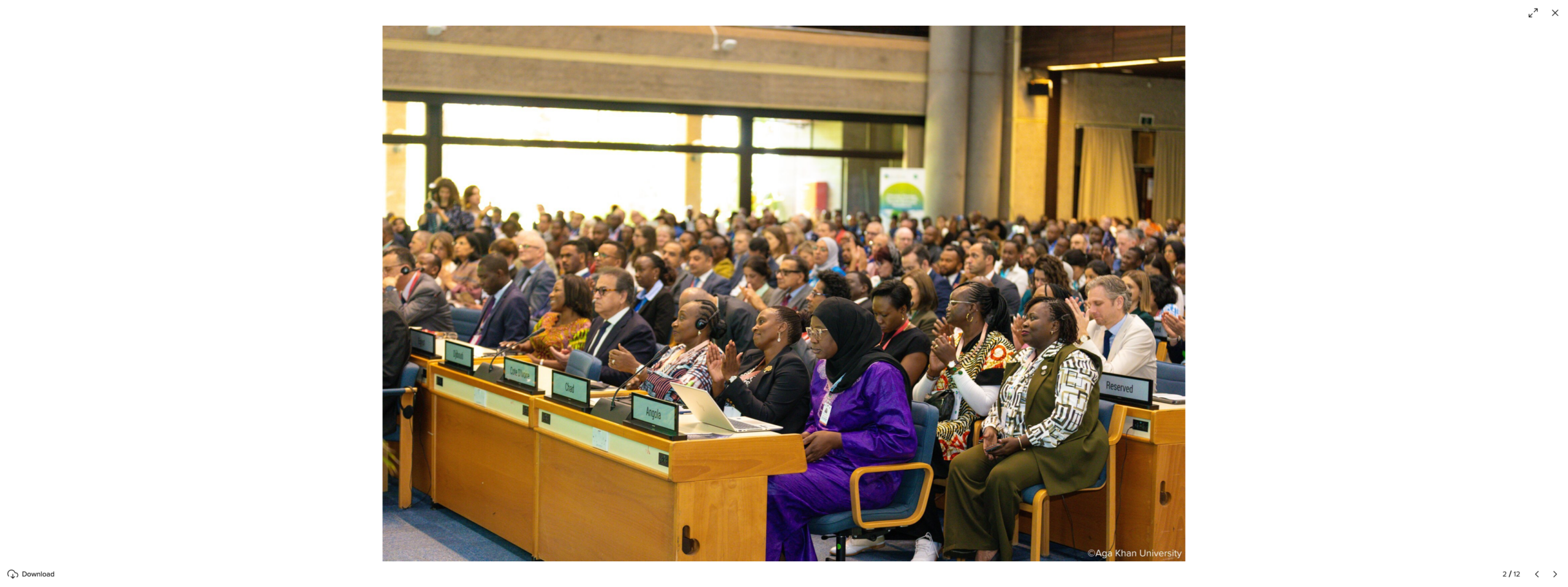
As world leaders gather at Évian, HealthAI extends three specific calls to action.
First, we call on all G7 members to join the HealthAI Global Regulatory Network. The United Kingdom is already a pioneering member. We urge the other G7 members to follow. Membership means commitment: to build national regulatory capacity, to contribute to shared standards and to demonstrate to the world that the most powerful economies are not just innovating in AI – they are committed to governing it responsibly and to ensuring that everyone can benefit from this intelligence revolution. This is how G7 countries retain and reinforce their leadership in the AI era.
We also call on G7 members to significantly increase their investment in responsible AI governance in low- and middle-income countries. The rising tide of AI must lift all boats. If governance infrastructure is only built in wealthy countries, AI will deepen, not diminish, global health inequities. Populations in LMICs have the most to gain from AI-enabled health systems, and the least capacity to protect themselves from its risks. Supporting HealthAI’s implementation work in these regions is a strategic investment in a more stable, equitable and prosperous world.
Finally, we call on the G7 as a body to take a stronger, more explicit stance on the governance of AI in health as a prerequisite for realising AI’s potential. Governance must be treated not as a compliance burden, but as the necessary infrastructure for trust, and trust as the necessary infrastructure for impact. We urge the G7 to commit to harmonised regulatory approaches, to support multilateral frameworks for AI safety signal sharing, and to champion the principle that no community should be left behind in the AI revolution.
HealthAI is fully committed to this mission. We stand ready as a partner to the G7 to provide technical expertise, facilitate international coordination, and ensure that the governance of AI in health keeps pace with its innovation. You can count on us. The people of the world are counting on you.