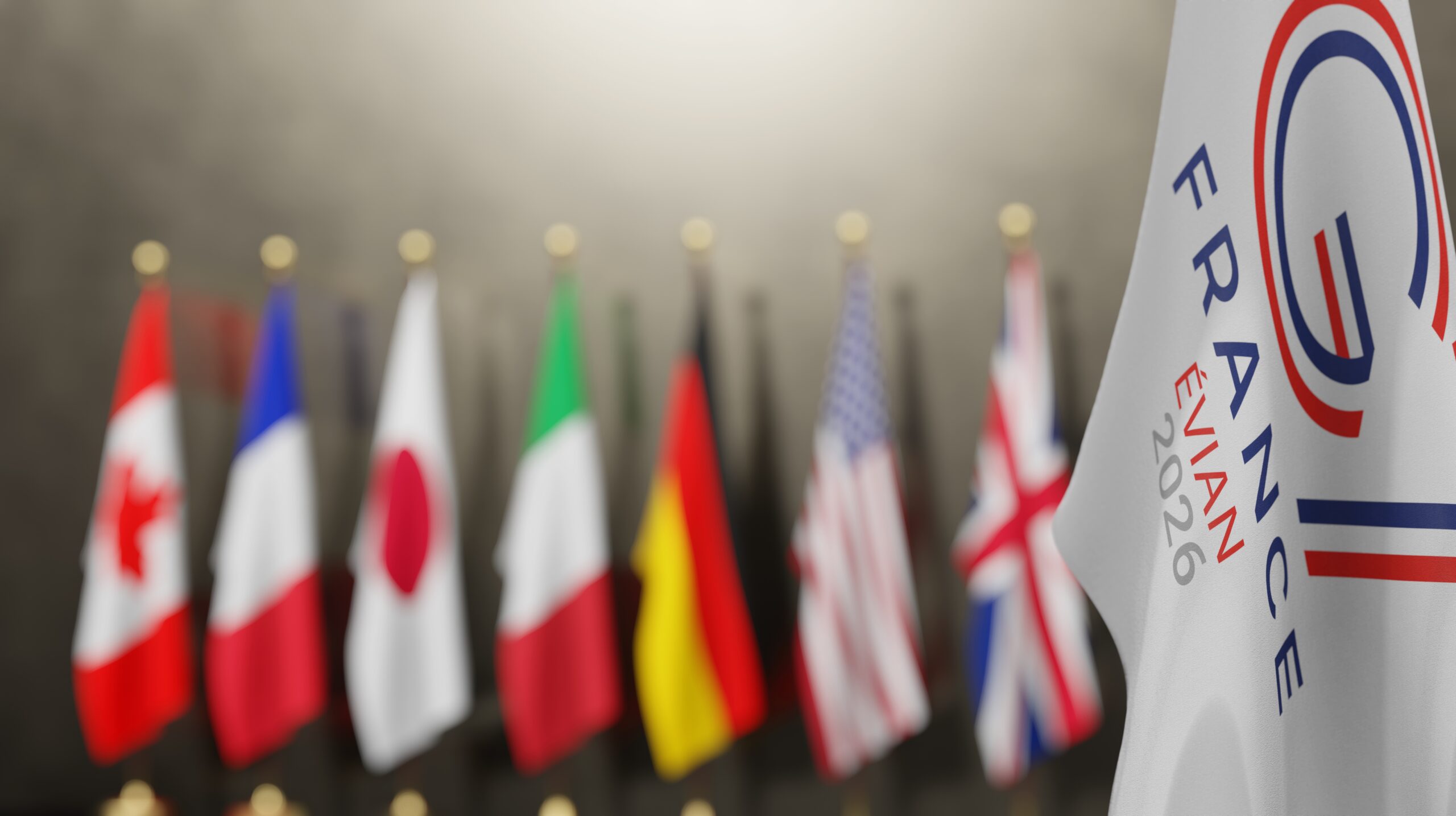


The G7’s 52nd annual summit will be hosted by France, for the second time at Évian, on 15–17 June 2026. It starts a new cycle of each member hosting, led by France, which inaugurated G7 summits at Rambouillet in 1975. It is designed and chaired by French president Emmanual Macron, who delivered the G7’s Biarritz Summit in 2019 and who will be at his tenth summit since becoming president in 2017.
Macron will again welcome US president Donald Trump, coming to his sixth summit and his second during his return to the US presidency in January 2025. European Commission president Ursula von der Leyen will also be at her sixth, and Italian prime minister Giorgia Meloni at her third. Coming to their second summit will be Canadian prime minister Mark Carney, who hosted at Kananaskis last year, German chancellor Friedrich Merz. European Council president António Costa and UK prime minister Keir Starmer. Japanese prime minister Takaichi Sanae will be at her first. Their invited leaders come from the key countries of the Global South: Brazil’s President Lula da Silva, India’s Prime Minister Narendra Modi, Korea’s President Lee Jae Myung and Kenya’s President William Ruto. Ukraine’s President Volodymyr Zelenskyy may also be invited.
Confronting interconnected conflicts
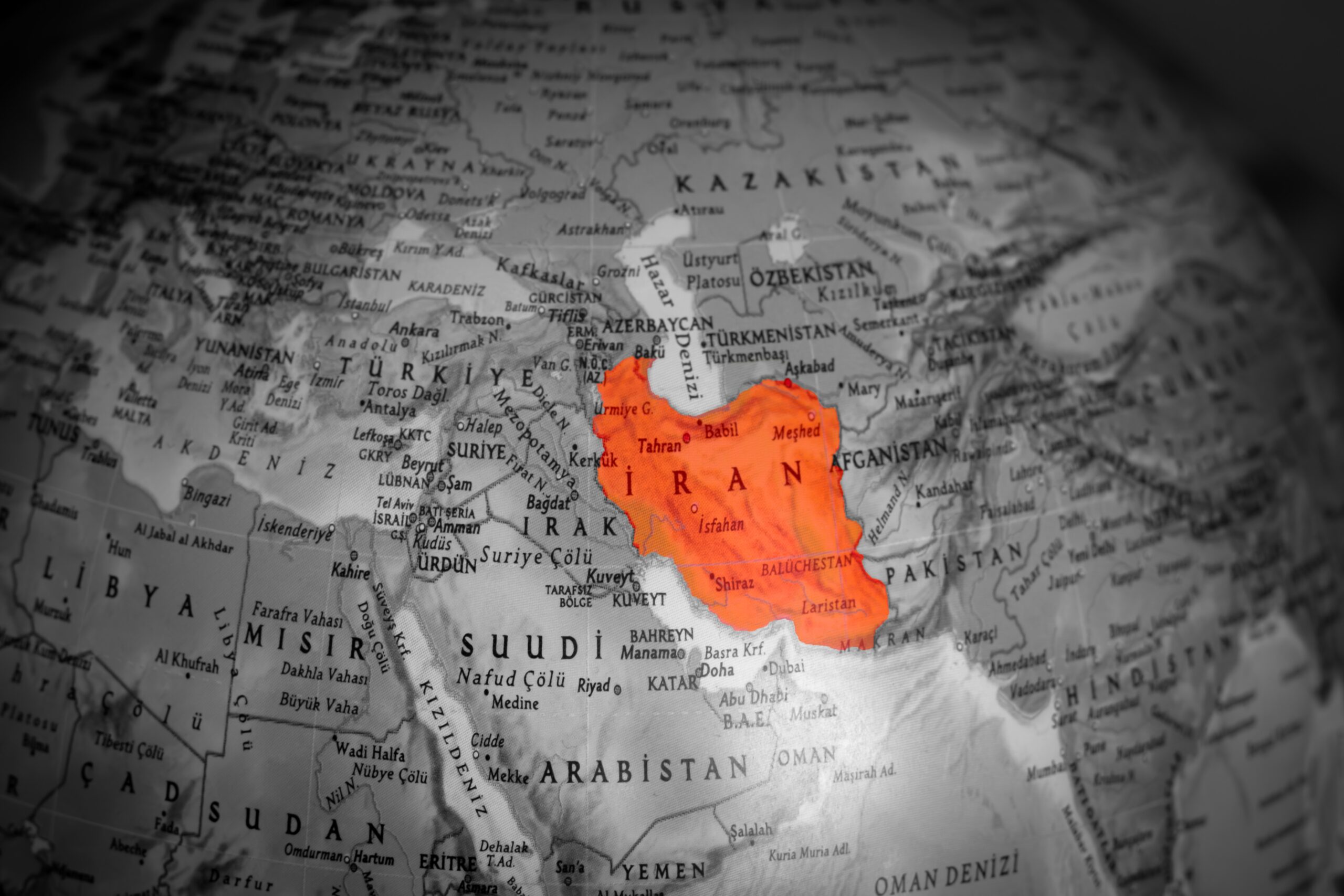
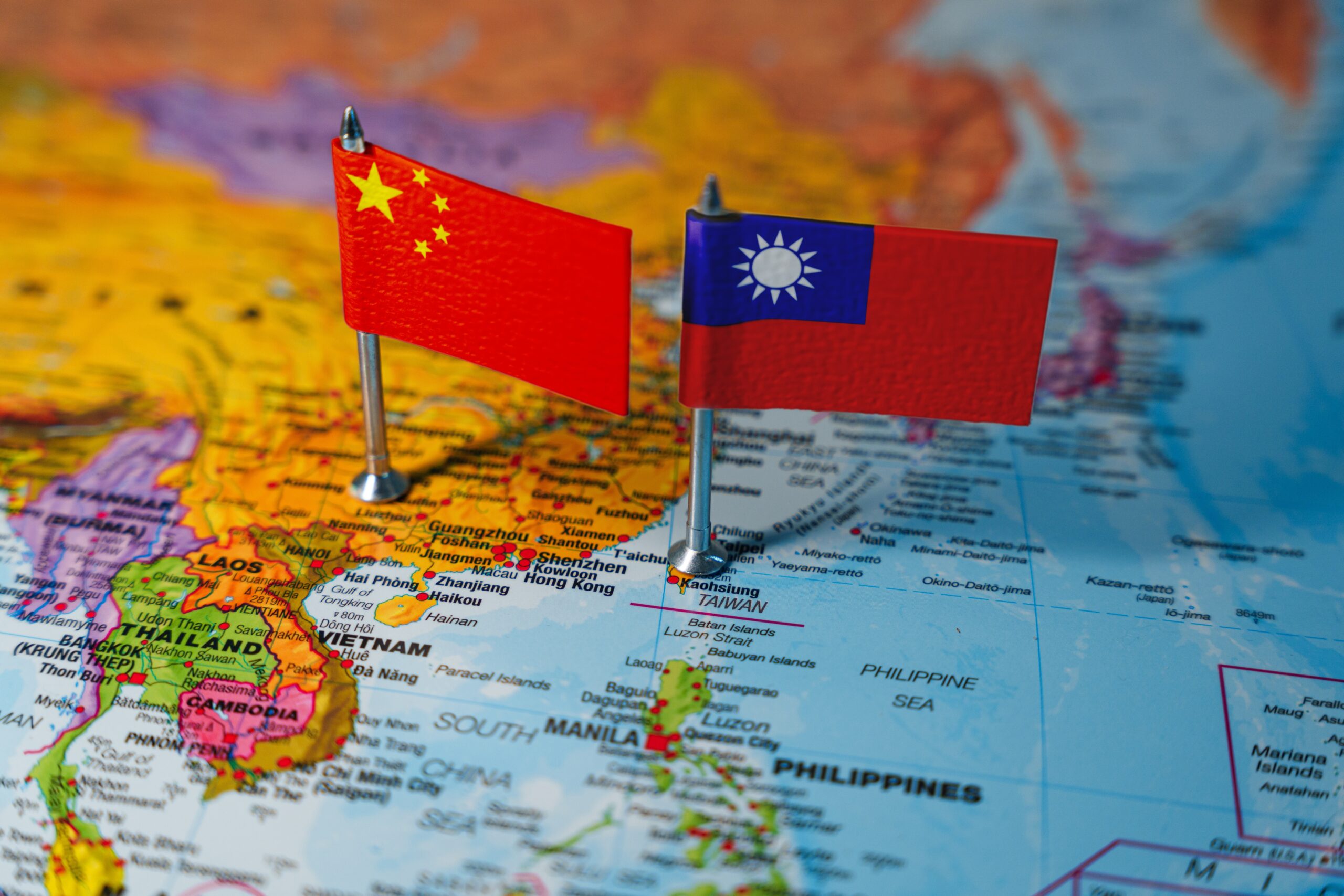
These leaders will confront a comprehensive, interconnected complex of global conflicts. These begin with the wars in Iran, the Middle East and Ukraine, military confrontations in the Indo-Pacific region and violence in North Africa and the Caribbean. These tensions have created new threats in security, energy, food, trade, supply chain security, inflation and economic growth, as well as human health, climate change, pollution and biodiversity loss. They arouse fears of a new surge of unwanted immigration from conflict zones, terrorism and foreign interference in G7 polities and societies. And they could divert leaders from the urgent need to govern the proliferating digital technologies of artificial intelligence and quantum computing.
Policy and political priorities
In response, G7 leaders will greatly expand the highly focused, economic and development priorities that France initially set for its 2026 G7 presidency. These were addressing global macro
economic imbalances among the world’s biggest economies, creating development partnerships beyond government aid, restoring multilateral frameworks and new rules for global governance, and building bridges and cooperation with emerging countries, notably those in the BRICS and the G20. These priorities were soon joined by critical minerals supply chain resilience; geopolitical crises, especially support for Ukraine; protecting children through development programmes and by controlling online assaults; and countering organised crime and illicit finance flows. Priorities proliferated after 28 February with the US attack on Iran and the new need to create a durable end to that war and repair the immense damage it has caused.
Also important are Évian’s political and institutional priorities. The first is maintaining unity among the G7 leaders, including its most powerful member, the United States. The second is showing this unity by making many fully agreed, ambitious, innovative commitments that members will faithfully implement during the following year. The third is to get the invited guest leaders to participate as equal partners in the G7’s global governance and extend the impact of the Évian consensus through the G20, BRICS and the other plurilateral summit forums they help lead.
The potential for significant progress
The Évian Summit thus has the potential to produce a significant performance, despite the poor domestic support for several leaders and the unpredictability of Donald Trump. The summit promises to advance its initial priorities of macroeconomic policy, trade, investment and development partnerships, its outreach to consequential partners, the digital economy, artificial intelligence and quantum technology, and childhood safety. More unpredictable is its performance on the now preoccupying priorities of the US-led war against Iran and Russia’s war against Ukraine, and their impact on G7 and global energy, supply chains, food and financial security, and environmental protection.
This potentially significant performance will be driven by the many strong shock-activated vulnerabilities in security, energy and possibly the economy, major multilateral organisational failure by United Nations bodies in response, and the significant predominant, equalising capabilities of G7 members and their participating democratic partners, but offset by the constraints from their leaders’ diverging principles and often poor domestic political support.
Above all, their performance should be propelled by the significant value that these G7 leaders place on the G7 as their club at the hub of a growing network of global summit governance. This has been seen in the many meetings and statements from G7 leaders and their ministers during the first five months of 2026. More broadly, all G7 leaders have always come to all G7 summits for their full 51-year life, including Donald Trump for all five during his presidencies to date. He helped produce the 150 commitments made at the Kananaskis Summit in 2025 and G7 member governments complied with them at a level of 75% during the following five months. And he will want his fellow G7 leaders at Évian to create a firm foundation for the even more successful summits he plans to host for the G20 in Miami on 14–15 December 2026 and for the G7 one he will design and deliver at home in 2027.