

By Global Governance Media Editorial Desk
Roughly 80 percent of world merchandise trade by volume moves by sea, according to UNCTAD. That baseline matters because a shipping group with a material London presence and a large global operating footprint can affect inflation, industrial input flows, energy logistics, and insurance pricing far beyond the ports it serves. Eastern Pacific Shipping belongs in that category. For G7 and G20 governments, especially the UK, it is best understood as part of the infrastructure of economic security and of the wider system that explains why oceans matter to global stability and prosperity.
Its UK arm alone is significant enough to register in policy terms. Eastern Pacific Shipping (UK) Ltd. has operated since 1988 and Preqin lists the entity in London, UK, with 2024 revenue of USD 35.66 million and EBITDA of USD 2.60 million (Preqin profile of Eastern Pacific Shipping UK Ltd.). Those figures do not make it system-defining on their own. They do show that Eastern Pacific Shipping is embedded in a major G7 maritime and financial centre, where shipping decisions interact with legal services, marine insurance, sanctions compliance, and trade finance.
That connection is the strategic point.
A company operating at this scale can shift how risk is transmitted through supply chains. Fleet renewal choices affect fuel exposure and emissions compliance costs. Route and chartering decisions affect delivery times and freight availability. Maintenance schedules, crewing models, and vessel deployment affect whether disruption stays local or spreads into broader shortages for import-dependent economies. In the Eastern Pacific and adjacent trade corridors, those are not abstract management choices. They are variables that can tighten or ease pressure on G20 supply chains.
Table of Contents
- The Unseen Nexus of Global Trade
- Mapping the Arteries of Commerce
- Navigating the Complex Regulatory Waters
- Environmental Risks and the Decarbonisation Imperative
- Maritime Security and Systemic Supply Chain Risks
- A Case Study in Global Shipping Operations
- Policy Pathways for a Resilient Maritime Future
The Unseen Nexus of Global Trade
The strongest way to understand Eastern Pacific Shipping is not as an isolated operator but as part of a maritime system that subtly underpins industrial stability. Shipping lanes in the Pacific connect production centres, commodity exporters, logistics hubs, insurers, financiers, and ports into one operating fabric. When that fabric tightens, trade flows efficiently. When it frays, inflation, inventory stress, and industrial delays move ashore fast.
That's why the eastern Pacific deserves more policy attention than it usually gets. Public discussion often lingers on decarbonisation pilots, vessel orders, or corporate innovation days. Those developments matter, but they don't answer the harder question facing G20 leaders. What happens to national resilience when a major operator's route economics or operational constraints collide with climate disruption, port congestion, labour conflict, or security incidents across Pacific-linked trades?
Why the UK should care
The UK often appears one step removed from Pacific disruptions because the geography feels distant. The commercial reality is different. London remains a maritime services centre, and firms with a UK office can influence chartering, management, compliance, and operating choices that ripple through wider trade networks. Eastern Pacific Shipping's dedicated UK footprint points to local coordination capacity that is directly relevant to UK-linked shipping activity, not merely a symbolic address.
A useful starting point is to frame oceans as strategic infrastructure rather than empty space. Why oceans are important to global governance and resilience is a better policy lens than seeing shipping only through freight rates or port queues.
The eastern Pacific is not peripheral to G20 prosperity. It is one of the operating theatres where commercial efficiency and systemic fragility meet.
The real strategic tension
The central tension is that efficiency has become inseparable from vulnerability. Modern fleets, tighter scheduling, and digital performance tools can improve utilisation and cost control. They can also reduce tolerance for disruption when multiple shocks arrive together. A vessel delay is rarely just a vessel delay. It can become a missed slot, a cargo rollover, a revised bunker decision, a chartering problem, or a downstream manufacturing interruption.
For policymakers, that means maritime strategy can't stop at ports or emissions rules. It has to include operator behaviour, commercial governance, and cross-border contingency planning.
Mapping the Arteries of Commerce
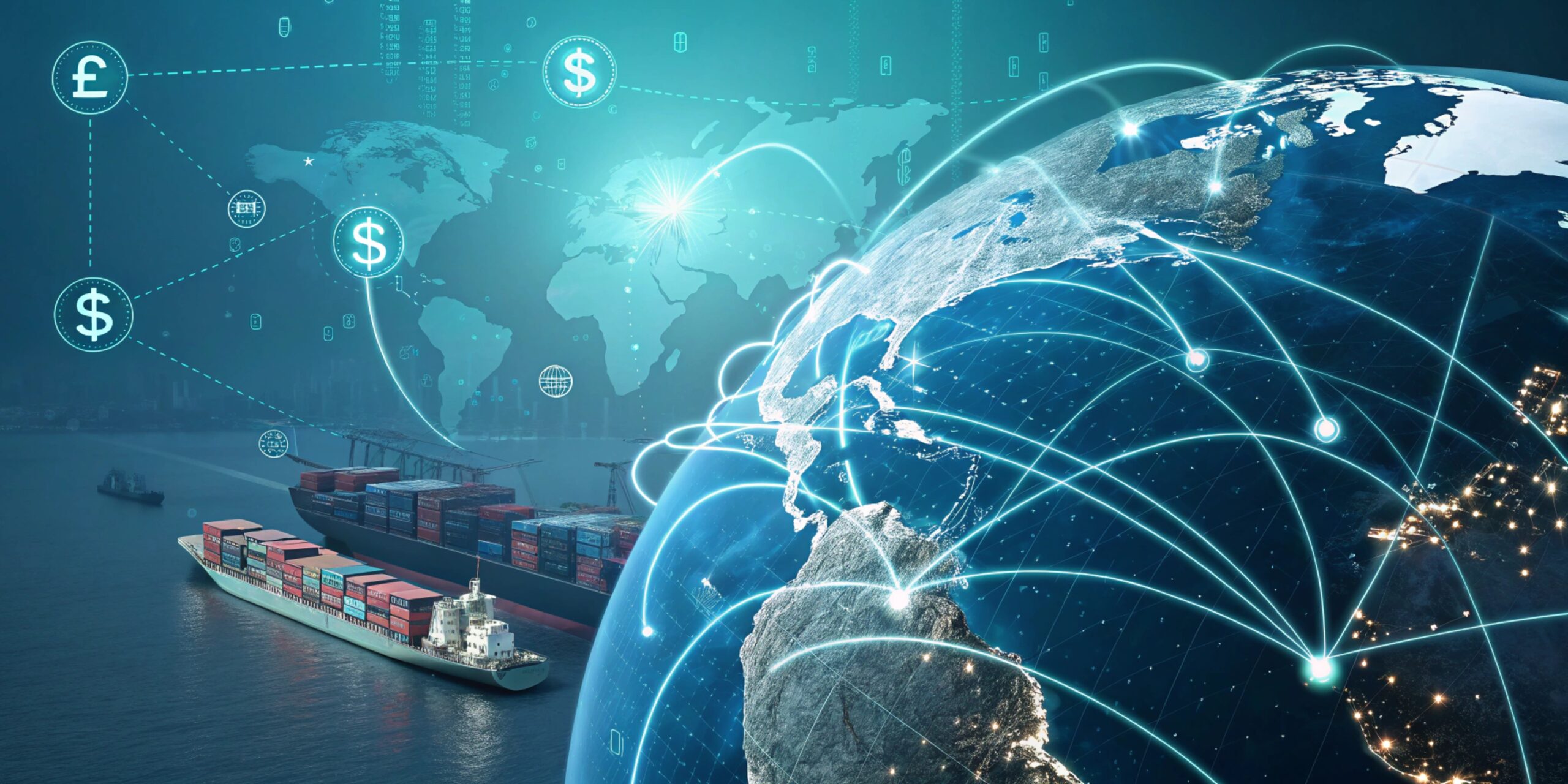
The eastern Pacific is best understood as a network of corridors rather than a single route. Cargo moves across linked deep-sea trades connecting Asia, the western seaboard of the Americas, South American commodity routes, and onward connections through canal systems and transhipment nodes. Operators such as Eastern Pacific Shipping matter because fleet deployment choices determine which trades remain fluid when pressure builds.
Early in any policy briefing, it helps to visualise the system:
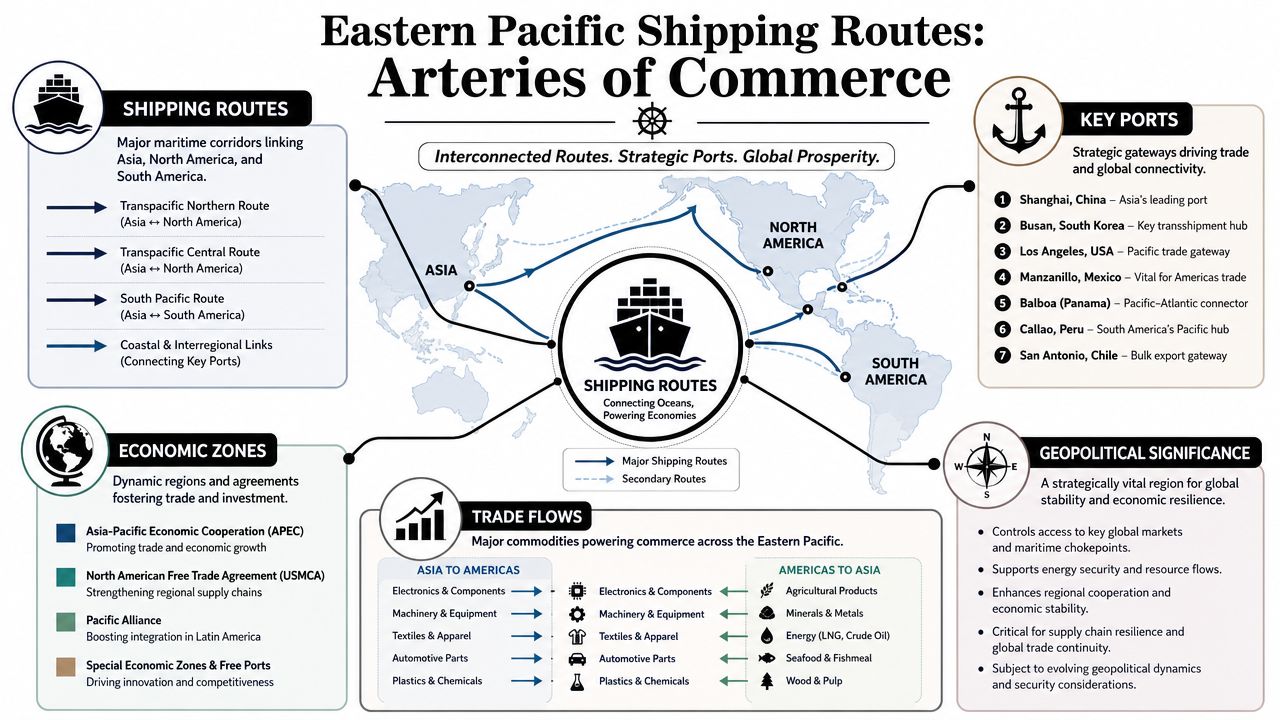
Eastern Pacific Shipping itself states that it manages about 200 vessels and 20 million deadweight tonnes, which gives it substantial scope to affect cargo allocation and route planning across major deep-sea trades (Eastern Pacific Shipping corporate site). That scale matters because route selection is never just about geography. It is a commercial calculation shaped by vessel type, cargo timing, maintenance windows, fuel strategy, and regulatory exposure.
What moves through these routes
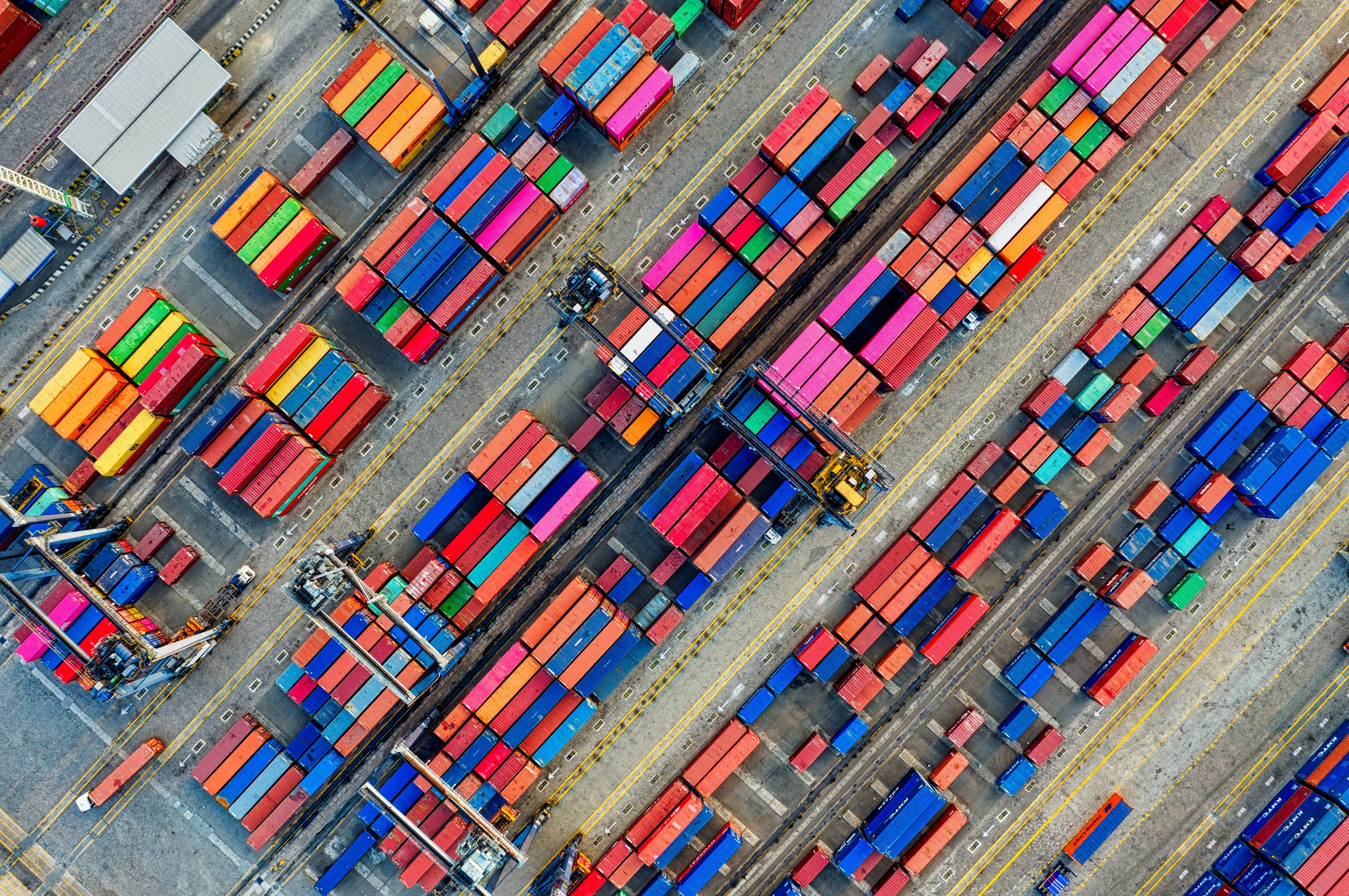
The traffic profile is diverse. Containerised goods support retail, manufacturing inputs, and industrial equipment flows. Tankers and bulk carriers connect energy and raw materials markets to downstream production. That mix is why eastern Pacific disruption rarely stays confined to one sector. The same operator may be relevant to consumer goods availability, industrial output, and energy-linked logistics at once.
For officials trying to map exposure, global value chains and their strategic bottlenecks provide the right framework. Maritime transport is not just a transport layer. It is the moving backbone of those value chains.
Why infrastructure concentration matters
Port complexes, canal access, and intermodal links create concentration risk. A few hubs do outsized work, and that means local disruption can have system-wide effects. The eastern Pacific is especially exposed because Pacific services often depend on tightly sequenced vessel rotations and highly synchronised onward inland movement.
To compare routing choices or explain modal trade-offs to non-specialists, practical guides on global sea shipping options can be useful. They show why sea freight remains the default for many cargo types even when geopolitical or environmental conditions become less predictable.
Later in the route analysis, operational context also matters:
Strategic reading for G20 leaders
A short policy table makes the point more clearly:
| Corridor feature | Why it matters for governments |
|---|---|
| Fleet deployment flexibility | Determines whether operators can absorb disruption or must cut, delay, or reroute capacity |
| Port concentration | Increases the impact of labour, weather, cyber, or security incidents |
| Cargo diversity | Spreads disruption from one trade lane into multiple sectors |
| Canal and chokepoint dependency | Turns regional incidents into wider supply chain risk |
The core insight is that eastern Pacific trade resilience depends on decisions made by private operators long before a crisis becomes visible to ministers.
Navigating the Complex Regulatory Waters
The eastern Pacific is governed by overlapping legal and commercial regimes. Flag-state rules, port-state control, customs classification, sanctions compliance, labour standards, emissions rules, and charterparty obligations all operate at the same time. In calm conditions, that layered system allows trade to move. Under stress, the same complexity can slow decision-making and increase friction.
G20 leaders should view this as a governance problem, not a paperwork problem. Operators need predictable standards, but they also need room to respond quickly when a route becomes commercially or politically unstable. The gap between those needs is where trade disruption often worsens.
Where rules collide with operations
One recurring challenge is that global shipping governance is multilevel while disruption is immediate. A port authority can impose local requirements. Customs can tighten documentary scrutiny. Financial restrictions can alter who can transact. Environmental obligations can affect voyage planning. None of these is optional, yet the combined effect can make resilience harder unless states coordinate.
For trade officials outside maritime ministries, even cargo classification can become a hidden friction point. If policymakers want a practical primer on product classification and customs treatment, a concise way to understand HS code system helps explain how administrative detail shapes real-world trade flows.
Practical rule: Regulatory complexity becomes a resilience risk when governments harmonise objectives in speeches but not in procedures.
Treaty principles still matter
Maritime stability still rests on basic legal principles that states shouldn't treat casually.
Freedom of navigation, lawful commerce, and predictable treatment under international law are not abstract ideals. They are operating conditions for global supply chains.
Coastal state authority and international transit rights need constant diplomatic maintenance, especially when geopolitical tensions intensify.
These principles are especially important when trade politics harden. Governments may pursue industrial policy, sanctions, security screening, or strategic autonomy. Those goals can be legitimate. But when they are layered without coordination, shipping operators face a compliance maze that can fragment routes and raise risk for importers and exporters alike.
Why the G20 should care about trade governance reform
Trade governance cannot be separated from maritime resilience. A fragmented trade order pushes costs and uncertainty onto operators, ports, insurers, and cargo owners. That's one reason how the G20 can advance WTO reform is directly relevant to shipping strategy. Rules-based trade and rules-based navigation support each other.
A focused multilateral agenda should include:
- Common crisis protocols: Governments should pre-agree how to communicate port restrictions, customs changes, and emergency operating measures.
- Data interoperability: Authorities need compatible reporting standards so ship operators don't face conflicting demands across jurisdictions.
- Regulatory sequencing: New environmental, security, and trade requirements should be phased in with operational realities in mind.
The legal architecture exists. The problem is uneven coordination.
Environmental Risks and the Decarbonisation Imperative
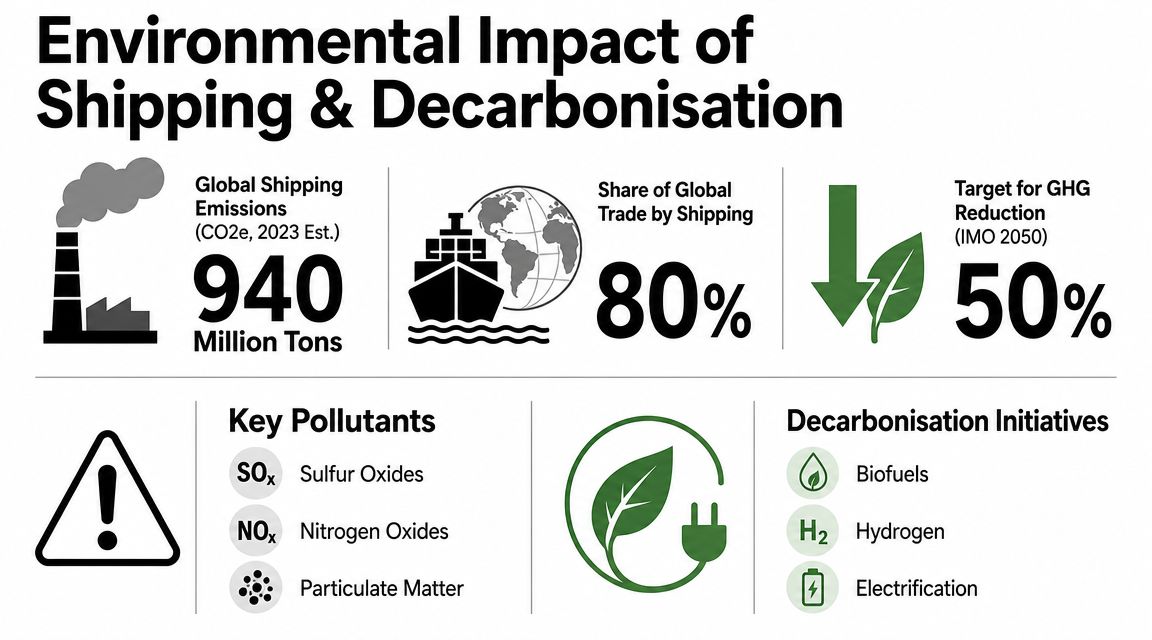
Shipping's environmental challenge isn't solved by adding technology to existing operating models. Digital tools can improve efficiency. Wind-assist projects can alter voyage economics. Better monitoring can identify underperformance earlier. None of that removes the wider environmental exposure that comes with fleet operations across congested and regulated waters.
Eastern Pacific Shipping offers a useful example of both progress and limitation. In May 2024, the company announced a full-fleet roll-out of DeepSea Technologies' Cassandra Performance Monitoring platform. EPS framed it as a fleet-wide deployment used to continuously track fuel consumption and machinery efficiency, a function that supports earlier detection of hull fouling, machinery drift, and inefficient voyage profiles (EPS announcement on the DeepSea Technologies deployment).
What technology can do
Continuous monitoring matters because it turns environmental performance into an operational discipline. If a vessel starts consuming fuel inefficiently or machinery begins to drift from expected baselines, shore teams can intervene sooner. In North European trades, where emissions exposure and port-call efficiency are tightly managed, that kind of visibility has obvious value.
The same logic has broader policy relevance. Governments often debate decarbonisation at the level of fuel pathways and long-term targets. Operators live it through maintenance schedules, voyage planning, performance baselines, and commercial constraints.
What technology can't do by itself
A cleaner monitoring stack doesn't erase spill risk, ballast-water challenges, or compliance complexity. Nor does it solve the financing and fuel-availability questions that shape actual fleet transition decisions. That's why a narrow innovation narrative can mislead policymakers. It suggests that adoption equals resolution.
Digital optimisation is an important tool. It isn't a substitute for enforceable standards, credible oversight, and aligned commercial incentives.
A more realistic G20 position would distinguish between three layers of environmental action:
| Layer | Policy meaning |
|---|---|
| Operational efficiency | Monitoring, maintenance discipline, and route optimisation |
| Asset transition | Fleet renewal, retrofits, and propulsion changes |
| System governance | Common rules, port readiness, and enforcement capacity |
The policy gap
The hardest issue is coordination between national regulation and international shipping practice. If rules vary too sharply between jurisdictions, operators face a patchwork that encourages workarounds rather than durable transition. If rules are too weak, the environmental burden remains externalised.
G20 governments should therefore stop treating decarbonisation as a standalone climate file. In shipping, it is also a trade, competition, and infrastructure file. The eastern Pacific makes that visible because voyage efficiency, routing choices, and environmental compliance are inseparable.
Maritime Security and Systemic Supply Chain Risks
Maritime security now sits inside economic security. That's the policy shift many governments still haven't fully made. In the eastern Pacific, a security incident doesn't need to be spectacular to cause strategic harm. It only needs to interfere with schedules, insurance assumptions, port operations, or route confidence.
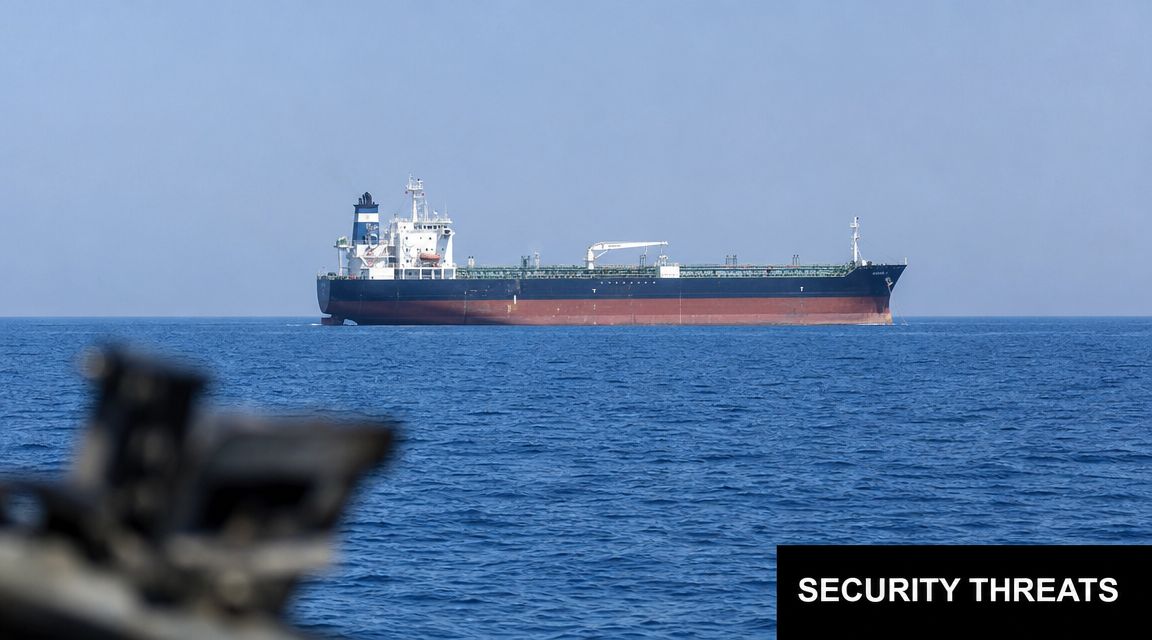
Threats are varied. Some are traditional, such as trafficking or vessel interception risk in sensitive waters. Others are newer in form but equally disruptive, such as cyber incidents affecting terminals, cargo systems, or communications that coordinate port calls and onward logistics. Labour disruption, severe weather, and local political instability can produce similar effects from a supply chain perspective even when they are not “security” events in the classic sense.
Why this matters for the UK and Europe
One of the most important gaps in public debate is analytical rather than operational. Coverage rarely connects UK trade dependence on seaborne commerce to operator-level decisions in the Pacific, even though those decisions can reshape route economics and supply chain resilience. EPS-linked analysis points directly to that gap and notes that public coverage rarely carries the implications through to UK trade, insurers, and port users, even as the company's technology choices may affect downstream supply-chain dynamics (EPS note on wind-assisted propulsion and the broader analytical gap).
That matters because European policymakers often read Pacific risk as external. It isn't. Delays and route changes in Pacific-facing trades can alter cargo timing, freight availability, maintenance windows, and commercial priorities that eventually affect Europe-facing services too.
Security risk becomes economic risk through transmission channels
Consider the main pathways:
- Routing disruption: When vessels reroute or lose schedule integrity, importers face uncertainty in delivery sequencing.
- Port system fragility: A local terminal incident can cause knock-on delays across multiple rotations.
- Insurance and compliance effects: Security concerns can change commercial assumptions even without physical damage.
- Operational reprioritisation: Large operators may shift capacity or attention toward more stable lanes, leaving other trades thinner.
Supply chain resilience begins at sea, long before shortages, price pressure, or factory delays become visible in domestic politics.
What governments should do differently
Many resilience plans still focus on warehousing, strategic stock, or domestic production buffers. Those tools have value, but they are late-stage responses. Earlier intervention means investing in maritime domain awareness, trusted information-sharing with operators, and joint contingency frameworks with ports and customs agencies.
The eastern Pacific should be treated as a strategic risk environment where trade, security, and climate shocks overlap. That calls for a more integrated model of governance than most G20 members currently use.
A Case Study in Global Shipping Operations
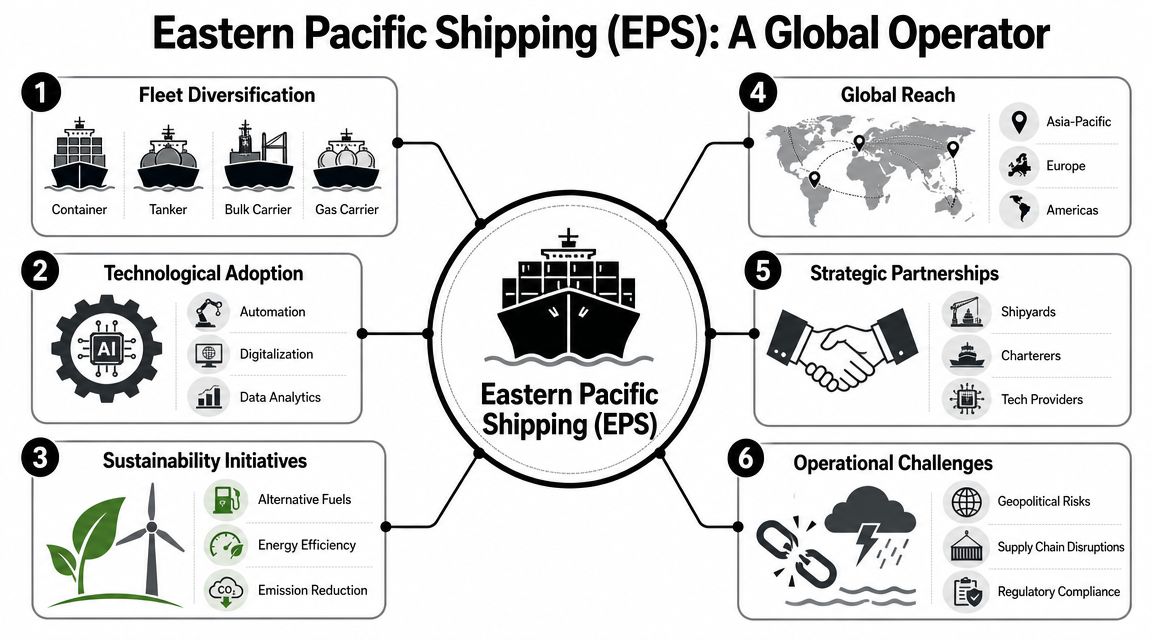
A single operator with a modern, globally distributed fleet can affect fuel choices, chartering patterns, crewing requirements, and port calls across several trade lanes at once. That is why Eastern Pacific Shipping merits attention as a policy case, especially for G7 and G20 governments assessing whether maritime resilience frameworks reflect how shipping works.
What the fleet composition tells us
As noted earlier, EPS manages a large fleet with a relatively young age profile and an internationally mixed workforce. For policymakers, that combination has three implications.
First, younger fleets usually have more scope to meet tightening efficiency and emissions rules without immediate scrappage or costly retrofits across every vessel class. Second, a global labour base increases the importance of common standards for training, safety, and compliance, because uneven implementation in one jurisdiction can create risk across the network. Third, scale gives operators choices. They can shift vessels between trades, alter deployment priorities, and respond faster than national regulators often assume.
Those advantages do not remove vulnerability. They concentrate it. When a large operator adjusts routing, investment timing, or fuel strategy, the effects can pass through charter markets, terminal planning, and cargo scheduling well beyond the original trade.
Why the UK office matters
Eastern Pacific Shipping (UK) Ltd. matters because shipping exposure for the UK does not begin at the quay. It also sits inside financing, insurance, legal services, broking, technical management, and commercial coordination. A London presence places part of that decision chain inside the UK's economic system, even when the physical disruption occurs in the eastern Pacific or another remote corridor.
That point has wider G20 relevance. Maritime dependence is often measured through import volumes or port throughput. The fuller exposure is larger. Economies such as the UK are also tied to the corporate and service infrastructure that helps determine how ships are financed, fixed, insured, and redeployed under stress.
A short case summary makes the strategic meaning clearer:
| EPS feature | Strategic meaning |
|---|---|
| UK presence | Links fleet and commercial decisions to London's maritime services cluster |
| Large managed fleet | Increases the operator's capacity to influence vessel deployment and service reliability |
| Modern vessel profile | Improves readiness for new standards, while increasing expectations on transition performance |
| Technology deployment | Supports tighter operating control, but also raises dependence on interoperable data and port systems |
The broader lesson
EPS is best understood as a systems case. It connects capital, compliance, labour, technology, and trade execution in one operating model. That makes it useful for public policy, because supply chain resilience depends not only on ports and cargo owners, but also on the incentives and constraints facing fleet managers.
The non-obvious lesson is that decarbonisation readiness and resilience readiness are not always the same. A company may be better prepared than its surrounding regulatory and port environment. If fuel availability, reporting rules, or digital standards differ across jurisdictions, even well-capitalised operators face friction that can reduce schedule reliability and raise costs for importing economies.
For G20 leaders, the policy gap is clear. Governments still monitor shipping mainly through trade statistics and port disruption after the fact. They need earlier visibility into fleet behaviour, operating constraints, and cross-border dependencies in the service ecosystems that support global shipping. Eastern Pacific Shipping shows why.
Policy Pathways for a Resilient Maritime Future
A single shipping disruption in the eastern Pacific can move quickly from a maritime incident to a macroeconomic problem for G7 and G20 economies. Delays on these routes affect inventory cycles, insurance costs, manufacturing schedules, and consumer prices well beyond the Pacific basin. For the UK, the exposure is indirect but real because trade resilience depends not only on domestic ports, but also on the global operators, service networks, and regulatory systems that keep cargo moving.
As noted earlier, Eastern Pacific Shipping's UK presence is one example of that interdependence. The strategic point is broader than any one company. Major economies remain commercially tied to shipping groups whose operating decisions are shaped across multiple jurisdictions, while public policy is still organised largely on a national basis. That mismatch leaves governments reacting to disruption after costs have already spread through supply chains.
The policy response should therefore focus less on isolated corporate pledges and more on shared system reliability.
A G20 action agenda
Create permanent maritime risk coordination cells
G20 governments should establish standing units that link transport ministries, customs authorities, port regulators, coast guards, and maritime security agencies. Their purpose should be practical. Track route stress, identify choke-point spillovers early, and coordinate intervention before disruption reaches manufacturers and retailers.Align decarbonisation rules with continuity of trade
Environmental policy and supply chain policy are still too often developed in parallel. That creates avoidable friction for operators facing different fuel rules, reporting requirements, and port-readiness conditions across jurisdictions. G20 members should pursue greater interoperability in compliance systems, shared implementation timelines where possible, and contingency planning for fuel and bunkering gaps.Treat shipping data as part of national resilience capacity
Governments need structured access to fleet movement indicators, port-operating conditions, and disruption alerts. This does not require disclosure of commercially sensitive contracts. It requires trusted public-private protocols so officials can detect stress before shortages appear in domestic markets.Expand contingency planning beyond the port gate
National resilience exercises should include ship managers, terminal operators, insurers, logistics providers, and major cargo owners. Many disruption plans still begin with shortages onshore. By that stage, options are narrower and costs are higher.Use the UK's maritime services base more deliberately
The UK has influence through legal, insurance, financial, and commercial shipping services tied to global trade flows. That position should be used to shape common reporting practices, crisis coordination standards, and transition finance frameworks that reduce fragmentation across the eastern Pacific trading system.
The strategic implication is clear. Shipping policy can no longer sit at the margin of economic security planning. For import-dependent economies, resilience now depends on whether governments can see cross-border operating risks early, align regulatory signals, and work with fleet operators before disruption becomes inflation, scarcity, or industrial delay.
The eastern Pacific will remain a pressure point in world trade. The policy question for G20 leaders is whether they will treat it as a routine commercial corridor or as a shared resilience challenge that merits the same level of coordination applied to energy, finance, and digital infrastructure.
Global Governance Media helps policymakers, analysts, and executives track the international cooperation agenda across trade, climate, energy, and resilience. If this briefing speaks to your work, explore more analysis and summit-focused coverage at Global Governance Media.